

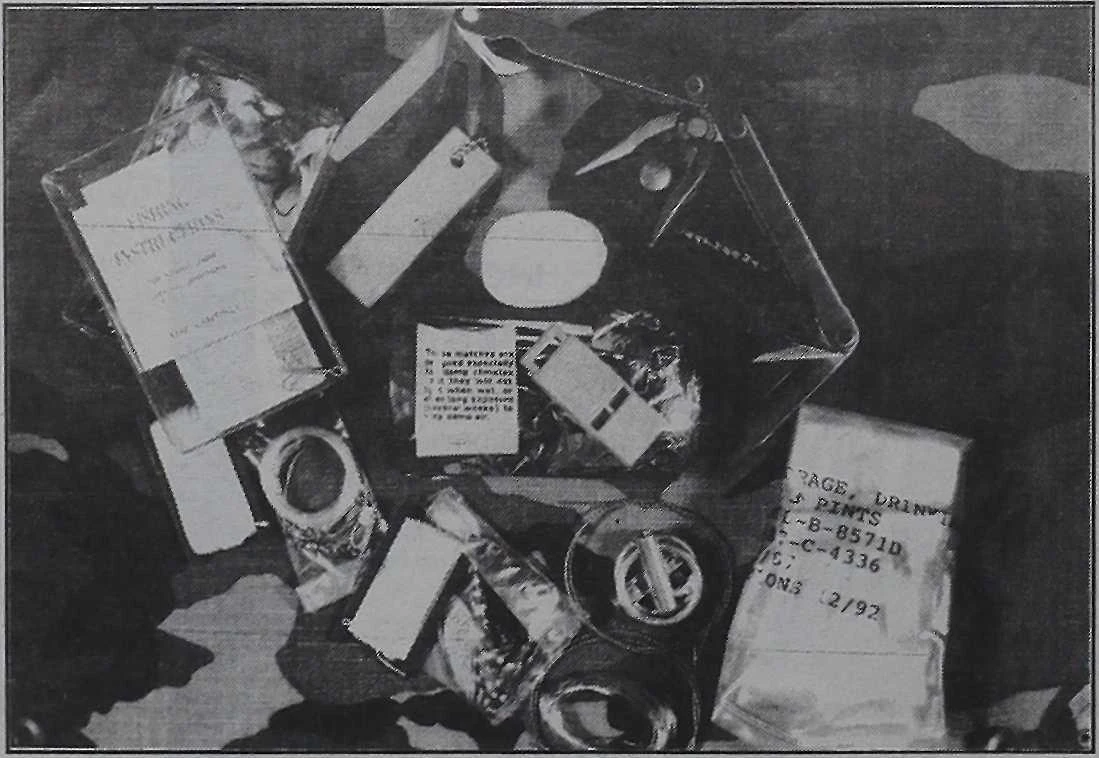
The US Marine Corps developed the R-PIE kit in 1990 for Recon Marines who might become separated from other equipment during patrolling, insertion or extraction. R-PIE stood for Reconnaissance Patrolling, Insertion and Extraction. The vacuum-packed kit fitted into utility-blouse pockets and was intended to support the first 24 hours with tools, fire-lighting and signalling equipment, a compass, blanket, fishing gear and water bags.
350 prototypes for six Recon units
The development task went to the Marine Corps Research, Development and Acquisition Command, MCRDAC. When no civilian company showed an interest in producing the kit, the Materiel Division at Marine Corps Logistics Base Albany made 350 prototypes. MCRDAC and six Recon units were evaluating them in October 1990.
Once the trials were complete, production of approximately 50,000 approved kits was planned for the following year. The source records the prototype and planning stage in 1990; it does not establish whether that full quantity was subsequently manufactured.
The first bag leaked
The initially specified water- and grease-resistant package failed its test. A water-vapour barrier was added to the revised design to limit moisture entering during storage. Prefabricated bags were too expensive for the cost plan, so Albany obtained the material and made the packages itself.
The contents were vacuum packed and heat sealed. This reduced bulk and protected several small metal items and consumables together. Damage to the material or seal could therefore compromise the entire kit. Once opened, the included resealable plastic bags could keep individual components organised and covered.
What the original photograph shows
The photograph from the Marine Corps newspaper The Globe shows the prototype laid out. Visible items include the combination tool, small individual packets, the round compass and the labelled water bag. The common barrier package has been opened for the photograph.
The kit was designed for the pockets of the utility blouse. It could therefore remain on the body if a rucksack or other equipment was lost. This distinguished it from larger survival kits installed in aircraft or vehicles.
Tools, fire-lighting and protection
The documented contents included a combination tool with a knife, matches, a candle and a magnesium fire starter. Fishing equipment, a blanket and resealable plastic bags were also carried. The selection combined a cutting tool, several ignition methods, a small amount of fuel and compact weather protection.
The kit also included a compass, signal mirror, whistle and flexible drinking-water bags. R-PIE was therefore mainly a reserve of tools and materials; larger quantities of water, food and clothing still belonged to the Marine's other equipment.
Planned for 24 hours, not as complete field sustainment
The development account specifies a 24-hour period. This was a design requirement, not proof of a fixed sustainment period under every terrain and weather condition.
R-PIE's distinctive technical problem was therefore the package rather than any single tool. A kit carried in a blouse pocket had to remain small while resisting water, grease and water vapour until opened. The first bag failed that requirement and was redesigned.
The appearance of U.S. Department of War (DoW) visual information does not imply or constitute DoW endorsement.