

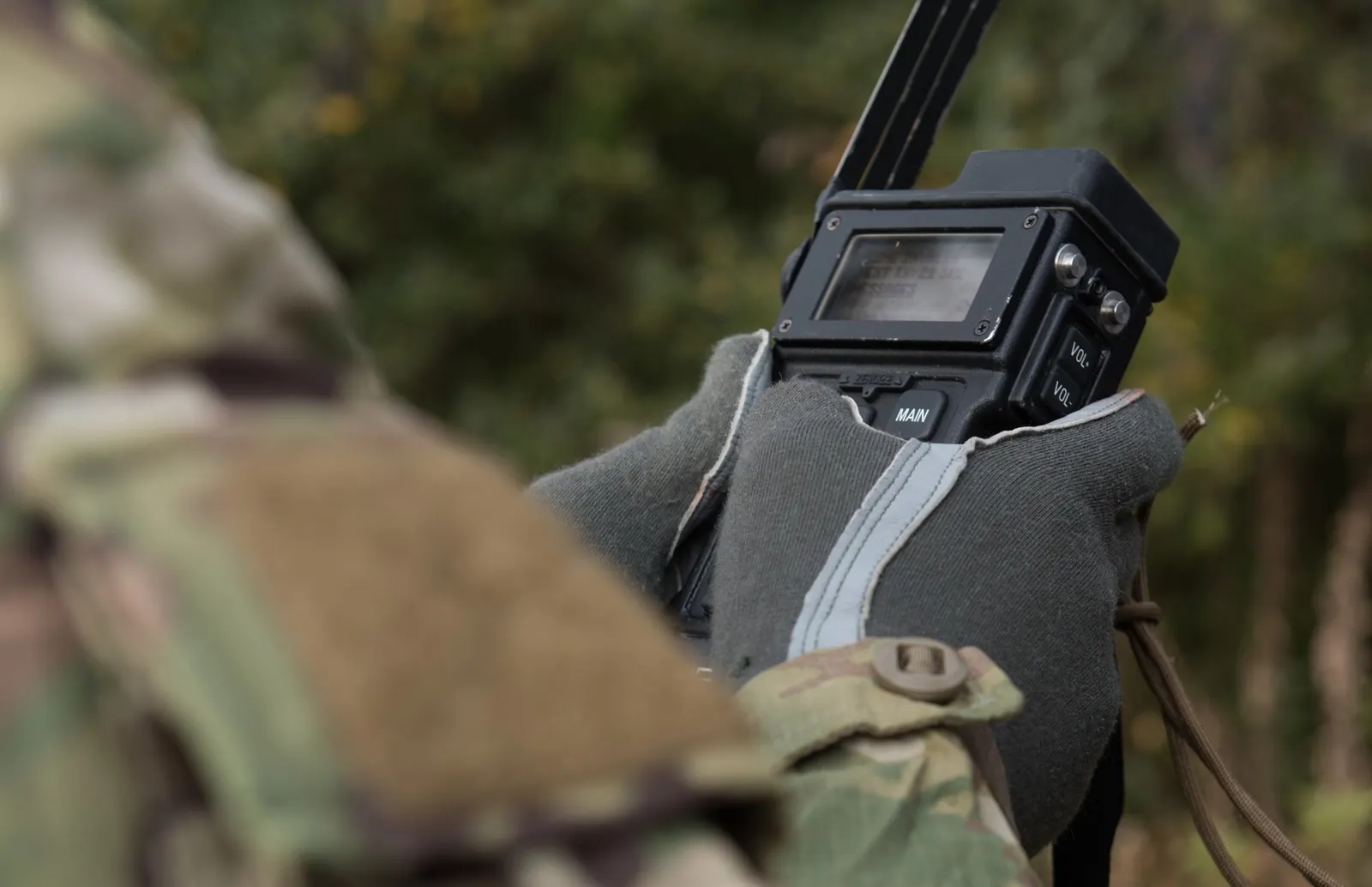
A military survival kit brings together the means an isolated person can use to care for injuries, protect against the environment, carry water and preserve remaining equipment. Charts, language aids and signalling devices support navigation and contact on the way back to friendly forces. Whether an item remains usable after an incident also depends on where it is carried: a dressing in a trouser pocket remains within reach for first aid if the rucksack has to be abandoned.
Selection starts with the consequences of losing a capability. Severe bleeding, wet cold, heat and lack of water require different means and leave different amounts of time. In cold, windy terrain, losing weather protection may affect the ability to act sooner than missing a meal. In intense heat, the water carried limits further physical exertion. Weight is therefore assessed against a specific remaining capability: what can the person still do after losing the largest pack?
What needs to remain with the person
The three equipment lines used by US Pararescue personnel provide a useful model. First-line equipment includes personal essentials for defence, survival, evasion and escape; a Personal Survival Kit is one component. The second line is the combat load, including items such as a radio, signalling devices and an individual first aid kit. The third line extends endurance with additional rations, batteries, sleeping equipment and medical supplies and is normally carried in the rucksack. If the supplementary load must be shed, the first line is intended to retain basic personal capabilities.
For isolated personnel, the actual separation matters more than the number assigned to a line. A survival vest may be removed or lost with other equipment. A small kit in clothing pockets may remain; a pouch attached only to that vest goes with it. The US regional Personnel Recovery Kit model expressly provides for carriage on the person. Its placement still has to suit protective clothing, freedom of movement and the prescribed escape procedures. An additional personal attachment that snags or obstructs access can turn the intended reserve into an obstacle.
Access can be checked beforehand without a rucksack or supplementary load. The person reaches the medical supplies, opens their pouch, then accesses water, weather protection and a planned signalling device. This reveals whether gloves make a closure unusable, an injured hand would prevent access or other equipment would first have to be removed. Small items stay in organised internal compartments; opening the kit should not empty all its contents onto the ground. Assigned locations shorten the search and make a missing capability apparent after a loss.
Medical care, protection, water and repair
The medical component needs to be immediately accessible following injury. Life-threatening bleeding from an arm or leg requires rapid, effective control. The bleeding-control equipment the person has trained to use must be within immediate reach. A tourniquet is intended for this life-threatening bleeding. Dressings cover a wound and secure a bandage; selection and use follow the intended purpose and the person's training. Applying a tourniquet unnecessarily to minor bleeding also cuts off the blood supply to healthy tissue. This distinction becomes especially significant when care is greatly delayed: time under a tourniquet can itself cause serious tissue damage. Personally required medicines need packaging that prevents moisture or damaged containers from making them unusable.
Environmental protection requires a barrier against wind and water and, in cold conditions, sufficient insulation. A poncho or lightweight protective bag can keep out rain and reduce airflow around the body. A thin emergency blanket provides little separation from cold ground; insulating material between the body and the surface is needed to limit that heat loss. Tears, open closures and material that can no longer be secured change the protection provided. A compact kit therefore has to work with the clothing actually worn. A tiny foil bag cannot replace the insulating layer required by the climate.
Water provision requires a carried supply of drinking water, a sound transport container and a treatment product suited to the water expected. A filled canteen allows movement to continue without immediately finding another water source. A folding reserve container increases the amount that can be transported but needs protection against thorns, sharp equipment and abrasion. Anyone using chemical products needs the corresponding volume information and product instructions. Different active ingredients cover pathogens differently; the specified treatment and waiting period have to be observed. Disinfection does not remove fuels or toxic chemicals from water.
A few lightweight repair items can keep carrying equipment and clothing usable. Cord can temporarily take strain off a damaged carrying strap, a needle and thread can close an open seam, and a safety pin can hold fabric together. A suitable small tool helps cut and work those materials. The repair must actually support the load and leave no new sharp edge against the body. If a temporarily reinforced seam fails a careful load test, the load has to be redistributed or the damaged carrying component abandoned.
Items needed for urgent tasks are placed close to the body first; additional supplies and comfort items follow. Where injury is expected, the first aid kit must not be buried behind cooking equipment; in wet, cold terrain, weather protection has to be usable without prolonged unpacking. An infrequently needed spare part can sit deeper. Consumables are assessed against the period they may have to last without resupply. A spare is especially useful when losing the first item would prevent an important task. It must be carried somewhere else that will remain with the person if the first item is lost.
Example: a body-worn survival kit
Consider a person operating on land in temperate, wet terrain. They wear clothing appropriate to the mission and anticipate possible separation from the rucksack. The reduced personal survival component is distributed between clothing pockets, an immediately accessible medical pouch and a water carrier close to the body. The medical pouch holds the dressings selected according to training, a designated tourniquet and protective gloves. A filled canteen with a secure closure remains accessible. A compactly packed poncho supplements the insulating layer already worn; a longer rest in cold conditions would require additional insulation and protection from the ground.
A protected internal compartment holds a folding water container, an appropriate treatment product and readable instructions. Another small compartment contains cord, a needle, thread, safety pins and a suitable cutting tool for equipment maintenance. The regional map or Evasion Chart, a language aid appropriate to the area and a signal mirror remain accessible in clothing pockets. If the person has actually been issued a prepared survival radio, it is carried close to the body with a usable battery; a suitable spare battery has a separate protected location. Personal authentication material stays protected from outside view.
The rucksack holds the extensions: larger water supplies, additional food, sleeping equipment and further spares. If the rucksack is lost, this kit still allows the person to give themselves first aid, obtain limited weather protection, drink from the carried supply, transport newly obtained water, make simple equipment repairs and use regional maps for navigation. A mirror can mark the position during a suitable actual contact; the radio can transmit a report if its communications path works. The person has to reassess the resting location, exertion and movement objective against this reduced endurance. Arctic cold, desert conditions or isolation at sea would require different protection and supply items.
Regional information and communication
National armed forces are responsible for their survival equipment and match it to the mission, isolation risk and environment. The US Personnel Recovery Kit supplements general survival kits with items for a particular operating area and the recovery capabilities planned there. An appropriate Evasion Chart combines geographical information with regional survival and evasion information. Its compact folded format facilitates carriage on the person. After baggage loss, a geographical information resource can therefore remain while supplies and technical devices have to be assessed separately.
During an actual encounter, a Pointee-Talkee allows a specific statement to be selected: the person points to the appropriate translation, while a phonetic line supports pronunciation. The other person must understand the selected language and, where necessary, be able to read the text. The line shown also determines which information about a need or intention is disclosed. The Pointee-Talkee pointing and response procedure connects that selection with a comprehensible read-back of the reply.
The US Blood Chit presents a multilingual request for help and connects it with national affiliation and a written reward promise. Showing it to an unknown person makes that request visible. Other prepared information is intended for the later personal authentication process with recovery forces: a matching position or publicly recognisable help card does not identify the individual being sought. The personal evidence intended for that process is not shown to arbitrary contacts alongside a language aid.
CSEL: preparation and usable contact
In the US Combat Survivor Evader Locator, or CSEL, the handset works with external communications infrastructure. Before the mission, a planning computer and radio adaptor load the identity, communications and navigation data required for that mission. Preparation covers the actual loaded data, handset condition and power supply, together with the infrastructure planned for the operating area and compatible receiving organisations. The person needs to know which contact their device and prepared operating modes can actually establish.
Personal handling is practised on the issued model beforehand: opening its pouch, removing the handset, reaching the controls, reading the display and selecting an appropriate planned status message. Checks also establish whether the battery type fits, the installed battery passes the functional test and a carried spare is genuinely usable. An authorised communications check uses the designated test procedures. Independently transmitting a distress alert would activate a real alerting path and is not a battery test.
GPS determines a position for the handset. Protected two-way over-the-horizon communications, OTH, carry data through a satellite path and system infrastructure to a military receiving organisation. Preset status messages and position can describe the person's situation there; an actually received reply enables further exchange. The communications path and responsible receiving organisation have to function. A position used in a report has to describe the present location: a fix obtained before movement identifies the earlier position. The display alone does not show whether that value has reached the receiving organisation.
Operating modes differ in protection and recipient. In the CSEL baseline, direct voice radio within radio range and the beacon function are unencrypted; the SARSAT data path is also an unsecured, one-way alerting route. Using those paths may make content or locating signals accessible outside the protected military data exchange. Radio software and the equipment of an actually reachable recovery platform determine additional capabilities. The CSEL entry explains the separate paths and their prerequisites in greater detail.
Check loss, moisture and energy
A readiness check starts with the closed kit and ends with a specific function. First, without the rucksack, establish which items remain with the person and where they can be reached. Then examine containers, packaging and closures for abrasion, tears, moisture and sand. A water bottle must close without leaking, instructions must remain readable and the dressing packet must be intact. After soaking, distinguish between a wet outer pouch and water that has reached sensitive contents.
Battery-powered devices then undergo their functional test and power-indicator check according to the relevant device procedure. Spare batteries are checked for compatible type, condition and protected carriage. After an incident, the carried handset may remain usable while reserves stored in lost baggage are absent, shortening the period it can be used. A signal mirror is checked for damage to its reflecting surface, grip and aiming aid. Heavy scratching, delamination or a damaged sighting aperture makes it harder to direct the reflected light towards an observer.
The devices, batteries and signalling items recorded in the Evasion Plan of Action describe the prepared equipment. After a loss, the person compares that record with the remaining inventory. If the declared night light is missing, they need to reassess the agreed light marking and possible alternatives. During actual contact, the person can report the missing item and an available alternative. For an approaching pickup, belongings are secured and the necessary signalling items prepared; they are used according to the earlier briefing or an actually received instruction.
The appearance of U.S. Department of War (DoW) visual information does not imply or constitute DoW endorsement.