

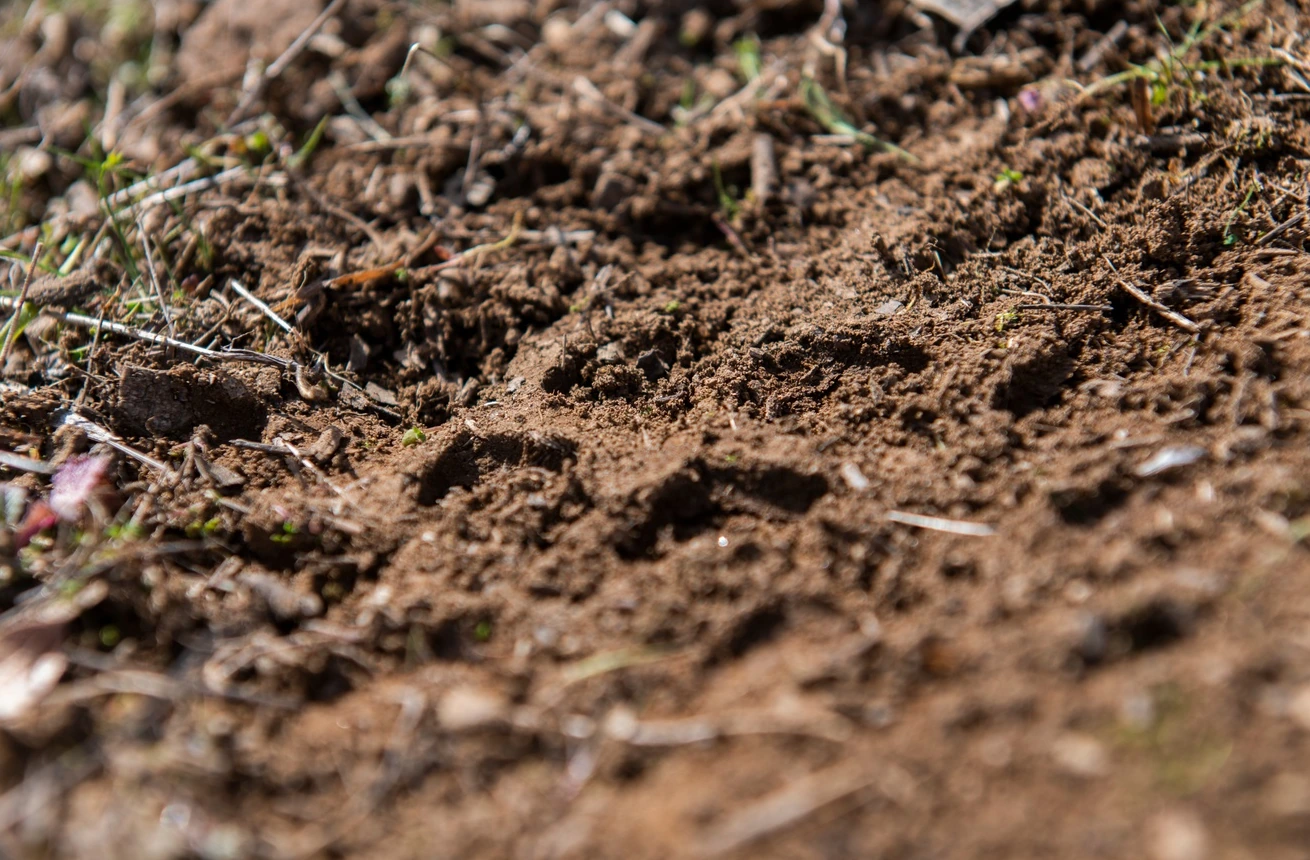
Movement across terrain leaves sign. Soft ground records boot tread, while loose stones or leaf litter move on firmer surfaces. Bent vegetation, scraped moss, lost equipment and mud carried onto dry ground may also reveal a route. Sign reduction therefore means avoiding unnecessary disturbance and recognising sensitive ground before crossing it.
Impressions, displaced material and transferred mud
Mud, damp sand and soft soil can preserve the shape and tread of a sole. On firmer ground, changes at the surface are often more visible: stones pushed aside, disturbed leaf litter or the dark, damp underside of an overturned stone.
Mud clings to boots and reappears on the next dry surface. Wet soles leave dark marks on rock or dry ground after a crossing. At a change of surface, what remains attached to footwear and equipment matters as much as the next foothold.
Avoiding slips and extra steps
A cleanly placed foot disturbs less ground than a boot that slips or pivots. Sideways movement, dragging and turning under load spread loose material beyond the original contact area.
Loose stones, dry twigs and ground that only appears firm should be identified before committing weight. Recovering from an unstable step or reaching for a handhold creates several points of contact. A firm foothold within reach is usually preferable to a long step onto unstable ground.
Reducing sign in vegetation
In dense vegetation, the most conspicuous changes may be above ground level. Turned leaves expose their lighter undersides, while broken twigs and stripped leaves remain behind. Before moving through, look for existing gaps that also provide enough room at shoulder and rucksack height.
Flexible branches can be guided aside slowly. Woody branches break easily and create a visible opening; another passage is then preferable. Flattened tall grass may show a route for some time. Where dew is present, the missing film of moisture alone can mark a path through the blades.
Sign on rock, wood and moss
Exposed, solid rock does not take a boot impression. Loose stones, soil or moss on its surface can still be displaced or scraped away. Brittle rock may also show fresh, pale fractures.
Crossing a decaying log can leave boot impressions in the wood and scuffs on the bark. Moss on roots and stones is easily rubbed away by soles or hands. An exposed, firm surface is therefore preferable to a soft or vegetated support.
Checking the exit from a watercourse
A crossing can leave sign on the bank, in a shallow bed and beyond the exit. Soft ground takes impressions, disturbed silt clouds the water, and wet footwear carries water or mud onto the next surface.
Before a necessary crossing, assess the opposite bank and the first footholds beyond it. A slip may dislodge stones, tear moss or force an extra step into a soft bank. A firm exit is often more important than an entry point that merely appears inconspicuous.
Rain and shade can alter sign
Rain may soften the edges of older impressions, but it can also turn firm ground into a surface that records new tracks clearly. Soil under trees or beside a log dries and changes differently from exposed ground. Its current condition matters more than the assumption that rain will erase a trail.
An impression may be harder to see in shade. As the sun moves, however, so does the shaded area; the sign itself does not disappear.
Securing equipment and limiting movement at a halt
Thorns can pull fibres from clothing, loose straps catch on branches, and poorly stowed packaging may be lost. Projecting items should therefore be secured before moving. Such debris marks the route, while printed labels or distinctive materials may also reveal something about the equipment carried.
At an evasion hide, repeated movement creates the clearest sign. Frequently used approaches, equipment placed on the ground and cleared areas begin to define the position. A site requiring little preparation and only short movements disturbs less of its surroundings.
Sign reduction must not compromise movement
The surface that takes the least sign is not automatically the best route. A long detour, steep ground or exposed terrain may consume more energy and increase the risk of detection. Surface, concealment, distance, water requirements and the person's ability to move have to be considered together. Using favourable footholds makes sense; taking a new detour for every slight disturbance can make the overall situation worse.
The appearance of U.S. Department of War (DoW) visual information does not imply or constitute DoW endorsement.