

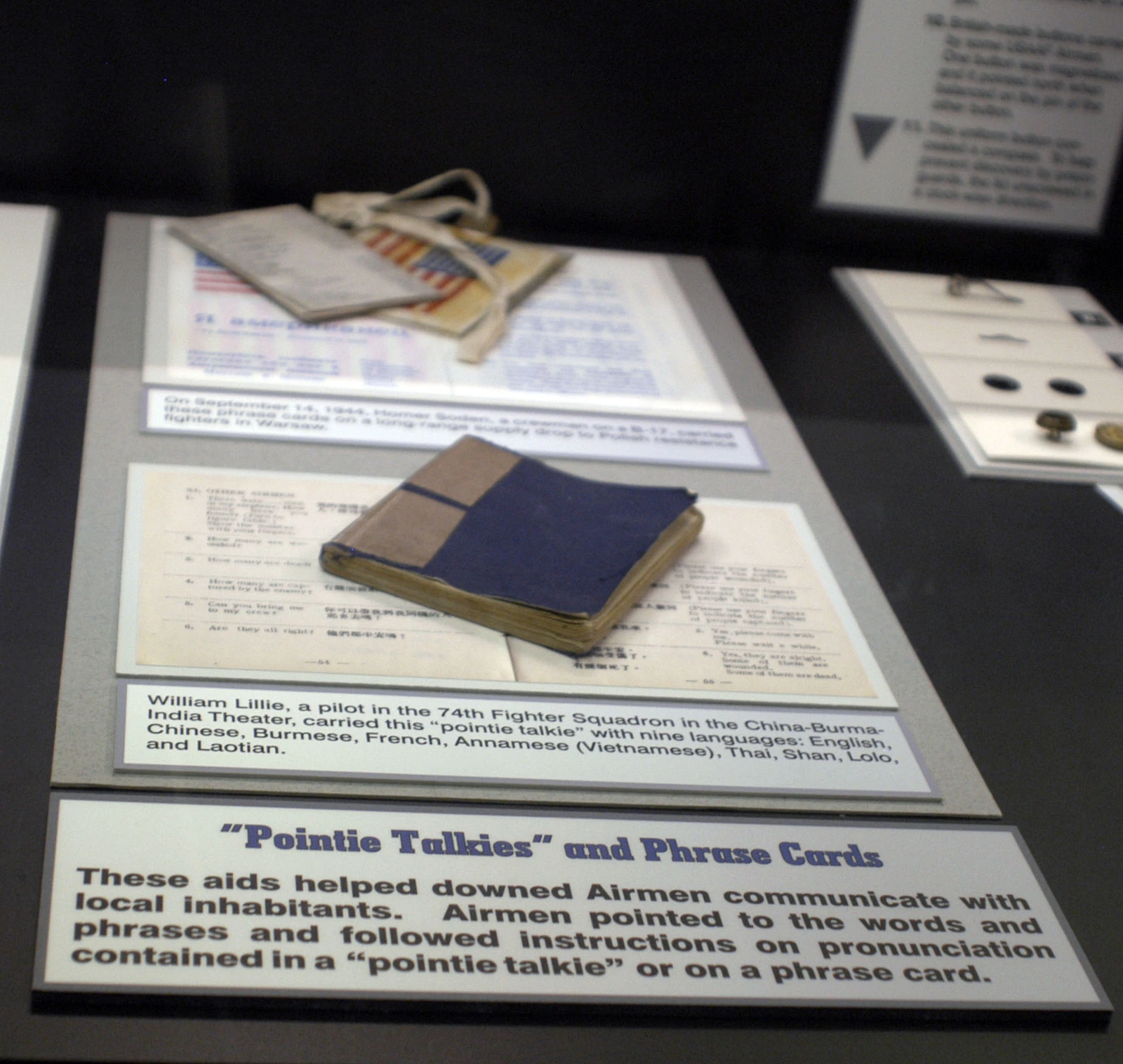
A pointee-talkee is a prepared military language aid for communication during evasion. The isolated person selects a statement in a language they can read and points to its translation. If the aid also contains possible replies, the other person can point to an answer and the isolated person can read its meaning.
Statement, translation and pronunciation
A US format uses a three-part arrangement: the English phrase on the left, its translation into the local language in the centre and a pronunciation guide on the right. The parts serve different readers. The English wording is used to select a phrase; the foreign-language script is for the other person to read. The pronunciation guide allows the user to attempt to say the selected phrase aloud.
| Part | Role in the exchange |
|---|---|
| The user's reading language | Understand the full meaning of the statement: is it a question, a request or a piece of information? |
| Translation | Show the other person the precise statement selected, in a language they understand. |
| Pronunciation guide | Say the prepared foreign-language phrase aloud without having to read its unfamiliar script. |
The user follows the row from the familiar wording to its foreign-language equivalent. A finger points beside the selected translation, leaving the whole phrase visible. If the sentence is also spoken, the pronunciation guide for that same row is used. The displayed and spoken messages then express the same question or request.
The reply needs a translation back
A historical US pointee-talkee booklet for Southeast Asia contains separate sections for French, Chinese, Vietnamese, Thai and Laotian. Within a section, the question half places English statements beside their translations; the answer half provides foreign-language replies with their English equivalents. This allows someone who does not speak English to answer as well. The foreign-language introduction explains the pointing method before the first substantive question.
A question may have several possible replies. A question about a possible interpreter, for example, offers “Yes”, “No” and “I do not know”. The last reply reports a lack of knowledge; the availability of an interpreter remains unresolved. A question asking whether to go with someone to the interpreter or wait for them instead offers two action replies. The selected reply indicates which movement the other person proposes.
When reading back, the question and answer stay within the same section and row. Numbering begins again in later sections, so a number alone does not identify the question. Otherwise, an answer from the injuries section could be matched to an identically numbered question about other crew members.
The booklet's sections range from immediate needs and injuries to hostile presence and other aircrew members. The questions about other crew members distinguish, for example, whether anyone has been found, how many are wounded and whether any captures or deaths are known. The possible replies also indicate whether those people can be brought over or the isolated person should be taken to them.
Convey one statement at a time
The first step is to open the appropriate language section and, if provided, show its introduction. The next statement addresses the immediate exchange. A general request for help is followed by a specific statement, such as a request for drinking water or clean cloth for an injury. This identifies the immediate need being expressed.
After the phrase has been shown, the other person has an opportunity to point to a prepared answer. The next question follows once that reply has been matched. Showing several questions at once can cause an answer to be read against the wrong question. If the pointing is unclear, the intended row is shown again before the reply is used to decide what to do.
Language aids can also contain messages for communication in the other direction. The person encountered then selects a statement in their language about a waiting place or a local hazard, for example; the isolated person reads the corresponding translation. This reverses the reading direction. These messages are selected independently of a preceding question and require their own prepared phrases.
Keep the number, unit and subject together
Number and time tables supplement prepared replies. The question gives a number its subject: a count of people, a duration or a distance. When a quantity is indicated, the corresponding question remains visible. A time of day is distinguished from an elapsed period; a distance needs its unit of measurement as part of the statement.
Confirmation can be sought by pointing again to the matched question and selected value. This matters particularly when an action follows, such as waiting or moving on. Pointing to a number alone does not convey when a waiting period begins or whether a time refers to the duration of a journey.
When writing alone is insufficient
If the other person understands the printed language when spoken but cannot read its script, the pronunciation guide allows an attempt to convey the prepared phrase aloud. If the spoken version is not understood either, pointing or a simple drawing can supplement a statement about a concrete object or an injury.
Drawings are particularly useful for visible objects and spatial information. A sketch of a bottle can clarify the container being sought. Whether it means an empty bottle, its contents or drinking water is established through the context and further feedback. A picture aid is therefore linked to a specific need; abstract properties or longer statements require additional communication.
The language version itself may also be the obstacle. Selection depends on the language and script the other person actually understands. A regional booklet with several language sections allows a switch to another included version.
The language aid and the blood chit serve different purposes
A US blood chit combines a multilingual request for assistance with a government promise of a reward. It is issued as a controlled document because its wording contains an obligation of the US government. A pointee-talkee serves to select and translate specific statements during an exchange. Historical language aids also contain reward phrases; the distinction therefore rests on the function of the issued aid, rather than the presence of the word “reward”.
American introductory texts, for example, state nationality; questions may reveal a need, other people or a movement destination. During evasion, the statement shown is the one required for the immediate exchange. Details of a further escape route or other people are not disclosed simply because the booklet contains phrases about them.
The appearance of U.S. Department of War (DoW) visual information does not imply or constitute DoW endorsement.