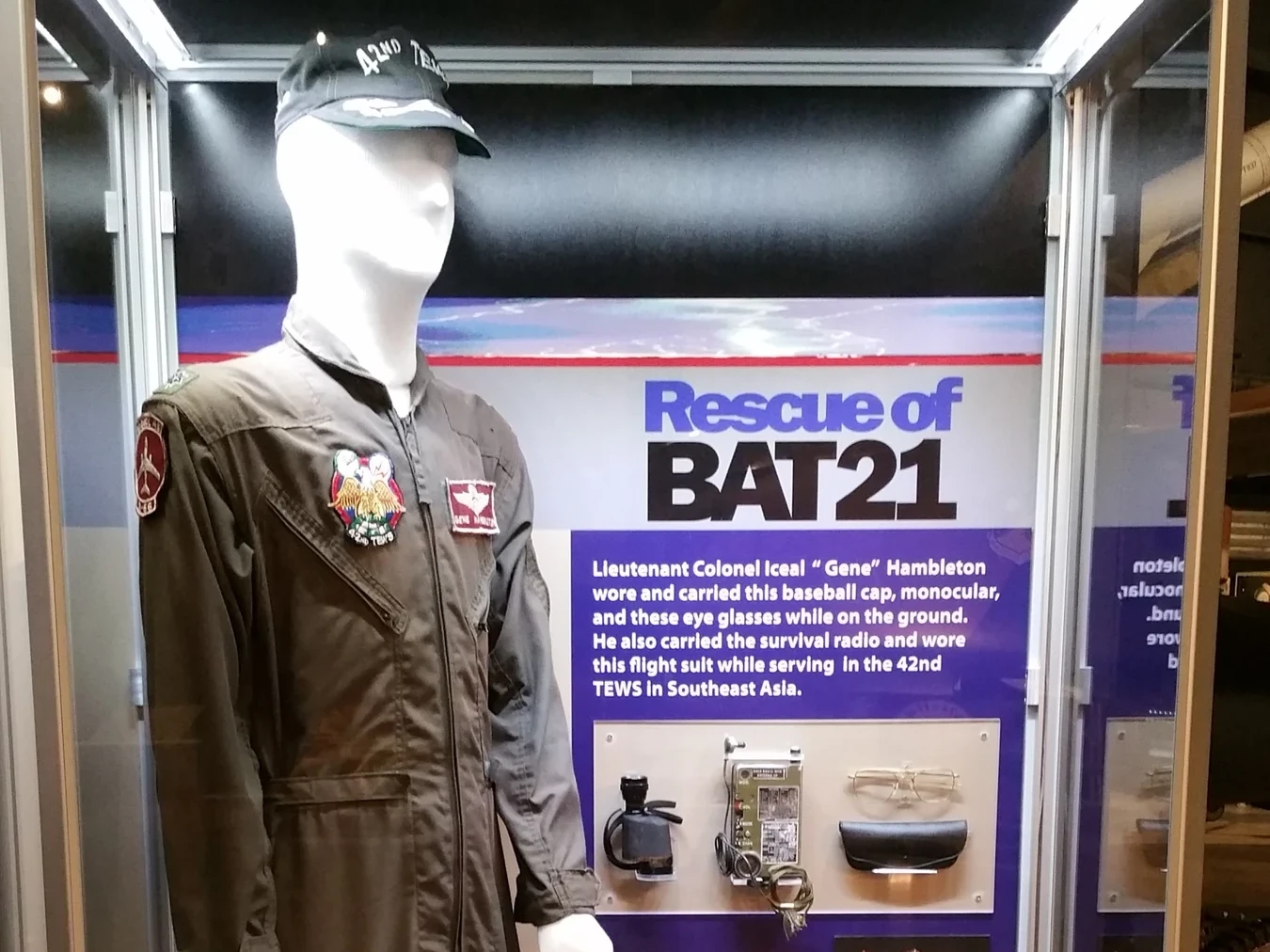
North Vietnam launched its Easter Offensive on 30 March 1972, sending regular formations with tanks, heavy artillery and air defences into northern South Vietnam. Within days, the defenders in Quảng Trị Province were under severe pressure. Most American ground troops had already left the country, but US advisers and air forces continued to support the South Vietnamese army. Among the airmen flying from Thailand was 53-year-old navigator Iceal “Gene” Hambleton. His mission on 2 April was to support a strike by American B-52 bombers, helping to detect and disrupt the North Vietnamese air defences.
The mission from Korat
Hambleton was based at Korat in Thailand. He had flown combat missions during the Korean War, then spent ten years in the strategic missile service before returning to flying duties. For his assignment in Southeast Asia, he had qualified on the EB-66, a twin-engine electronic reconnaissance and countermeasures aircraft. Its crew could detect enemy radar transmissions and use jamming equipment to interfere with the air defences. When supporting a B-52 strike, the men watched for missile threats and helped the bombers carry out their attack.
On Easter Sunday, 2 April, two EB-66s were supporting a formation of three B-52s. Hambleton was the navigator aboard the aircraft with the call sign BAT 21, which carried a crew of six. They were operating near the demilitarized zone separating North and South Vietnam. On the ground, North Vietnamese troops had gained territory, overrun bases and forced South Vietnamese formations to withdraw. Their air defences had advanced south with them. Rain, low cloud and poor visibility complicated American air operations and made it harder to follow the rapidly changing front.
An SA-2 surface-to-air missile struck BAT 21. Hambleton later recalled that the usual warning sequence before a missile launch had been absent, and that the crew had initially expected the threat from the wrong direction. He managed to operate his ejection seat before the aircraft broke apart. None of the other five crew members survived. After ejecting, Hambleton began spinning and opened his parachute manually at high altitude to stop the rotation.
During the long descent, he took a radio from his survival vest and called a nearby forward air controller, or FAC. The controller’s work included directing air attacks and guiding aircraft towards targets. He now followed Hambleton down and tracked the place where he would land. The navigator identified himself over the radio as BAT 21 Bravo: the added word distinguished the individual survivor from the lost aircraft.
A low bank of fog hid the final part of his descent. Hambleton landed in a rice paddy, freed himself from the parachute and looked for cover. He did not remain at the landing point to bury the canopy. A ditch or low earth bank allowed him to lie below the level of the surrounding ground. He had come down in enemy-held territory west of Đông Hà. The FAC knew where to look for him, but the ground around him was beyond friendly control.
The first attempt that afternoon
A rapid pickup was intended to get Hambleton out before North Vietnamese soldiers found his parachute and searched the landing area. The FAC called for help from forces already operating nearby. A-1 Skyraiders, propeller-driven attack aircraft, engaged weapons positions around Hambleton. From the ground, he reported where he could see fire and what effect the attacks were having. Those reports helped the pilots adjust their attacks while a helicopter flight was directed towards the survivor.
The helicopters were flown by US Army crews. Two armed AH-1 Cobras and two UH-1 transports were available. For the immediate approach, UH-1H Blueghost 39 and Cobra Blueghost 28 headed north. The Cobra crew was to cover the transport helicopter. As both crossed the river at Đông Hà, however, they came under fire from numerous directions. The concentration of enemy weapons reflected the advancing offensive. The crews had entered the area without adequate knowledge of the enemy troops and positions there.
Blueghost 39 was hit and went down behind enemy lines. Its pilots, Byron Kulland and John Frink, and crew chief Ronald Paschall died. Wounded gunner Jose Astorga escaped from the helicopter but was captured by North Vietnamese soldiers. Blueghost 28 was also hit. The Cobra made it back south, had to land and was lost as an aircraft; its crew was recovered. Hambleton remained in the rice paddy. The attempt to bring him out quickly had cost other men their lives and another survivor his freedom.
After dark, Hambleton left his first shelter. He moved to a brush-covered knoll, dug a hole and camouflaged it with the vegetation. He initially expected to spend only that night there before being picked up the next morning. Rescue helicopter crews did try to reach him at first light on 3 April. The early approach was meant to surprise the defenders and keep exposure over the pickup point brief. Ground fire nevertheless forced the helicopters to turn back before reaching him.
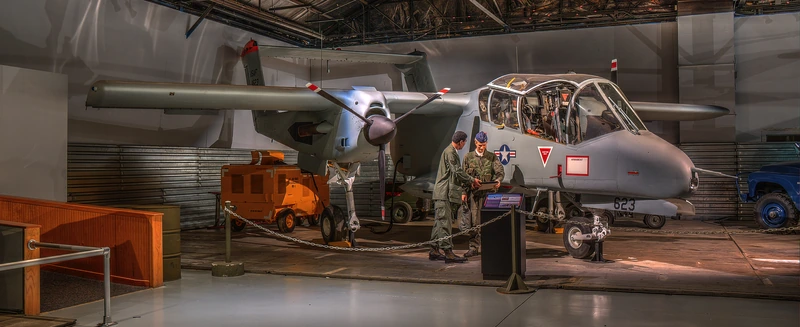
Later on 3 April, a missile shot down the OV-10 with the call sign Nail 38 while it was supporting the recovery effort. The OV-10 was a small twin-engine aircraft used for several tasks, including forward air control. Mark Clark concealed himself after ejecting; fellow crew member William Henderson was captured. The rescue forces now also had to reach Clark. Hambleton’s hide was still known, but the presence of aircraft above him had not made a pickup any easier.
Waiting on the knoll
Hambleton had equipment for an emergency, but no provisions for an extended stay on the ground. He carried two URC-64 survival radios, a small first-aid kit, an empty water bottle, signalling equipment, a knife and a .38-calibre revolver with twenty rounds. He also had a map and compass. The relatively short sorties from Thailand had not seemed to require carrying food or water. Now he had to obtain both without being discovered when he left his hide.
He used his rubberized escape-and-evasion map to collect rainwater, spreading it over a bush and catching the runoff in his plastic bottle. On the third night, he recalled gathering about two quarts, just under two litres. He later also drank from a watercourse; his equipment included Halazone water-treatment tablets. Rain gave him a temporary supply, but he remained dependent on the weather and on the water sources he could reach.
He found four small ears of corn while foraging. That was little food, and each trip out created further difficulties. A boy with a dog found him; an armed party subsequently returned to search. On another excursion, Hambleton struggled to locate his own shelter. More frequent food searches offered no simple solution. They would take him through ground used by other people, after which he would have to return to the camouflaged position without leading anyone there.
On two occasions, patrols stopped within roughly six metres of his hole. The soldiers lingered nearby, then moved away without finding him. Hambleton spent almost a week on the knoll. One reason for staying was that the FACs knew his exact position and could organize protective attacks and further pickup attempts around it. A more distant replacement hide would first have to be located and brought into the plan.
Several FAC crews took turns supporting him from the air. Hambleton later described six four-hour shifts each day. His reports helped the pilots assess enemy movements and weapons positions; in return, he received directions and learned what they intended to try next. Both radios remained usable throughout his isolation. A relieving controller could therefore take over the contact even when cloud or vegetation concealed the navigator from view.
Suitably equipped OV-10s used the Pave Nail system with LORAN, an electronic navigation aid, to determine his position from radio transmissions. That allowed a fix without requiring Hambleton to produce smoke or fire a flare each time, signals which soldiers on the ground could also see. Radio contact enabled the controllers to stay with him and coordinate attacks around his location. To collect him, a helicopter crew still had to get through the air defences and reach the ground immediately beside him.
Hunger, thirst and interrupted sleep steadily reduced his strength. He reported sleeping only briefly at a time and, after several days, having to make a conscious effort to restore his concentration while moving. His trouble finding the hide after a food search was particularly dangerous under those conditions. Every additional day reduced the distance he could manage if he had to leave, while soldiers around him continued their movements and searches.
Fire restrictions and mounting losses
Soon after the aircraft’s loss, Seventh Air Force had established an initial restricted-fire zone with a radius of twenty-seven kilometres around Hambleton. Uncoordinated artillery fire and air attacks were not to hit him. Other artillery fire and air attacks therefore required clearance, although the rescue forces continued attacking targets within the area. The original radius covered much of the ground where the South Vietnamese 3rd Division was fighting the advance. The zone was reduced, but the restrictions had already caused a dispute between air and ground commands.
Air liaison officer David Brookbank criticized delays in striking important targets during the North Vietnamese advance. The defenders needed to use air and artillery support while the isolated survivor had to be protected from those same weapons. Poor visibility, withdrawals and uncertain friendly positions made targeting harder still.
For Hambleton, the weapons used immediately around his hide created dangers of their own. Air-delivered antipersonnel mines were intended to keep enemy troops away, but they also lay in the ground he would have to cross when leaving. Gas ammunition used against a nearby target drifted towards him when the wind changed and made him very ill.
On 6 April, the rescue forces made another extensively prepared helicopter attempt. Strike aircraft would suppress enemy weapons before the pickup, and four Skyraiders would cover the helicopters on their approach and departure. One HH-53 would go in low, with a second held outside the immediate danger area as a backup. If successful, the crews intended to recover Hambleton and then Clark during the same mission. The incoming HH-53 was shot down. All six men aboard died.
From his hide, Hambleton witnessed the loss of the aircraft that had almost reached him. The six deaths affected him deeply, and the FACs kept talking to him afterwards. The following day, another OV-10 was lost in connection with the recovery effort. Air attacks had engaged individual weapons, but had not secured a reliable approach or a safe period over the pickup points. To get a man aboard, a helicopter had to fly low and slowly through the area. Concealed weapons could remain silent during the supporting strikes and reopen fire as the helicopter appeared.
After the failed approaches, General Creighton Abrams, commander of American forces in Vietnam, halted further airborne rescue attempts on 8 April. The rescuers had to find a route on the ground before Hambleton became too weak to reach another pickup point.
Radio directions towards the river
The new plan required Hambleton to walk. He was to leave the knoll, reach a river west of Đông Hà and move towards a small ground team. Aircraft would continue accompanying him, following his position and attacking when necessary. A pickup from his existing hide had been abandoned. At the river, the rescuers would try to reach him by an approach that avoided the heavily occupied helicopter pickup areas.
Directions had to reach Hambleton over the radio without exposing his planned route to anyone listening. The planners used his memory of golf courses. For many holes, he could recall both the bearing and the distance from tee to green. Naming a particular hole therefore supplied two elements of a walking leg: a course to follow with his compass and a distance to cover. The FACs used these references to guide him from one hiding place to the next towards the river. He could understand the instructions, while a listener without the same personal knowledge would not immediately hear a usable route.
One leg took him at night through the village from which the rescue forces had previously been fired upon. Air attacks had badly damaged it. The planners directed Hambleton through because, as they explained to him, going around would add two and a half to three hours. He nevertheless encountered a Vietnamese man inside the village. There was a brief violent confrontation, which Hambleton did not describe in detail afterwards, and he managed to continue.
In a banana grove close to the river, he lost his way. He had to retrace his steps and skirt the vegetation before finding the water. When he saw the river, he hurried towards it and stepped over a steep bank. He fell against a tree and fractured an arm. The FACs then told him to cross to the other bank as quickly as he could. Hambleton did so and, about half an hour later, watched a search party reach the place he had left. The men searched the vegetation there but did not follow him across.
He had reached the intended river, but the walk had further depleted his strength and left him with another injury. Movement in and along the water also exhausted him. His radios remained useful in arranging a rendezvous, but eventually he could no longer reach friendly positions under his own power. A recovery would now depend on the ground team coming to the place where he actually was.
Norris and Kiệt reach Hambleton
Thomas Norris was an officer in the US Navy’s SEAL special operations forces, serving as an adviser to South Vietnamese units. He joined the ground recovery being prepared under Andy Anderson, an officer of the US Marine Corps. South Vietnamese naval commandos formed the team that would move with Norris towards the isolated airmen. They used a small forward operating base beside the river. This put them closer to the survivors, but the position was inside the battle area and also came under fire.
They searched for Mark Clark first. On the night of 10 April, Norris led a five-man patrol approximately two kilometres through enemy-controlled territory. They found Clark at daybreak on 11 April and brought him back to the base. Later on 11 April, rockets and mortar rounds struck the position. Norris subsequently led a three-man team on two attempts to reach Hambleton. Both were unsuccessful.
On the afternoon of 12 April, a FAC located Hambleton again and notified Norris. Nguyễn Văn Kiệt, a naval commando from the Republic of Vietnam, volunteered to accompany him on the next attempt. Norris and Kiệt dressed as fishermen and travelled upstream through the night in a sampan, a small boat commonly used on local waterways. It allowed them to travel along the river without the obvious appearance of a military rescue craft. The two men had to pass major enemy positions, and their plan depended on doing so as inconspicuously as possible.
At dawn on 13 April, they found Hambleton. Norris and Kiệt helped the weakened navigator into the sampan and covered him with bamboo and other vegetation, concealing the extra passenger for the return journey. A North Vietnamese patrol became aware of the small party, but the rescuers managed to evade it. They now had Hambleton with them, yet still had to take him back through enemy-controlled territory.
Near the forward base, they came under heavy machine-gun fire. Kiệt pulled the sampan into shelter behind a bank and camouflaged it while Norris requested air support. The aircraft suppressed the enemy position and laid a smoke screen, providing cover for the final part of the journey. Norris and Kiệt reached the base with Hambleton. A small team’s river approach had replaced the attempt to fly a helicopter into his hide; the team’s return had again required support from the air.
From the forward position, the rescuers took Hambleton in an armoured personnel carrier to a helicopter landing zone. Only there could they hand him over to a crew that flew him to Đà Nẵng for treatment. He arrived with fragment wounds and cuts, a fractured arm, severe exhaustion, dehydration and malnutrition. From the loss of BAT 21 on 2 April to his recovery on the morning of 13 April, he had spent eleven days hiding and moving in enemy territory.
Norris received the Medal of Honor for the ground rescues; Kiệt was awarded the Navy Cross for his part in Hambleton’s recovery on 13 April. After treatment, Hambleton also returned to Korat. He told the crews there about his experiences and the conditions on the ground. He subsequently spent thirty days convalescing in hospital at Clark Air Base.
The appearance of U.S. Department of War (DoW) visual information does not imply or constitute DoW endorsement.