HMS Wager sailed with George Anson’s British squadron in 1740 for a campaign against Spain’s possessions in the Pacific. A former merchant ship, she had been armed and assigned to carry supplies: guns for operations ashore, ammunition, tools and equipment for the other ships. Her cargo would be needed for an attack on the Chilean port of Valdivia. To deliver it, the Wager first had to pass around the southern end of South America and then reach the squadron’s agreed rendezvous off the Pacific coast. By May 1741, storms had left her sailing alone, with damaged rigging and a largely sick crew.
Shipwreck on the Patagonian coast
Captain David Cheap continued towards the rendezvous despite the Wager’s increasingly poor ability to manoeuvre. She had lost her mizzenmast; the shrouds and their supporting fittings were damaged, and her sails were worn. At times only twelve men, including officers, remained fit for duty. Wind and current carried the heavily laden ship eastwards towards the coast. This was a lee shore: the rocks lay on the side towards which the wind was pushing her. Regaining sea room meant sailing against that wind. The men lacked sufficient sail, sound rigging and hands to work the ship.
Drifting weed and birds had warned of land before the sailors could make out the coast. In the bad weather, they had little opportunity to establish their position. John Bulkeley, the gunner, urged Cheap to turn west and gain a safer distance offshore. The captain insisted on carrying out his orders: without the Wager, Anson would lack the equipment for the intended attack. On 13 May, the straps holding the blocks used to raise the foreyard failed. The few men able to work had to raise the fallen spar again while the ship continued to drift towards land. Cheap fell during this effort and dislocated a shoulder.
Early on 14 May, the Wager struck a submerged rock. Another impact broke the tiller, and the hull was holed. She finally lodged between rocks close to the shore. The men cut away the remaining masts and launched the boats to ferry the company ashore. Some of those ill with scurvy could no longer leave their hammocks and drowned. Cheap, unable to remain continuously on deck because of his shoulder, continued to direct the evacuation.
Other men spent their remaining time aboard drinking liquor and breaking open chests. Part of the crew initially refused to leave the wreck, demanding the boats only when the sea grew rougher. A gun on the quarterdeck was even fired towards Cheap’s shelter ashore. More than a hundred people reached the island. They had escaped the foundering ship, but had neither an adequate supply of food nor an agreed plan for what to do next.
Salvage, shelter and the distribution of food
A hut left by local people sheltered only some of the survivors. Others lay beneath trees in the cold rain. Bulkeley and John Cummins, the ship’s carpenter, raised the cutter upside down on supports, creating another shelter beneath its hull. In time the men built small houses with timber frames and brush roofs. Salvaged cloth became wall linings, curtains and clothing. By August the new quarters for Bulkeley’s group could hold fourteen people. Finding material for accommodation was easier, however, than obtaining enough food for everyone living in it.
Mussels, limpets, seabirds and wild celery supplemented the ship’s provisions. Weather and tides determined how much could be gathered and whether the collecting grounds could be reached. Men working along the rocks faced slippery footing and surf, returning with soaked clothes. For a sick man, the journey alone could be too much. In rough weather even stronger men could scarcely find enough for themselves. The company therefore remained dependent on stores inside the wreck, although every visit was dangerous and the ship was steadily breaking apart.
The men cut through decks and the ship’s side to reach the spaces below. They could extract the large longboat only after opening the gunwale. Where casks could not be reached directly, they hauled at them with large hooks attached to poles. Flour, peas, beef and pork came ashore, along with nails, carpenters’ tools, bales of cloth and candles. The tools were as essential to repairing and rebuilding the boats as the provisions were to feeding the men. A storm might throw fresh casks onto the beach while also tearing planks from the wreck and destroying access to stores still inside.
Regular issues from a guarded store began only on 25 May. Initially each man received half an English pound of flour, while three men shared a piece of pork. The daily flour allowance later fell to a quarter of a pound. These rations had to sustain salvage and boat work while leaving something in reserve for the departure. Stolen provisions were consequently lost both to the sick and to the future boat passengers. Guards discovered holes in the store tent; detected thefts were followed by floggings and abandonment.
Liquor from the Wager intensified the disputes. Men demanded larger allowances, got drunk and interfered with the work. The officers also disagreed about how tightly access to the wreck should be controlled. Bulkeley and Cummins later complained that restrictions had prevented salvage even on nights when the sea would have allowed it. John Byron, a young midshipman training as a naval officer, stressed the plundering and the difficulty of protecting a common stock of provisions. Their different accounts reflected different responsibilities: some had to bring food and material ashore, while the captain sought to prevent distribution without his consent.
On 10 June, an argument during the issue of provisions ended in a shooting. The purser fired a pistol at Midshipman Henry Cozens and missed. Cheap came out of his shelter and shot Cozens in the face. The wounded man died fourteen days later. His treatment, and the captain’s refusal to allow the accommodation requested by his companions, increased the anger among the survivors. Even Byron, who would later remain with Cheap, condemned his rash action. The company still obeyed particular orders, but the captain had seriously damaged its trust.
Finding food remained a daily task. Men fried seaweed in tallow from salvaged candles, ate dogs and resorted even to rotten remnants of earlier meals. Visitors from the surrounding country arrived in canoes, exchanging shellfish, fish, dogs and animals the British called sheep for clothing and other goods from the wreck. Women dived for sea urchins, and trained dogs were also used in fishing. These supplies were irregular. When a larger group left, Byron linked the departure to British sailors’ advances to the visitors’ wives. Bulkeley also considered a need to obtain fresh provisions. For the shipwrecked men, the departure removed an important source of food.
Rebuilding the longboat and choosing a course
From June onwards, Cummins worked to prepare the longboat for an extended voyage with as many people as possible. The men placed it on blocks, cut it in two and inserted a new section. This lengthened the keel by just under twelve English feet, about 3.6 metres. Those not immediately needed to gather food cut and shaped timber under the carpenter’s direction. Material recovered from the ship provided a deck. The boat received two masts with schooner sails; salvaged tallow, wax and soap were among the materials available for treating its bottom.
The inserted section provided more room, while the deck offered better protection from incoming seas than the open longboat. Cummins had nevertheless produced a lightly built vessel for a difficult coastal passage. When Cheap proposed going north to capture a Spanish ship, the carpenter pointed to the thin planking. A shot below the waterline could open a hole he would be unable to stop. The men had muskets, but an armed merchant ship could fire guns at them. Such an attack would therefore risk the very boat on which their passage depended.
Cheap still intended to rejoin the British squadron. Around Chiloé and Valdivia, he hoped to find and take a Spanish ship carrying provisions. The ship could carry the men onwards, and its cargo could feed them. Bulkeley and Cummins, by contrast, wanted to reach England and especially to avoid Spanish captivity. After months on the island, the prospect of resuming the campaign did not persuade them to accept a northern course.
Bulkeley had seen Byron reading the navigator John Narborough’s account of a voyage and subsequently borrowed it from Cheap. The book described coastal features, courses, the Strait of Magellan and places where water and food could be obtained. Bulkeley used this information to compare the distances with the rebuilt boat’s capacity for carrying water. His proposal was to head south, pass through the strait into the Atlantic and then follow the east coast north to Portuguese Brazil. There the men hoped to obtain passage to Europe. This route also demanded long stretches at sea, difficult landings and adequate stores, but gave them a destination different from Cheap’s search for a Spanish ship.
During the summer the argument over the route became an argument over command. Cheap’s opponents wanted major decisions to depend on consultation with the other officers. The captain insisted on retaining his existing authority. On 9 October he was disarmed and placed under guard. The men invoked Cozens’ death and announced that Cheap would be taken to England to answer for it. In the end he remained on the island. Bulkeley and Cummins later said that he had asked to be left; Byron also cited the shortage of room and provisions. Men who abandoned their captain could expect an accusation of mutiny when they returned home. Whether Cheap had stayed voluntarily therefore mattered well beyond the departure itself.
The rebuilt boat was launched on 12 October as the Speedwell. In the middle of the month, eighty-one people initially embarked in three craft: fifty-nine in the Speedwell, twelve in the cutter and ten in the barge. Cheap, the marine officer Hamilton and the surgeon Elliot received a share of the provisions. When the barge was sent back soon afterwards to collect canvas, Byron, Alexander Campbell and their companions remained with the captain. Byron then went overland to the other party to request food shares for those who had returned. His request was refused.
Byron explained that he had returned because he would not abandon Cheap. Bulkeley attributed the decision to dissatisfaction with his accommodation. Whatever the personal disagreement, the change had an immediate practical result: the barge was now available to Cheap, while the southern party continued in the Speedwell and cutter. After about five months on the island, the survivors had divided. Both groups had to sustain their journeys with salvaged provisions, the boats they still possessed and whatever they could obtain along the way.
The Speedwell’s passage through the Strait of Magellan
The southern party gave Lieutenant Baynes command. Bulkeley remained central to navigation and Cummins to the condition of the boat. Along the broken coast, the cutter was to go ahead, find safe anchorages and put men ashore to gather food. The Speedwell carried more people and stores, but could not readily replace this smaller landing boat. Islands, submerged rocks and deep bays also made it difficult to keep the two craft together in poor weather.
They lost sight of the cutter on 3 November. Two days later, the boatswain built a raft from oars and water barrels to reach the shore from the Speedwell. It overturned almost as soon as it left the vessel’s side, forcing the men to swim. On 6 November they found the cutter again and could collect shellfish once more. That night, however, it remained made fast astern of the Speedwell, eventually with only one man aboard. In storm and rain it broke loose in the early hours of 7 November. The men called out to the man aboard but soon lost sight of the cutter.
Everyone now depended on the Speedwell. On 8 November, eleven men asked to be put ashore. They hoped to find the cutter or build a canoe themselves. The others gave them some necessities and required a signed declaration that they were remaining at their own request. Bulkeley and Cummins retained the certificate to protect themselves before the Admiralty. The overcrowded boat lacked both room and food; ashore, the eleven might be able to gather provisions and find shelter, but had no assured onward passage. Their subsequent fate was unknown when the voyage continued.
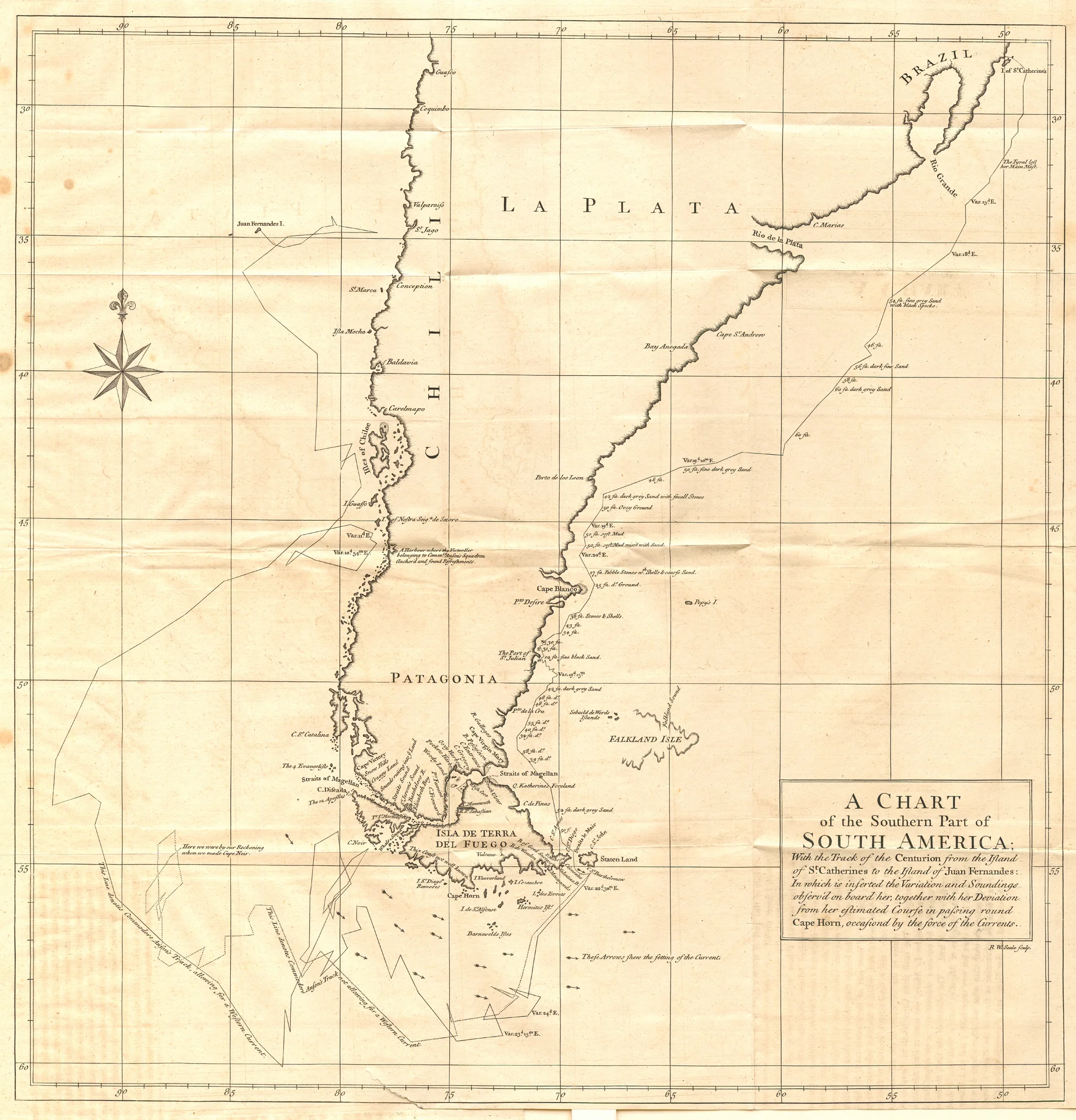
When the weather cleared, Bulkeley could observe their latitude. Approaching the Strait of Magellan, he compared headlands and islands with Narborough’s descriptions. Within the branching waterways, however, the officers disagreed about the passage ahead. Some believed they had entered a dead end, and Baynes insisted on turning back. Bulkeley maintained that their original course had been correct. More than two weeks were lost before they identified Cape Pillar again in early December and resumed their eastward passage. The navigational information helped them recognise land but did not prevent a costly disagreement aboard.
The return against the wind consumed time and provisions. The lengthened Speedwell sailed poorly to windward; her light, buoyant hull was pushed sideways. Trapped between coves, men ate rations before they were due, exchanged flour for personal valuables and roasted seal skin. Several died from exhaustion and lack of food. Better winds eventually allowed progress. Wherever they could land, the men gathered shellfish, searched for water and traded with local people. On 11 December they reached the eastern end of the Strait of Magellan, roughly a month after beginning the passage.
On the Atlantic coast at Port Desire, they found large numbers of seals and birds. Narborough had also described a well there, enabling the men to refill their water casks. They could not, however, preserve all the meat they obtained. Without salt, much of it spoiled before they reached another source of supplies. As the journey continued, the sick increasingly depended on other men gathering food for them ashore. Those men were also needed to sail, steer and repair the vessel. Surf could prevent provisions from reaching the boat even when they were plainly visible on the beach.
In a bay in January 1742, Cummins, the boatswain, a marine officer and other men swam ashore with casks and firearms to obtain meat and water. One drowned. The landing party found both, but at first could not get the supplies through the surf to the Speedwell. A brief improvement in the sea allowed some to be brought aboard. Then an onshore wind returned and the rudderhead broke. The vessel had to sail away from the dangerous shore before all the men could be taken off. Eight remained on the beach; the boat’s company sent them a cask containing equipment and a letter explaining the departure.
Further shortages of water and an encounter with Spanish fishermen followed before the Speedwell reached Rio Grande in Brazil on 28 January. Thirty people remained aboard. Portuguese officials sent meat and bread and received the sick. They also prevented an immediate continuation of the voyage in the battered vessel. The southern party had reached the Atlantic and avoided Spanish captivity. To continue to Europe, they now needed new accommodation, food and berths on other ships.
Cheap’s first attempt to go north
While the Speedwell was making her passage, the party still on Wager Island prepared its own departure. Cheap now had twenty people with him, a damaged barge and a yawl. Cummins had left with the southern party; those remaining patched the boats with what they had understood of his work. They departed in mid-December. On the first stage, so much water came aboard that they threw provisions and even the grapnel over the side. Sitting tightly together, the men turned their backs against breaking waves to reduce the water entering the boats.
A sheltered harbour gave temporary relief, but beyond it they could find no continuous passage north. An apparent channel ended at the head of a bay; a projecting cape defeated repeated attempts to round it. They had to row back. Their food was insufficient, and they ate seaweed and, for a time, shoes they had made from raw seal skin. Reaching the coast did not in itself provide a resting place: the surf had to permit a landing, there had to be somewhere safe for the boats, and food had to be within reach.
The sea then overturned the anchored yawl. William Rose drowned. The barge alone could not accommodate everyone, so four marines were left ashore with arms and other necessities. A later search found only an abandoned musket. The returning men did not discover what had happened to the four. After approximately two months, Cheap gave up the attempt. His remaining party reached the huts on Wager Island again, exhausted and with fewer means of transport than when it had set out.
Local guides and the passage to Chiloé
After their return, visitors in canoes came to the island once more. One was Martín, a Chono leader who spoke Spanish. Elliot understood enough of the language to negotiate guidance to the Spanish settlements. Martín was to receive the barge and its equipment in payment. Cheap had abandoned the search for a coastal route of his own and accepted a guide who knew the waterways and crossing places. Even so, his boat and the strength of his men remained barely adequate for the journey.
Trying to row the heavy barge up a swift river exhausted the men without gaining enough ground. Two died. Byron also describes Cheap retaining seal meat during this stage while a man beside him begged for a few mouthfuls. Loyalty to the captain did not prevent him from sharply criticising the way food was distributed. Soon afterwards, six sailors disappeared with the barge, taking Martín’s companion Emanuel with them. Cheap, Hamilton, Byron, Campbell and Elliot remained ashore without their principal means of transport.
Martín returned in his canoe. He initially feared that Emanuel had been harmed, but Elliot managed to reassure him. Emanuel himself returned a few days later. The promised barge was nevertheless gone. Byron’s small fowling-piece, other possessions and the prospect of later payment made a new arrangement possible. Continuing the journey required additional canoes and their owners. Byron and Campbell had to row for long stretches themselves. Even when exhausted, a traveller could not count on an equal share of food or a place beside the others at a fire.
The canoes could be used in ways the British boats could not. They consisted of five planks stitched together with plant fibre. Bark, soaked and worked into a sealing material, closed the joints. At a carrying place, the owners dismantled the boats; men and women carried individual planks through the woods and assembled them again beside the next stretch of water. The heavy barge could not have been moved overland in this manner. Dismantling the canoes allowed the travellers to connect inland waterways and avoid dangerous passages along the outer coast. This depended on local knowledge as well as repeated work with the boats and their loads.
There was no regular supply of food on this journey either. During particular stops, local women gave Byron fish, sea urchins, a place at the fire, boughs for a bed and a blanket. Elsewhere he remained hungry and still had to work. He observed fishing and the catching of birds at night but could not organise equivalent supplies for himself. Food and shelter had to be obtained repeatedly from the people able to provide them along the route. Elliot, who had previously hunted and helped feed the others, died during the journey in March.
Cheap, Byron and Campbell reached Chiloé in June 1742. Hamilton had separated from their transport along the way and arrived months later. On the final crossing, the three had to keep bailing a damaged canoe and once again pass through dangerous surf. Ashore, local households gave them fish, potatoes, broth, bread and warmth. The inhabitants notified the Spanish authorities. After the failed voyage in their own boats and the long canoe passage, the men had obtained food and shelter, but as members of an enemy navy they were now under Spanish supervision.
Returning to England
The Speedwell’s survivors were also struggling to arrange the next stage of their journey. The initial welcome at Rio Grande settled neither their longer-term food supply nor who would pay for a passage. Shortages and disputes delayed departure. Bulkeley and Cummins eventually travelled through Rio de Janeiro and Bahia to Lisbon. With John Young, the cooper, they arrived at Spithead on 1 January 1743. This was the homecoming date of those three men, not of all thirty who had reached Brazil. The Admiralty initially kept them aboard. Even after release, they were to receive neither wages nor further naval employment until the events surrounding the Wager had been clarified. The inquiry was to wait until either Anson or Cheap returned.
Cheap’s party had a longer wait. On Chiloé, the British were initially guarded, lodged at Castro and sent on to the governor. Later they received freedom to move about and invitations to visit. In January 1743, the four reached Valparaiso. Cheap and Hamilton were soon allowed to travel to Santiago; Byron and Campbell initially remained in a bleak prison room. A soldier responsible for feeding them used some of his own pay to support them, and visitors brought food. They did not suffer the lifelong forced labour that Bulkeley’s party had feared. Instead, their conditions of confinement changed with the decisions of Spanish officials and the assistance of individuals.
In Santiago they lived on parole in the house of the Scottish physician Patricio Gedd. They could move about and obtain new clothing. Campbell later took a separate course. Cheap, Hamilton and Byron secured passage home on the French Lys late in 1744. A leak forced the ship to return to Valparaiso; she did not sail again until March 1745. After rounding Cape Horn, they reached Brest in October. In France, too, they were initially treated as prisoners, until permission from Spain made onward travel possible. In 1746, a British warship took them from a Dutch vessel and had them landed at Dover.
Bulkeley and Cummins had published their account in 1743 to defend the southern party’s decisions and their own reputations. Byron later described the events as a man who had returned to the captain and still criticised his conduct. Thirty people had reached Brazil in the Speedwell, and four from Cheap’s remaining company eventually reached Chiloé; others had previously been left ashore or disappeared with a boat. Those two arrival figures do not provide a complete count of the wreck’s survivors. Cheap, Hamilton and Byron finally returned to England in 1746. Byron was eventually reunited with his sister, more than five years after the Wager had sailed.