

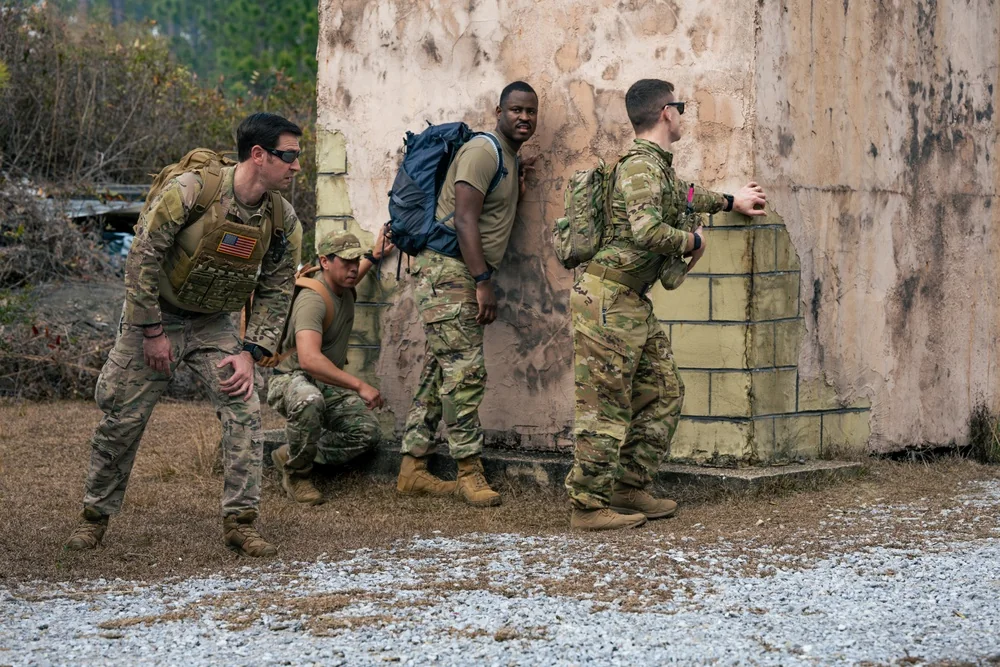
In military situational assessment, an isolated person considers what their observations mean for the next action and what they can do under present conditions. A rest halt can preserve strength; a prepared rendezvous or an available radio may enable contact with friendly forces. If people approach, a route becomes impassable or an agreed rendezvous can no longer be reached in time, the person needs to review that decision. They therefore choose a next action for a specific reason and identify changes that would make it unsuitable or impossible.
Separate observations, interpretations and unanswered questions
Establishing the situation starts with specific information: What can be seen or heard, where is it happening, and in which direction is it changing? Two people approaching a woodland edge are an observation. The suspicion that they are searching for the isolated person is an interpretation. Their affiliation, task and knowledge of the hiding place may remain unknown. Keeping these separate prevents an assumption from quietly becoming the basis for a long movement or an attempt to make contact.
Further observation is useful when it can answer an important open question: Do the people remain at the edge, continue towards the halt or obstruct the intended departure? Only what can be established from the present position without further exposure is used. Becoming visible to identify them can bring about the very discovery that was previously only suspected. Even when their affiliation remains unclear, their observed direction of movement may already weigh against a longer stay.
The person's capacity to act is assessed alongside this. Is the location known or only narrowed down? Which next point is known, and is access possible under the conditions now apparent? How far can they move with their remaining strength and supplies? Which means of navigation, sustainment and communication are actually available? A desired destination becomes an option when these prerequisites fit together. A lost aid, a blocked passage or declining mobility can remove a previously intended action from the available choices.
Narrow the options and choose the next action
The choice is often between remaining halted, moving and making a prepared contact attempt. A halt conserves strength and provides time for sustainment and observation, but extends the stay at the same location. Movement can change an unfavourable situation, uses reserves and takes the person through different observation areas. Contact requires operable means and a recipient who can actually be reached; signals may also reveal the person's position. Each option is therefore tested against the same questions: Which immediate task does it resolve, what does it require, and what new burden does it create?
Priority follows from the threatened loss of an ability to act. If people are approaching the only usable departure route, its threatened loss may weigh against a longer rest. A longer detour may help avoid detection at the immediate obstacle while requiring more time, strength and water than remain available. Continued movement and waiting are therefore assessed in terms of detection risk, time required and use of remaining reserves. An option that requires a missing device, an inaccessible point or a movement no longer possible is removed.
The choice is a manageable next action with a particular purpose: leaving a threatened halt and reaching a known accessible point from which the onward route can be assessed, for example. The conditions that would invalidate the decision are identified at the same time. A new direction of approach, blocked access or a substantial deterioration in personal condition are such signs. At the end of the action, the expected effect is compared with the actual situation; a significant change prompts that assessment sooner.
When unidentified people approach the halt
An exhausted person is resting at a concealed halt. They already know a second concealed point and the way to it. They see two people at the woodland edge but cannot yet identify their affiliation. Rest was the halt's original purpose. The person now has to decide whether that rest justifies staying longer or whether access to the halt may soon come under observation.
They distinguish what they have observed from the fear of having been discovered: The people are visible and their direction can be recognised, but a deliberate search for the isolated person has not been established. While they remain distant and cannot observe the departure route, continued observation at the halt can provide more information without spending the strength required for an immediate move. Movement is an option only if the known way and next point remain usable and the person can physically reach them. A possible contact attempt is not based merely on the hope that the people might be friendly.
If they continue towards the area from which the halt or its departure route can be observed, a longer rest loses part of its value. If the known move can still be carried out, the person may choose it as the next action before that opportunity is lost. They accept the additional effort in order to leave the threatened location. If their mobility is insufficient or the way is now within the people's observation area, that movement option must be reassessed.
The next destination and the changes that would make continuing unsuitable have now been identified. At the next point, the observed approach, the person's new situation and remaining strength are assessed again. If the people's direction changes earlier or an unknown obstruction appears, the intended onward movement is reassessed there. If the people move away, that particular approach pressure is removed; the person's condition and next necessary task still need assessment.
When the original intention no longer fits the situation
A prepared intention links a goal to particular conditions. A person may intend to reach an agreed rendezvous, allow for a particular journey and preserve enough strength and supplies until contact becomes possible. When one of these conditions changes, adjusting the pace may not be enough. The person assesses whether the rendezvous is still reachable and whether moving towards it continues to support their return.
If hostile forces now observe an access route that was previously usable, the intended route must be reassessed. A detour requires a known or sufficiently assessable route, additional time and adequate reserves. Waiting may allow further observation, but prolongs the stay and consumption of supplies at the same location. Continuing on the original route may preserve the agreed time window while taking the person into the area under observation. The timing agreement alone does not make that movement suitable. What matters is which achievable option remains under the present threat.
If an agreed time window has passed, staying at the rendezvous is reassessed too: Does the location still allow a prepared contact attempt, does it offer concealment, and are supplies sufficient for the additional wait? A previously agreed alternative can be considered if it is actually reachable and remains useful under the new conditions. Without such an alternative, the next intention must be based on the current position, known terrain and remaining reserves.
Without communications, the person may not know what friendly forces have learned or what recovery remains possible. A missing reply proves neither that no one is searching nor that the planned pickup is still about to take place. The person therefore retains useful parts of the arrangements while replacing movement that is no longer feasible or a stay that is no longer justified. At the next actual contact, they need to explain which intention changed, why and where they now are. Otherwise, friendly forces may still expect them along a route or at a location they have already abandoned.
Reassess independently and communicate changed intentions
After moving or a significant change in the situation, assessment starts with the new facts: Has the expected position been reached, is the onward route usable, are remaining strength and supplies sufficient for the intended movement, and has the observed threat changed? The next action is chosen from that information. A previously unanswered question can remain unanswered if the action is executable despite that uncertainty. If the action depends on an unresolved prerequisite, however, it is not yet among the options that can reliably be used.
Prepared guidance and personal intentions provide a starting point. In the US Army model, mission-specific isolated-personnel guidance includes actions for isolation; actual conditions on the ground may require a departure from it. An Evasion Plan of Action describes personal intentions communicated beforehand. This enables available recovery forces to anticipate movements and stays. When conditions on the ground or the person's condition alter those intentions, the expected location and actual position can diverge.
When contact has actually been established, the change is communicated specifically: current position and how confidently it is determined, personal condition, observed activity, usable means and the action now intended. Blocked access explains why a rendezvous cannot be reached; an injury may change the achievable distance and pace and create a need for additional transport. Recovery forces can compare that information with their available means, access and risks.
The appearance of U.S. Department of War (DoW) visual information does not imply or constitute DoW endorsement.