

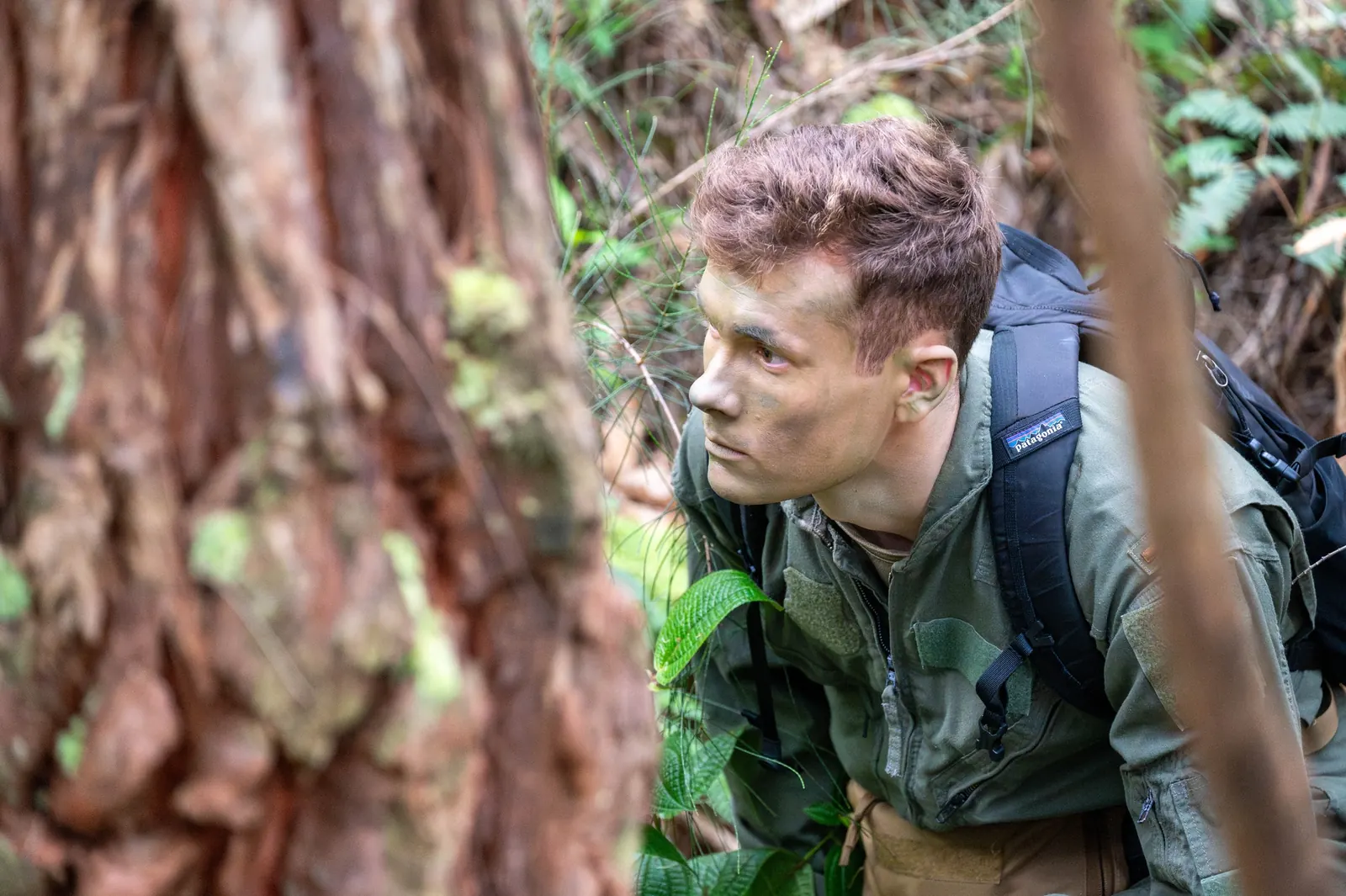
Military isolation begins when personnel become separated from their own unit or organisation and are no longer under its control. An ambush, a disabled vehicle, a forced landing or a group broken apart can force the individual to survive, evade capture and regain friendly control. The individual first assesses the immediate threat and their own condition to establish which actions remain possible. A prepared plan helps; after losing a radio, map or equipment, the next decision must still be executable.
Recognising isolation
Planned separation is part of many military tasks. A detached observer or a temporarily separated crew is therefore not isolated simply because of distance. The question is whether the connections and procedures intended for the mission still work: Can the individual reach their group at the expected location? Can the agreed link-up still take place? Has hostile action cut off the intended return? A sudden change can require individual action before the rest of the unit notices that someone is missing.
In the US Army model, Isolated Soldier Guidance establishes mission-specific criteria. These can include an unplanned landing in hostile territory, the observed separation of a vehicle from its convoy in hostile territory or the absence of agreed contact. For ground forces, planned separation needs particular consideration. Individuals compare their situation with the criteria actually briefed and implement the applicable actions. A contact interval established for one mission does not become a general threshold for every isolation event.
Immediate threat and physical limits
At the point of separation, the first question is what threatens the individual now. Visible forces, approaching vehicles or an ongoing search can make remaining exposed untenable. An initial concealed point provides room to observe and assess; it must be reachable in the individual's actual condition. A distant ideal hide offers little value if reaching it means passing through observed activity or undertaking movement beyond personal capacity. Conversely, a detailed equipment check must not keep the individual at a location where an immediate threat is increasing.
The physical assessment concerns the next possible action. Can the individual perceive clearly, get upright, place their feet securely and move the available load? Which injury requires immediate self-aid already learned, and which mainly limits distance, pace or terrain choice? Can an injured arm still secure the equipment; does a painful leg permit the necessary descent? Injury does not necessarily mean complete immobility. It can, however, make a planned route with steep sections or a long movement impossible. Distance, load and destination must then change, rather than the original movement intention continuing unchanged.
Exhaustion belongs in the same assessment. Someone stumbling at every step or struggling to interpret observations is losing both movement and decision-making capacity. A suitable halt can preserve strength for a movement that may become necessary later. Cold, wet conditions, heat and lack of water also limit how long that halt can last. Individuals use the clothing and terrain available for protection, drink available drinking water and take necessary rest where approaches remain observable and departure is possible. An individual isolated alone cannot sleep and maintain uninterrupted personal observation at the same time.
Remaining means and location clues
The equipment check asks what the remaining items can actually do. Which clothing still provides protection, how much water is accessible, what can actually be carried and which orientation aid works? Planned contacts and routes need to be reassessed if the radio has failed or the map needed for the route is still in the abandoned vehicle. Individuals first assess what they already have or can reach without additional exposure to danger. Recovering a complete kit can be less useful than preserving mobility if it requires approaching the observed danger area again.
Location assessment brings together the last position known with confidence, movement since then and recognisable terrain features or structures. A remembered valley shape, a distinctive terrain edge or a previously known road junction can narrow down the general location. The more movement since the last confirmed point remains unknown, the wider the uncertainty becomes. Without a map, a similar hill and a presumed road must not merge into a supposedly precise position. Individuals distinguish what they have recognised from what they merely suspect and consider which observation could improve the match.
Paths, smoke, sounds, vehicles and people also provide clues to use of the area and threats. Engine noise can indicate nearby movement; it establishes neither an exact distance nor the vehicle's affiliation. A road can assist location assessment while also concentrating traffic, observation and control. Individuals observe these clues from concealment and assess their significance before approaching. A possible reference point thus does not quietly become a destination approached merely because it is visible.
Movement or a concealed halt
Movement needs a specific purpose. It may leave an immediate danger area, reach a viable resting point or advance towards a prepared destination that remains accessible. Before setting out, direction, the next reachable section and physical capacity must fit together. Choosing the next concealed point is different from choosing a distant return route. Individuals who know only the next terrain section can assess that section; this does not yet provide a sound understanding of the whole journey.
Under possible hostile observation, individuals connect concealed points with deliberate movement and renewed observation. Movement makes the body easier to recognise; exposed outlines, noise and light can make it more conspicuous. At a suitable halt, terrain and activity are reassessed before the next section begins. Darkness is not a fixed instruction to move. It can reduce personal vision, the assessment of footing and recognition of reference points.
A longer concealed halt is useful when it permits observation, protection and necessary recovery of strength, and immediate movement offers insufficient benefit. The location should require little alteration, have observable approaches and alternative ways out, and avoid trapping the individual in a dead end. A hollow providing good visual concealment can become unsuitable through runoff. Human activity can increase and change the function of an initially quiet location. A falling water supply or deteriorating physical condition can also require a new decision.
Halt and movement are therefore weighed repeatedly. What has changed since the last observation? Is the next section still manageable? Which necessary supply is missing, and can it be reached with the situation recognised and the means available? A halt preserves the ability to act; it must not continue merely through indecision while protection or sustainment fails. Equally, movement without a reasoned destination consumes strength and widens the area in which both the individual and possible friendly forces may be mistaken about their whereabouts.
When the radio, map, kit and plan fail
If the prepared equipment and plans are lost, the person must work with their remaining abilities, the clothing they are wearing and what they can observe around them. The first limited task may be to leave an exposed position and reach a physically accessible point with better concealment or protection from the environment. Condition and terrain are assessed again there. If even that movement is impossible, they must use the protection within immediate reach, such as shelter from wind, shade or concealment. A distant destination is of no help if they lack the strength to reach it.
Remembered knowledge of the operational area may remain useful even when the map is lost. Individuals check it against the terrain they can see. If a still-known link-up or return point fits the recognised situation, it can continue to guide their intention; the route to it must nevertheless remain manageable. Where there is no sound location estimate and no known reachable destination, a randomly chosen direction of travel is no substitute. The initial aim is a limited improvement in protection, observation or necessary sustainment. A further section follows from the clues gained there and the strength remaining.
Someone without a radio or map, but with a recognised terrain feature and sufficient mobility, can assess a known next section. An exhausted person with no knowledge of their location must initially limit the decision to the immediate area they can observe. Both reassess after movement, rest or a change in threat. The specific tasks of concealment and movement belong to evasion.
Evasion Plan of Action: preparing for different situations
An Evasion Plan of Action records before the mission what personnel intend to do if isolated. In the US Army model, it originates with the individual or group and is passed upwards; a retained copy helps narrow down their expected actions. Different circumstances need consideration: possible initial halts, movement under hostile pressure, intentions when injured and available communications and signalling means. A single route for an uninjured person with complete equipment leaves open precisely the cases in which those conditions are lost.
Preparation includes understanding what the individual’s plan requires. Which part requires mobility, which requires a particular access route and which requires a particular device? If the mission or conditions change beforehand, preparation is revised. If the actual isolation later forces a different action, blocked access, lost means and restricted mobility are incorporated into the new decision. If contact is established, the individual reports the change so that friendly forces can adjust their search.
Identity, intention and present situation
An ISOPREP prepares identity verification. In the US system, it combines identifying features, such as photographs, with personal authentication information. The EPA instead answers what the individual is likely to do. The present situation answers where they actually are and which options remain. These serve different purposes: retained intentions may be outdated after an unplanned deviation; identity data does not establish a location. Personal authentication means are protected because an adversary obtaining the information can endanger approaching friendly forces.
Actual contact and return
An available connection is used according to prepared procedures. Individuals communicate their present situation, relevant observed threats, the condition of the group and means still available. These affect whether and how forces can reach and recover them. A conspicuous marker can simultaneously expose the individual's position. The means used are therefore governed by preparation and the observed situation.
When recovery is imminent, individuals help confirm their position and identity, secure loose equipment and follow instructions from the forces actually receiving them. Unannounced approach, rapid movement or a threatening posture make contact harder. Isolation ends upon return to friendly control, through unassisted return or actual recovery. Subsequent care and processing belong to reintegration.
The appearance of U.S. Department of War (DoW) visual information does not imply or constitute DoW endorsement.