

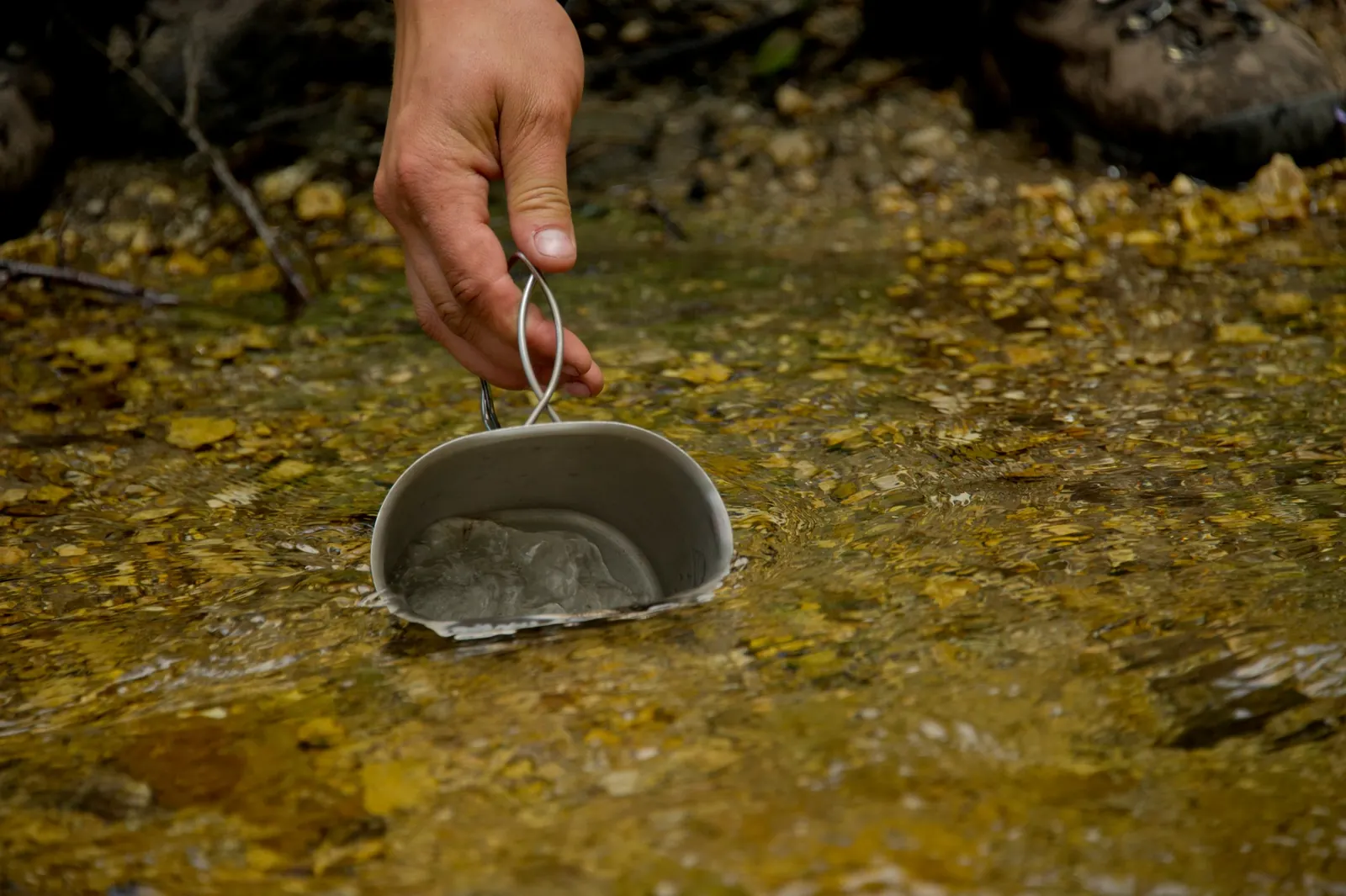
Within SERE, Survival means preserving life and physical capability during military isolation. It includes managing injuries, protection from the environment, water, usable food and rest. Its immediate purpose is to retain the ability to observe, conceal oneself, move and operate the means that remain available. A separated person often has to manage two hazards at once: the body needs care and supplies, while the movement, work or heat source needed to obtain them can reveal the location.
Check condition and address the most urgent danger
In an immediate danger area, the first concern is what could injure or kill the person in the next few moments. Gunfire, a burning vehicle or life-threatening external bleeding leave no time for a lengthy equipment check. The person uses reachable cover, avoids further injury and carries out the lifesaving self-aid that is possible. Severe bleeding may require self-aid before or during a move to cover; prolonged treatment at an exposed location would make further attack easier. The person's condition and actual ability to move determine how these requirements can be combined.
A concealed halt allows a more thorough check: look for further bleeding, assess one's breathing, check the usable function of arms and legs, and establish whether attention and orientation remain intact. A leg may seem usable while sitting still and fail under body weight. Cold hands may still hold a bottle but struggle to open its cap or a dressing packet. Such differences determine the next task: a short movement with less strain, protection from further cooling first, or care that requires both hands. After a fall or a demanding movement, the check is repeated instead of treating the initial judgement as valid for the entire remaining route.
Life-threatening blood loss takes priority over eating and collecting water. On an arm or leg, a purpose-designed tourniquet can interrupt blood flow to the injured limb. Its use requires a suitable available device and practised application skills; the critical result is that bleeding actually stops. The application time is recorded. If an external bleeding source can be compressed, the person presses available dressings directly against it and maintains that pressure. Compression reduces further blood loss; merely laying material over the site does not exert this pressure. After movement, the person checks for renewed bleeding. Loosening an applied tourniquet because of pain or to continue walking can undo haemorrhage control. When the necessary medical oversight is unavailable, a tourniquet needed for lifesaving bleeding control remains in place. The person continues to check that bleeding stays controlled.
After checking their condition, the person establishes which supplies and equipment can be used for the tasks ahead. Water counts as available when it can be drunk; food when it can be prepared with the means at hand. A poncho can block precipitation and wind, while material underneath the body can reduce contact with cold ground. Unpacking and scattering all the few useful items at once makes packing for a necessary move take longer and risks leaving equipment behind.
Cold and heat change what the person can do
Cold: limit heat loss and preserve the ability to act
An injured person can become hypothermic even in a warm climate. Protection against heat loss therefore belongs in care following an injury. Cold ground draws heat from the body resting on it; wind and precipitation add to the exposure. A protected halt, available insulation beneath the body and a covering against wind and wetness serve different purposes. A thin sheet of foil or a poncho produces no heat. For a longer rest, the person also needs the available insulation to separate the body from cold surfaces and reduce heat loss.
If dry replacements are unavailable, an additional water-resistant and wind-resistant covering over the existing layers can limit further heat loss. This avoids first exposing the whole body to the surroundings. Such protection mainly retains the heat the body can still generate. When heat production is substantially impaired, an available external heat source becomes more important. Active warming products are used as intended and separated from the skin; a burn beneath a heat pack creates another injury.
As finger dexterity declines, dressings, containers and signalling equipment become harder to handle. Gloves protect the hands but make some fine tasks more difficult. Necessary items are therefore organised and prepared at the protected halt while this work is still possible. If the person can barely grip and open their equipment, they need to interrupt or shorten a planned longer movement. Further cooling along the route may leave them unable to use those items for self-care.
Heat: reduce exertion and release body heat
Heat creates a different conflict. Muscle work, carried weight and prolonged exertion produce additional heat. High humidity makes heat loss through evaporation more difficult. Walking faster to save time can therefore cause the person to lose mobility sooner. They limit the next movement section, use a reachable shaded halt and reduce avoidable exertion. Clothing and equipment are loosened or removed there to allow heat loss while keeping the essential means within reach for a move.
Headache, dizziness, nausea or unusual weakness during heat exposure call for stopping and cooling. Available drinking water is taken in small amounts while the person is awake and can swallow safely. Confusion, markedly unsteady walking or impending collapse are particularly dangerous: the ability to provide appropriate self-care may already be failing. Continuing to walk in order to reach the intended point then increases the physical danger. Excessive drinking is also dangerous because it can disturb the balance of water and sodium; repeatedly drinking more replaces neither reduced exertion nor cooling.
Planning water supplies and collection trips
Water planning must account for losses through sweating, breathing and excretion as well as the drinking-water supply that remains. A deficit impairs physical performance and attention. Water shortage therefore also changes evasion: long detours, a demanding pace and extra work to collect materials use reserves that may be needed for the next essential movement. At a concealed halt, the person checks how much water is already drinkable, which containers are usable and what obtaining more would actually require.
Before travelling to a source, they prepare containers, closures and available treatment means. This limits the work at a potentially exposed access point. Planning covers the outward journey, work at the source, the return journey and the treatment still required. A large bottle with a leaking closure can provide less useful stock than a smaller intact one. Limited carrying capacity may require further collection trips. Each one means moving through the terrain again and coming into contact with ground and vegetation.
Water that has already been treated is kept in a clean closed container, separate from the untreated stock. Otherwise, transferring it or using contaminated containers can introduce microorganisms again. Whether it is worth remaining in the area to collect water therefore also depends on whether the person can use the available means to produce and store a drinkable supply.
Judge food by whether it can be used
Packaged rations differ chiefly in the additional resources they require. An MRE provides most of its energy without further water. A Meal, Cold Weather contains several freeze-dried components; preparing the main meals and beverages in an average menu bag requires about one litre of water in total. If water, a suitable vessel or time is unavailable, the package's full calculated energy content cannot be used. Food and drinking water therefore have to be planned together, based on which components can actually be prepared during the next stage.
Searching for more food can provide energy but prolongs time in the area being searched. The person must weigh this against delaying the next necessary movement. If existing supplies will support that stage, it may be better to eat the ration already available. If they are no longer physically able to complete it, they first need better sustenance and rest, as far as the means and location permit. Which takes priority depends on their condition and the route ahead.
Choosing a protected rest site with a way out
A rest location needs concealment, protection from the environment, observable approaches and a way out. Existing protection is used with as little alteration as possible. Each extra trip to gather material can flatten grass, disturb branches and make an approach to the halt apparent. Making the site more comfortable may therefore cost too much material and time and draw attention to the work. The article on Hide Site and Hole-up explains the selection and use of these locations in more detail.
Rest and sleep preserve strength for critical movements. A person sleeping alone, however, cannot simultaneously observe the approaches. The choice of location and preparation for departure become more significant: keep necessary items together, prepare the next movement and avoid starting lengthy preparation that cannot be interrupted when a threat appears. After resting, condition, stock and current surroundings are checked again. A previously useful location may lose its function as the weather changes or enemy activity becomes apparent.
Sustainment and onward movement: a worked example
A separated person has reached a concealed halt after a long movement. They are wet, shivering and have a painful foot. They have a poncho, some insulating material, a partly filled drinking bottle, another empty container, a suitable water-treatment item and a ready-to-eat ration. Access to water lies away from the onward route. No reliable connection with friendly forces is available from the halt.
First, the person checks injuries and what they can still do physically. Any newly discovered severe bleeding would take priority over the following supply tasks. If being wet and cold remains the main problem, they improve protection from wind and ground with the available material. They check whether the foot can bear weight and whether they can complete the next stage at all or need to limit distance and pace. Any additional shelter work is weighed against further exhaustion and conspicuous changes at the halt.
The person then uses the existing drinking water and only those ration components available without additional water or lengthy preparation. They prepare both containers and the treatment item for the water trip. They check the access point from available concealment and establish how much stock they can actually carry and treat. Apparent enemy activity at the access point can prevent collection. Initially, the alternatives are the remaining stock, reduced exertion and another reachable collection option.
If collection succeeds, the person treats the water with the suitable means available, following its handling and timing instructions. Only then is the usable supply stored in a closed container separately from untreated water. The person rests under the existing shelter and arranges the equipment for the next stage. Before departing, they check the foot, hands, any bleeding-control measures and the surroundings again. If their condition has improved and the limited stage is feasible, they can continue. If cold has made equipment even harder to use or the foot no longer bears weight, they shorten the route or stay for now to improve protection. If a hostile threat instead closes on the halt, they take the most important equipment and move into protection as far as their condition allows. At the new location, they reassess how to protect and sustain themselves.
How national training connects these tasks
Germany: field stations and an evasion phase
In a German SERE-B course delivered by Artillery Training Battalion 345, instruction is followed by practical work on shelter, fire, water and food. An overnight camp and subsequent evasion exercise combine these tasks with movement under hostile search pressure. Participants need to prepare a shelter, fire or meal within the time available and remain able to continue evading. Spending too long on camp improvements may prevent departure in time. Later pickup by friendly forces is also part of this training.
United States: procure supplies or move towards the next objective
A practical US Army SERE-C training problem combines restricted food and sleep with a concrete decision: spend time obtaining food or continue towards the planned recovery area. Opposing exercise forces search for the participants at the same time. Food procurement thus becomes a decision about sustenance, time in the area and the risk of capture. The US model of tactical casualty care adds self-aid under immediate threat and more thorough checks after moving to cover. The person has to combine bleeding control and protection of the injured body with the movement that remains possible.
United Kingdom: land survival for aircrew
A British land-survival programme for aircrew from the three Services recreates the situation after losing an aircraft over hostile territory. Participants practise basic first aid, protection, obtaining food, water treatment and storage with little equipment. They must account for injury, fatigue, cold, wetness and hunger. Collected water needs to be stored so that it remains usable during the rest of the stay and further movement. Maritime training with a life raft separately addresses the specific situation after ditching.
France: immediate reactions, personal means and climate
The French SERE framework connects Survival with protection, location, water and food. At foundation level, it also addresses physical limitations and the effects of time. Practical levels B and C add immediate reactions to isolation, use of personal equipment and casualty care adapted to the environment and threat. The Centre de formation à la survie et au sauvetage trains aircrew from different Services and offers separate training for cold, desert and equatorial conditions. For the person, these environments chiefly change how quickly protection and water stocks need to be established and how much work remains physically sustainable.
Preserve the body for evasion and return
Evasion determines how a person avoids capture; Survival preserves the physical basis for doing so. A weakened person needs longer to cover the same route, and an injured hand may no longer operate the available equipment. Sustenance therefore also affects which movements and signalling actions remain possible. If an actual connection or pickup opportunity arises, location, condition and available means have to fit the agreed recovery arrangements. Until then, water, protection and rest are needed for the person's own next action.
The appearance of U.S. Department of War (DoW) visual information does not imply or constitute DoW endorsement.