

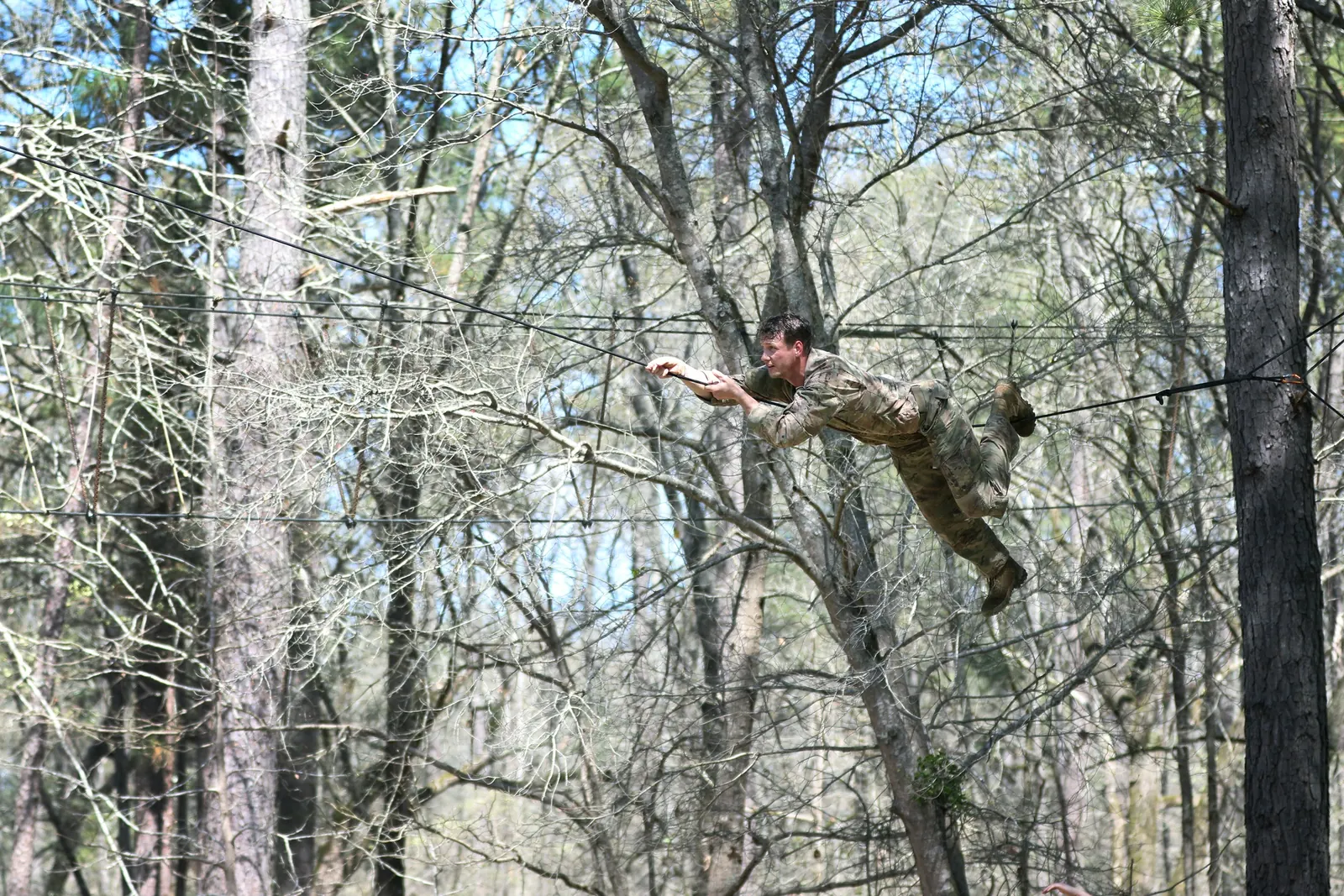
Stress, sleep loss and physical exhaustion impair different abilities. During evasion, a person's legs may still carry them while new situational information is taken in incompletely. Following stressful captivity, a face may feel very familiar yet be identified incorrectly. The relevant question is which function the next action requires: sustained observation, retaining a cue, assessing a change or carrying out a movement.
Threat pressure, sleep loss and physical effort
Military isolation often combines several burdens. The risk of detection demands observation and restraint. Uncertainty about the next approach, possible searching forces or recovery by friendly forces occupies attention. At the same time, travel, cold, heat, hunger and lack of rest may restrict physical capacity. Captivity adds control by captors and a daily routine determined by them.
Assessment therefore separates three questions: what can the person still do physically, how reliably are they taking in new information, and what interruption does the threat allow? A necessary change of position may still be required despite exhaustion. Conversely, physically possible movement may be based on an incomplete or outdated assessment.
Acute activation and breathing control
A sudden sound of searching, the approach of a captor or an unexpected movement may trigger a bodily alarm response. The sympathetic nervous system, the activating part of the involuntary nervous system, increases heart rate and breathing rate among other responses. This reaction may arise from an actual danger or from a situation perceived as dangerous. The next action therefore requires two pieces of information to be kept separate: the person's bodily activation and the external cue that makes movement or remaining in place necessary.
Breathing is the part of this response the person can influence directly. If immediate movement is not required, they take several slow, even breaths; about five to seven seconds for each phase provides a clear rhythm. Perfect counting is not the point. The purpose is to interrupt rapid breathing and return attention to the next task. Prior practice prevents the method itself from becoming something new to learn under pressure.
During a concealed halt, this control can accompany a specific task: observing an approach from the present position or mentally going through the preparation of a remaining signalling device. The person controls their breathing rhythm while keeping their attention on that specific task. If immediate evasion is required, or exertion creates a need for rapid airflow, no extra pause is forced for the slow counting pattern. A fast pulse after a sprint may partly reflect the exertion; the movement decision depends on the observed threat and the action still possible.
Alertness is not a uniform state
Sleep loss does more than slow performance consistently. Delayed responses and lapses can occur between correct responses. That variability makes assessment difficult: several tasks succeed, then a new cue is missed. Operating an item of equipment or completing a section of the route does not establish the reliability of the next prolonged observation task.
Sustained attention is often called vigilance. It keeps a person receptive to relevant changes over a period of time. A concealed stay overlooking an approach requires this function even when the body barely moves. A monotonous view often lacks the changes that temporarily help maintain alertness during movement. Severe sleepiness can eventually lead to brief involuntary sleep episodes. Attentional lapses appear as delayed or absent responses; a sleep episode interrupts wakefulness itself.
Self-assessment may lag behind the actual impairment. Basic actions continue to work while concentration, judgement and error monitoring deteriorate. The person may become accustomed to this reduced state and experience it as adequate. Specific difficulties matter in practical assessment: repeatedly losing track of an observation task, overlooking changes, an interrupted train of thought or mistakes in a previously mastered sequence. A planned action requiring the failing function must then be changed. Someone repeatedly losing track of movement at an approach cannot base a subsequent crossing on an assumption of uninterrupted observation.
Sleep duration, timing and interruptions jointly affect subsequent alertness. Previous sleep, the length of continued wakefulness and individual sensitivity also contribute. Circadian rhythms may temporarily support alertness or increase sleepiness. A person may therefore feel more awake during evasion even though they have had no additional sleep. That second wind needs to be considered alongside the lapses actually occurring and the sleep previously obtained when planning the next actions.
Acquiring and processing information under strain
Errors in a decision can arise at different points. A new cue may never be taken in fully, may be lost moments later, or may be remembered without being incorporated into the plan already under way. Under sleep loss, older information can remain clear while the latest change is missing. When passing on a short message or a sequence of observed movement, the person therefore separates what was received with confidence from what remained unclear.
Changing from a practised response to a new one is particularly vulnerable to error. If a familiar signal now requires a different action, the old association may still trigger even after the person has been corrected. Before moving or attempting contact, they connect the changed rule to the concrete action again: which signal applies now, and what follows when it appears? If the old response still recurs, the person needs a simpler task, checking by someone else or, when the situation permits, sleep.
Recognising people under severe stress
Severe stress during captivity may impair later recognition of a face seen at close range for an extended period. This concerns more than fleeting encounters. A person observed at length can later be confused with someone else or identified incorrectly. A strong feeling of familiarity may accompany that mistaken identification.
Three types of information are kept separate when evaluating an encounter. The first is the current observation, such as a visible action or identifiable feature. The second is the remembered identification of a previously seen person. The third is the confidence with which that identification is felt. In a description to a fellow captive or after recovery, the observation is therefore reported as an observation: an action, a feature or the place of the encounter. The assumption that this was the same person as before remains a remembered identification. This keeps usable observations from being replaced by a potentially mistaken identity.
Breaking a demanding evasion situation into actions
Following separation from friendly forces, the sequence begins with actually reachable concealment and observation of the surroundings. Concealed halts are used during movement where the location permits them. The halt interrupts movement so new cues can be acquired before the next section. Stopping in an open area would instead keep the person in a possible observer's view for longer. Reaching the next available concealment may therefore be the first manageable task.
Looking, listening and smelling are directed at specific situational information. Visible approaches, human movement, vehicles, tracks and smoke may indicate use of an area. Sounds can announce movement before its cause becomes visible. Unusual smells may add information about vehicles, fires or people. Observation connects these impressions to the terrain and the situation previously known.
The actual inventory is then established: water, food, equipment, available signalling means and the person's ability to walk, carry and perform necessary work. A lost signalling device, for example, changes the prepared means of making contact. An insufficient water supply changes how long a planned stay can be sustained with the remaining stock. That inventory change is incorporated into the plan before continuing.
The next step is to plan a manageable task. This may initially be observing a particular approach, checking the remaining water supply or preparing a signalling item actually carried. Task and purpose belong together: an approach is observed to assess the conditions for the next movement; stock is checked to shape the further stay or route. The person addresses a specific decision rather than trying to solve the entire return at once.
An example connects these steps: an exhausted person intends to cross a previously quiet road and hears vehicles in that area. They initially suspend the approach and observe the direction and progress of movement from their existing concealment. If the sound has no visible source, clarifying that cue is the next task; the noise alone does not establish an enemy search party. If a vehicle stops and people appear at the intended crossing, the premise of the planned crossing has changed. The person abandons that approach and observes the area's new use while their position remains concealed. If people approach their concealment, the next reachable concealment becomes the immediate movement objective. The decision thus runs from a new observation to a limited action of their own, rather than continuing the earlier decision through a changed situation.
An awake halt, a task break and actual sleep
Spending a long time on the same task also causes fatigue. This is particularly apparent in prolonged observation and other activities requiring sustained mental effort. A break reduces fatigue caused by that particular task. Recovering from sleep loss, however, requires actual sleep. Switching while awake from observation to another necessary activity may therefore ease the work sequence while marked sleepiness remains.
A person acting alone faces an immediate conflict: their own observation ends during sleep. With severe sleepiness, however, an intention to remain awake can also give way to involuntary sleep episodes. A position whose security depends entirely on uninterrupted observation then loses an essential premise. If new movements are repeatedly missed, a prolonged crossing dependent on that observation is initially postponed. Before continuing, a concealed rest halt is assessed: concealment of the body, avoiding a conspicuous location at a used approach, and a remaining way to leave the site. The sleep halt is thus prepared before the person falls asleep involuntarily at an exposed observation point.
Searching forces approaching immediately may instead compel movement. The first choice is then the short movement objective still achievable; further observation and rest follow when a suitable stay becomes possible. Choosing a concealed halt reduces visual exposure but provides no relief observer. Repeated disturbances and necessary renewed movement shorten the sleep actually obtained. Subsequent planning therefore considers when and how long the person really slept, together with task errors still occurring afterwards.
Load, pace and duration under search pressure
Physical fatigue calls for assessment of work still possible. During evasion, this includes walking, carrying, lifting and other necessary actions. Load, pace and duration are separate variables: reducing a carried burden has a different effect from slowing the pace; an interruption after a period of work changes the length of continuous effort. The way a necessary task is performed also affects the effort required.
If a person increasingly loses control of their next steps under load on a prolonged ascent, the originally planned uninterrupted section is shortened. Where a concealed halt lies ahead, that point is reached first and the effort interrupted. Pace and a manageable load for the next section are adjusted to movement still under control. If an immediate approach by others compels a brief escape movement, the reachable movement objective comes first; this does not automatically become a long further stage. The adjustment therefore follows an observed impairment and a specific next section.
The threat may make these adjustments difficult. A necessary change of position may demand exertion despite fatigue. Remaining longer may instead increase exposure. Waiting until physical performance collapses before planning rest leaves fewer options for allocating the effort still available. Where interruption is possible, it is considered alongside the critical actions still needed.
Obtaining supplies introduces another conflict. Extra food may cost time and effort to acquire while hostile searching forces continue their activity. Continued movement consumes strength and may delay supplies or a possible rest halt. Remaining stock, the actual threat and the movement task matter. A need for food alone therefore does not decide whether to search for it at the current position.
Scope for action in captivity
In captivity, control of wakefulness, rest, supplies and activity differs from control during self-directed evasion. Freely planning sleep or obtaining extra supplies requires opportunities captors may restrict. Practical action is therefore directed at options actually remaining.
If communication with a fellow captive is possible, the next short message can be prepared: what has actually been observed since the last contact, what does the other person need to know now, and which question remains open? Those few points are put in the order in which the familiar method will transmit them. If the exchange is interrupted, it should remain clear which part has not yet been sent.
This preparation uses a small remaining scope for action. A permitted rest period has a different purpose and is used for sleep. Filling an already limited sleep opportunity with additional self-imposed tasks worsens the burden during the next enforced period of wakefulness.
Attention and decisions after recovery sleep
Recovery sleep can markedly improve attention and short-term retention. It does not automatically make the plan formed before sleep suitable again. On waking, the person first checks location, time, physical condition and activity apparent since the last reliable observation. Only then do they continue a prepared movement. In the vehicle example, the observed use of the crossing remains decisive even when the person feels more alert again.
The appearance of U.S. Department of War (DoW) visual information does not imply or constitute DoW endorsement.