

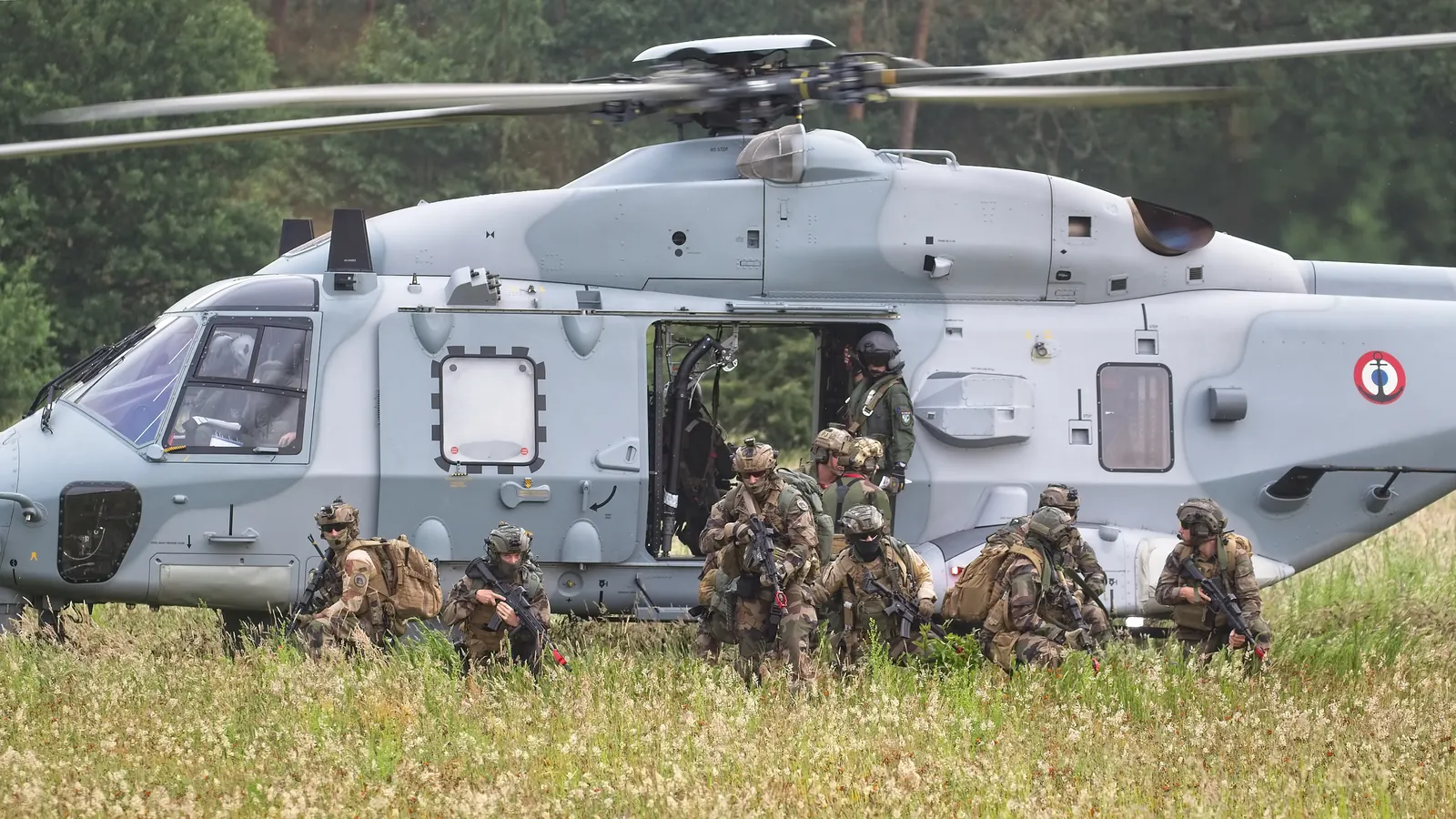
APROC stands for Air Centric Personnel Recovery Operatives Course. In this multinational course run by the European Personnel Recovery Centre, aircrew and ground forces jointly plan and fly missions to recover isolated personnel. Recovery helicopters, escort aircraft, reconnaissance and coordination elements must operate as an integrated force. A practical task might involve locating a downed aircrew in hostile terrain, checking their identity, protecting them and recovering them by helicopter.
Who takes part and which roles they practise
The course brings together several groups with different responsibilities. Aircrew with limited personnel recovery experience practise planning and conducting missions involving multiple aircraft of different types and nations. Experienced pilots take the role of Rescue Mission Commander, RMC: they lead mission planning, brief the task force and commander, and direct execution. Extraction Force leaders participate in the same planning process so that ground operations are considered from the outset.
Additional training opportunities concern airborne coordination and command at the recovery scene. Airborne early warning crews can perform Airborne Mission Coordinator duties; Rescue Escort crews practise acting as On-scene Commander. Some course elements therefore run in parallel for different roles, including advanced instruction for prospective mission commanders. Presentations, handouts and orders are in English.
How the recovery force works together
The air and ground elements form a Personnel Recovery Task Force, PRTF. APROC focuses on helicopter pickup. Escorts can include both rotary-wing and fixed-wing aircraft. The composition is tailored to the exercise mission.
| Element | Contribution to the mission |
|---|---|
| RMC | Leads the planning and execution of the combined recovery mission. |
| Recovery Vehicle | Takes the isolated personnel aboard. Recovery helicopters primarily perform this function in APROC. |
| Extraction Force | Makes contact on the ground, checks identity, protects and cares for personnel, and brings them to the pickup. |
| Rescue Escort | Accompanies and protects the recovery force. This element may also provide the On-scene Commander. |
| Coordination and reconnaissance elements | Support situational awareness and communications. An airborne relay can link isolated personnel, helicopters and the operations centre. |
The Extraction Force connects the airborne mission with events on the ground. Its leaders must agree with the aircrew how the team will be employed and how it will bring the isolated personnel to the pickup. A reconnaissance aircraft can also act as a radio relay linking the ground, helicopters and operations centre.
From the situation to a shared mission plan
The initial instruction covers the personnel recovery concept and role-specific preparation for the exercise missions. Aircrew and ground forces then plan together. Their plan must connect movement to the objective area, protection of the forces, pickup and return. A workable solution therefore also depends on what the Extraction Force must do after insertion and how the personnel will reach the recovery helicopter.
The 4T framework used in APROC comprises Task, Target, Threats and Tactics. The RMC integrates the participating forces' contributions into a shared mission plan and explains the planned mission during the briefing. If the situation changes during execution, the participating elements must adjust their actions together.
Mission Mentors and Monitors, or MIMO, accompany the planning process. They support the different roles and ensure that safety considerations enter the preparations. Specialist staff elements can provide additional support: a Joint Operational Planning Group has been incorporated as a shared planning cell, while a Legal Advisor provided legal advice during planning and execution in another course iteration.
What Extraction Forces practise
The ground forces receive their own academic and practical instruction. This covers cooperation with aircraft, insertion into the operating area, contact with isolated personnel and their recovery. Insertion practice can include fast roping, descending a rope from a helicopter.
At the recovery scene, the force must establish whom it has encountered. An exercise can include other people alongside those being sought. During authentication, the force checks whether these are the people it is seeking. German training examples include comparing known identifying information and handling unknown persons separately. At the same time, the team protects the personnel and prepares their movement to the aircraft.
Casualties alter the sequence. Simulated wounds allow the force to practise assessing a person's condition, providing first aid or stabilisation, and moving them to the helicopter. Medical training personnel and realistic casualty simulation support these scenarios. As well as finding and identifying the right person, the force must manage the care and movement of someone who may be unable to reach the pickup unaided.
How a practical recovery mission unfolds
A typical scenario involves a downed aircrew in hostile terrain. Following joint preparation, the force flies into the exercise area. Opposing forces and simulated ground-based air defence represent the threat. Reconnaissance, communications and protection support the recovery helicopters' approach. An airborne relay, where employed, can maintain contact between the isolated personnel, helicopters and operations centre.
On the ground, the Extraction Force disembarks, secures the pickup area and makes contact with the personnel. The team carries out the necessary identity checks and care, then brings them to the helicopter. After embarkation, the escort protects the onward recovery. Threats, casualties and the assets involved affect the order of individual actions.
Missions become progressively more complex. The fictional setting may change between flying days. Those to be recovered can include specially prepared military personnel, other military personnel and civilians. The general APROC course design uses daytime missions. After flights, participants discuss the plan and what happened, allowing problems in communications, coordination or pickup to inform the next mission.
International cooperation in practice
The multinational format brings together different aircraft and military specialisations. German contributions illustrate cooperation between CH-53 crews and combat recovery specialists, specialised army personnel and specifically prepared mechanised infantry acting as Extraction Forces. Italian contributions combine aircrew with SERE instructors, air-ground coordination specialists and technical support. Spain provides an operating environment around Albacete for joint air and ground missions.
The practical value of this cooperation lies in the handovers between forces: an aircrew must be able to plan with a ground element that may come from another national system. Escorts, recovery helicopters and communications elements need a shared understanding of the task and their responsibilities. English-language material and jointly practised procedures support this cooperation without requiring participating armed forces to use identical aircraft or national organisational structures.
APROC, SERE and the return after pickup
SERE prepares the person at risk for survival, evasion, captivity and contributing to their own recovery. APROC primarily trains the forces that plan and execute an airborne recovery mission. The two come together when contact is made: the isolated person's actions, authentication, the Extraction Force's work and pickup must fit together.
Separate reintegration and debriefing training associated with APROC can involve SERE instructors, psychologists, leaders and intelligence personnel. These elements concern support and debriefing after recovery and are distinct from flying mission training.