

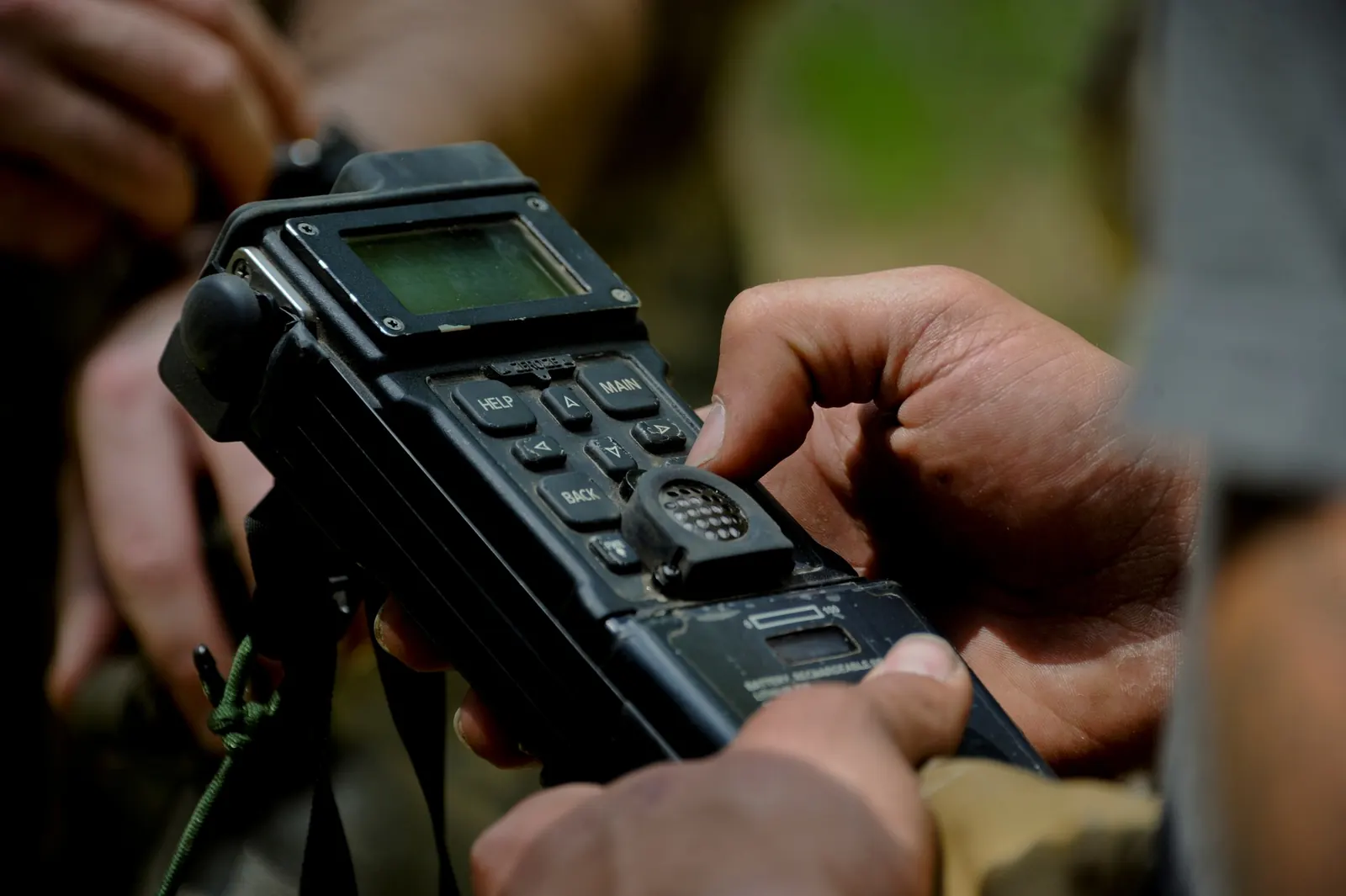
SERE prepares military personnel to remain physically capable after separation from friendly forces, avoid capture, resist exploitation in captivity and return to friendly control. The person must work with what they still have after a crash, an ambush or loss of contact with their unit. When seeking shelter or water, moving or hiding, they must consider their remaining strength and the risk of detection. Unintentionally disclosing information can also make their situation worse.
What the acronym means
In the United States, SERE stands for Survival, Evasion, Resistance and Escape: staying alive, avoiding capture, resisting exploitation and escaping. NATO and the Bundeswehr also use Extraction for the final E. The British wording is Survive, Evade, Resist, Extract. Escape means getting out of captivity; extraction means returning to the control of one's own or other friendly forces. A person who has escaped may still have to evade through hostile territory.
The four subjects interact. Water and protection from the elements remain necessary during evasion; hunger, injury and cold continue to affect a captive. Capture primarily changes the person's freedom of action: the detaining side now largely controls location, movement, supplies and communication. After escape, orientation, concealment and procurement may become necessary again. During recovery, the person who was previously hiding must deliberately reveal their presence while allowing the recovery force to establish identity and understand the situation.
Military isolation
Military isolation means separation from one's unit or organization with loss of positive or procedural control. It can affect a separated soldier or an aircraft crew on the ground; civilian personnel involved in an operation can also become isolated. Following a confused incident, the remaining forces may not yet know who is missing. The isolated person must assess the immediate situation: what threatens the present location, what is known about their position, who is injured and what equipment was carried or retained?
An immediate hostile threat may force the person to leave. A longer movement needs a reachable destination or, initially, a useful intermediate objective. Injury, terrain, time of day, water reserves and observed hostile activity determine what is within reach. An approximate position may be enough to move away from immediate danger. Before a long march, the person needs to establish their location more precisely so that they can plan a direction and the next stage towards the chosen objective. Continuing without an objective consumes supplies and strength without knowing whether the route brings them closer to returning.
Survival: preserving physical capability
Survival within SERE requires the person to judge both how an action helps them and what dangers it creates. A shelter may protect against wind and rain, but approaching it, gathering material and repeated movement may draw attention to its location. For a short halt, the person therefore first checks whether existing terrain offers sufficient protection. They also need a view of possible approaches and a way to leave. A sheltered depression with only one exit may make a poor resting place; a dry drainage channel may carry water after rain.
Clothing, weather protection and ground insulation perform different functions. Clothing holds an insulating layer of air close to the body; a shelter limits exposure to wind and water; material beneath the body reduces heat transfer to cold ground. A person who builds only a roof and then lies directly on wet or cold ground continues to lose heat through contact with it. Movement and rest also require different adjustments: heavy sweating during a strenuous stage can impair insulation during the subsequent halt. In a hot environment, solar exposure, effort and water loss must be considered together when choosing where to halt and when to move.
Water planning begins with the remaining supply, a usable container and available treatment methods. An accessible water source supports onward travel only if the person can collect the water, treat it where needed and carry it. The detour costs time and strength and may lead to a watched or frequently visited location. Before the next stage, the person needs to check whether the carried supply will last, water must be collected first or a different intermediate objective is needed. The benefit of obtaining food is weighed against the effort of searching, time spent in the area and exposure to detection. Carried rations postpone the need to search for more food.
A fire can provide warmth, heat water or cook food. Smoke, light, smell and gathering fuel can also reveal the person's presence. They must weigh how urgently they need the fire for warmth, water treatment or cooking against the risk of detection at that location. Existing clothing and a suitable sheltered halt may reduce the need for additional warmth.
Injury, thirst, hunger, fear and fatigue can make decisions harder. Effects can include forgotten steps, indecision and careless equipment handling. It then helps to concentrate on manageable tasks and check the result: confirm position, determine the next stage, check supplies and equipment, then act. Within a group, observation, supply and preparation can be divided according to what each member can still do. An injured member changes the group's pace and route choice; an exhausted observer may endanger a halt even when its location was well chosen.
Evasion: avoiding detection and capture
During evasion, movement and concealment serve the intended return. The objective may be a friendly area, an agreed recovery area or initially a location from which the next stage can be planned. The pre-mission Evasion Plan of Action, or EPA, sets out such intentions in case of isolation. Once isolated, the person must check whether the plan is still feasible: can they travel in the intended direction, is the route under observation, and will their mobility and supplies allow them to complete it? A road may shorten the distance while increasing the likelihood of an encounter.
Movement proceeds in manageable sections. From a concealed halt, the next section is observed: people, vehicles, sounds, smoke and changes in the terrain provide indications of activity. The person then decides whether to move along that section, choose another route or wait. This check is repeated because an earlier observation represents only the situation at that time. A vehicle, new voices or an evident search may turn a useful halt into a location that must be left.
The person reduces the indications they create themselves. Loose equipment may rattle, reflective surfaces may stand out and a body on a skyline may contrast with its background. Equipment problems are addressed before movement; existing concealment and concealed observation are used in the terrain. Unnecessary damage to vegetation, abandoned objects and repeated use of the same approach may reveal a stay or a travelled route. Camouflage effort must fit the surroundings and required movement: it must not obstruct vision, equipment operation or a prompt departure.
Darkness and poor weather can hinder visual observation, but also make it harder for the person to navigate and see obstacles. They choose timing and pace according to the observed threat and how well they can see. A longer concealed halt may preserve strength for the next stage; repeated trips to obtain supplies or the use of signals may expose that same location. When to observe, replenish supplies, rest or move therefore also depends on what is needed for the next stage of the return.
Resistance: resisting exploitation by an adversary
Resistance prepares personnel to deal with a detaining party that seeks to use their information, statements or conduct for its own purposes. Questioning may target military knowledge, other unit members or prepared recovery procedures. Recorded or written statements may also be used for propaganda. Information protection therefore begins before capture: carried documents, marked routes and details of intended recovery areas may reveal information that the person later tries to withhold during questioning.
Preparation distinguishes prisoner-of-war captivity, government detention in other contexts and hostage-taking. POW captivity belongs to the framework of international armed conflicts; protected categories include armed forces members and certain authorized civilians accompanying them. Government detention can occur outside that framework. In hostage-taking, detention and threats against the person seek to compel a third party to act or refrain from acting. The captive must therefore consider which information has military value and how their person or statements may be used to pressure others. Preparation connects this context to the person's national and status-specific conduct requirements.
The US Code of Conduct provides US military personnel with a specific framework for POW captivity. The prescribed identity information when questioned consists of name, rank, service number and date of birth; further questions are to be evaded to the extent of the person's ability. Oral and written statements must not be disloyal to the country and its allies or harmful to their cause. Responsibility towards fellow prisoners includes protecting them from harmful information and actions and supporting lawful leadership within the prisoner group. US training connects this national framework to anticipated captivity situations.
During questioning, the person must distinguish a requested identity detail from information that would expose other people, operations or a recovery effort. They must also consider how their actions affect fellow prisoners. They still need water, food and protection, but may have little control over these or their freedom of movement. In practical resistance training, participants use controlled captivity scenarios to practise protecting information and taking responsibility for one another under these restrictions.
Escape, extraction and personnel recovery
Escape means getting out of captivity. The US Code of Conduct calls for efforts to escape and assistance to others in escaping. The situation afterwards may remain hostile: orientation, equipment and supplies may be lacking, while injury and exhaustion restrict movement. After escape, the next attainable location, personal condition and threat must therefore be assessed again. Return from isolation may involve one's own movement or recovery forces that are actually available.
Personnel recovery involves cooperation between the isolated person, recovery forces, commanders and staffs. The person prepares with their operational equipment, applicable recovery instructions and, where required, personal preparation documents. The ISOPREP supports identification and authentication; the EPA describes intended actions during evasion. These documents help forces establish whom they are looking for and the route the person is likely to take. Before the mission, the person reviews the associated instructions and their own documents and protects sensitive information about identity verification and recovery.
If a suitable communication device is available and contact with a receiving element is possible, the person reports information that helps recovery forces locate them and plan the pickup. This includes position and how it was determined, number of people, condition and mobility, observed threats and characteristics of a possible recovery site. A location alone explains neither an injury-related access requirement nor an obstruction at the pickup point. While contact remains available, the person also reports changes in their situation. Until a possible recovery, they must continue to provide their own protection and supplies and remain concealed.
Signalling and authentication serve different functions. A signal attracts attention to the person or helps establish their precise location; authentication checks whether the contact is the person being sought. That check also protects forces that become particularly exposed during pickup. Signalling devices are prepared and used according to the applicable instructions or during actual contact with recovery forces. Light or smoke may also reveal the location to other observers. Without radio, a visual signal can reach a suitable recipient nearby if there is line of sight at the chosen moment.
Loose equipment is packed and secured against loss for pickup. The person prepares the required signal, remains concealed until recovery is imminent where possible and follows the instructions of the actual recovery force. Contact with a vehicle requires a recognizable, non-threatening posture, secured weapons and avoidance of sudden movements. Approach is made on instruction; aircraft add concrete hazards from rotors, propellers and loose objects. Reintegration, including care and an organized return, begins once the person is actually back under friendly control.
How training brings the tasks together
At the start of SERE training, participants learn what isolation situations they may face and which tasks they will need to carry out themselves. In programmes with practical components, they then practise at stations covering personal equipment, protection and supplies, navigation, use of terrain, signalling and communication. During a sustained field exercise, they apply these skills both simultaneously and in sequence. A newly chosen resting place changes the supply route; injury changes the distance within reach; a hostile search changes the timing and direction of movement.
During captivity training, the person can no longer choose their location freely. Under another party's control, they must attend to physical needs, protect information and take responsibility for others. Advanced practical training may combine a field phase, controlled captivity and recovery in one exercise. National course models place different emphasis on these elements. Despite hunger, fatigue and uncertainty, participants must still be able to observe, navigate, operate equipment, limit the information they disclose and determine the next necessary step.
Preparation for a specific role adds the operating area, equipment and applicable procedures. A participant may receive a different signalling device for the mission from the one used during training; a recovery plan may specify different areas or times. Before deployment, the devices carried, the applicable communication and recovery instructions and the intended evasion routes are checked for compatibility. The person and the recovery forces need to be prepared to use the same procedures for contact, identification and pickup.
SERE Levels A, B and C
Within the NATO framework, the training level depends on the risk of isolation and exploitation and the consequences of exploitation. Unit, role, mission profile, knowledge and responsibilities influence this categorization. An aircraft crew may end up far from friendly forces after being shot down; a captive's knowledge may be particularly valuable to the adversary. The extent and depth of academic and practical preparation therefore vary by level.
| Level and risk profile | Training content | Individual task |
|---|---|---|
| Level A · low risk | Academic foundations; basic practical survival training may be added in a controlled environment. | Understand isolation hazards, personal equipment, conduct after capture and one's own role in recovery. |
| Level B · medium risk | Academic preparation, basic practical survival and evasion training, and classroom resistance training. | Provide protection and supplies in practice, evade in the field and use personal equipment for contact and pickup. |
| Level C · high risk | Academic preparation and extensive practical survival, evasion and resistance training in a controlled, realistic environment. | Manage a sustained isolation situation, including captivity and recovery, with the means available. |
National programmes implement this framework differently. The Bundeswehr describes Level A as academic training. The US Air Force's Evasion and Conduct After Capture course, ECAC, is designated Level B and includes a practical hostage resistance scenario alongside practical evasion. Actual training content consequently depends on the national implementation, target population and specific programme; the letter alone does not fully describe the captivity component.
National tasks and areas of emphasis
Germany
The German use of extraction emphasizes active participation in recovery. At Level B, survival and evasion are taught alongside the EPA, ISOPREP and conduct during pickup. The person must plan a viable evasion route and be able to move from concealment to contact using the prescribed procedure. In the practical field component, they sustain themselves with limited equipment and reach a recovery location.
Level C develops survival and evasion further and addresses appropriate conduct in POW captivity. Resistance to Interrogation, RtoI, is an additional component particularly for special forces and aircraft crews; when included, a captivity and questioning phase may follow evasion. The person first practises avoiding capture, then protecting information and resisting exploitation under another party's control. Which additional components the German Level C programme includes depends on its intended participants.
United States
US training combines SERE with the national Code of Conduct and preparation for different operational roles. For aircraft crews at risk, subjects include actions after ejection or landing, water survival, life rafts, signalling and recovery devices. ECAC prepares personnel for evasion and conduct in wartime, peacetime and hostage situations: academic classes and role-play are combined with a practical evasion exercise and a concluding hostage resistance component. The anticipated form of captivity helps determine which attempts at exploitation personnel prepare for and practise responding to.
A US Army Level C programme is directed at military personnel and eligible government civilians and contractors identified as being at high risk. Additional specialized preparation is available for people whose missions, roles or operating environments may make them particularly valuable to an adversary and who need content beyond standard programmes. SERE specialist or instructor training and PR education for command and staff have other purposes: they prepare personnel to teach SERE or plan and coordinate a recovery. Individual SERE training focuses on the participant's own conduct during isolation.
United Kingdom
In the British system, the operational commander is responsible for operational isolation risk. Level B is delivered at unit level; the Defence SERE Training Organisation is responsible for Level C. Depending on operational need, personnel at risk receive practical preparation within the unit or attend centralized advanced training. The wording Survive, Evade, Resist, Extract connects survival and evasion with captivity preparation and return.
British training encompasses maritime survival for aircraft crews, escape and evasion, resistance or Conduct After Capture, and jungle, desert and cold-weather training. These are covered in different programmes. Forces designated for recovery are equipped for their primary role; their suitability for a particular pickup is assessed against the environment and threat. By reporting their current location, condition and local threats, the isolated person helps establish which available forces can recover them under those conditions.
France
France uses Alpha, Bravo and Charlie for the three risk-related training levels. French Air and Space Force aircrew receive the highest level; shared preparation also covers naval and Army aircrew. Within the French competence model, Bravo covers individual navigation, signalling and communication, and participation in identification and authentication. Charlie adds advanced practical survival, evasion, resistance and recovery tasks, including use of operational equipment and exercises with an opposing force.
In the French model, the services organize training and maintain the skills acquired. Before deployment, personnel also prepare to use the procedures, devices and recovery instructions that apply in the theatre. This includes checking whether the devices used in training match the communication equipment issued for the mission and whether the intended evasion route fits the recovery methods available there. Separate cold-weather, desert and equatorial programmes address the respective environmental conditions. Captivity preparation covers government and non-government detention and the physical and psychological aspects of survival under another party's control.
Relationship with Combat Survival
Combat Survival addresses survival under military threat. The person must organize protection, supplies and movement to remain physically capable while accounting for the risk of capture. Collecting water may require leaving a concealed location. A fire for warmth may reveal their presence; an easier route may pass closer to hostile forces. Each action therefore needs to be judged by how it affects further evasion and return.
SERE covers risk-related training before possible isolation and the skills needed to cope with it: survival and evasion, conduct after capture, escape or extraction, and cooperation within personnel recovery. Training also prepares personnel for captivity outside an ongoing battle. Course names can overlap: a British programme called the Aircrew Combat Survival Course also included Conduct After Capture.
The appearance of U.S. Department of War (DoW) visual information does not imply or constitute DoW endorsement.