

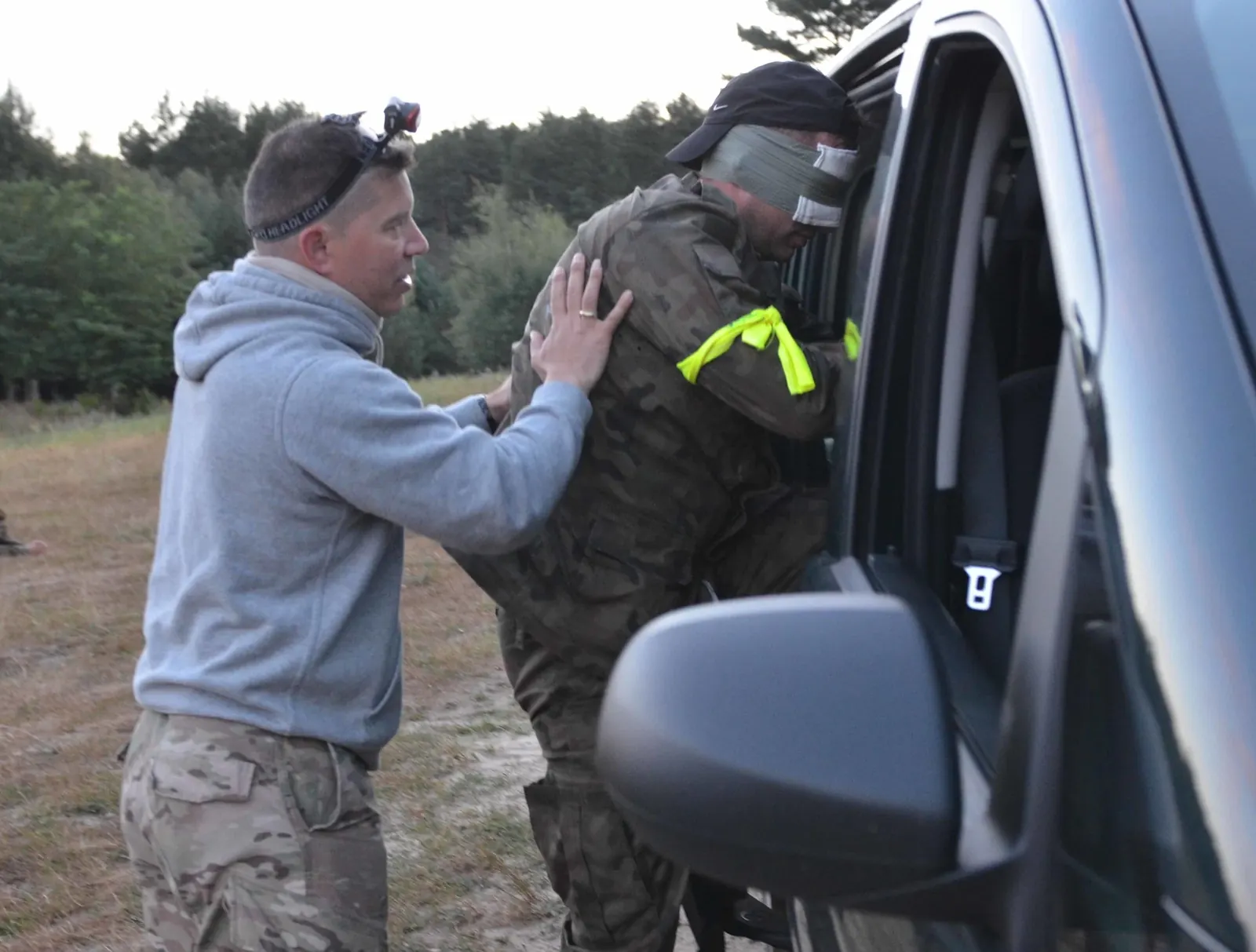
Captivity changes the survival task because other people decide where a person stays, how they may move, what supplies they receive and whom they may contact. A captive may need food without being able to reach it, recognise an injury without having dressings, and hear fellow captives without being allowed to speak to them. At the same time, their knowledge, statements and relationships may be used for military intelligence, propaganda or demands against third parties. Within that restricted scope for action, the captive needs to preserve strength, organise their thoughts and make use of whatever mutual support is possible.
What control by captors means in practice
Captivity involves more than a locked door. Guards often also determine when lights remain on, who stays together, whether someone may lie down or move, and which objects they may keep. Equipment may be confiscated, water withheld and a concession withdrawn after it has been granted. The person's assessment therefore has to identify what is actually accessible now: drinking water, food, clothing, washing facilities, rest, movement and contact with others.
Legal status changes the framework for conduct. Prisoner of war status concerns specified protected categories of people in an international armed conflict. A hostage, by contrast, is detained or threatened to compel a government, organisation or other third party to act. A state detainer can also hold people for political exploitation. A guard's uniform alone does not establish either the captive's status or their next treatment. Resistance includes the captive's task of limiting such exploitation; Conduct After Capture covers the associated preparation and national frameworks for behaviour.
Contact with guards and relocation
During a handover, search or transport, guards may be particularly tense because they are still establishing control. Sudden movements, loud arguments or reaching for an object may be interpreted as an attack or escape attempt. Calm, predictable movements and brief, understandable communication limit the additional escalation that the captive's own behaviour may cause. A person with a physical problem, or who cannot carry out an instruction, describes the specific limitation where possible instead of starting a movement whose purpose is unclear to the guard.
Conversation about water, food, pain or a necessary resting position serves a specific welfare function. Arguments about politics or religion may turn the person into a symbol of an enemy. In a hostage situation, an uncontentious conversation may help the captive be perceived as a human being. A guard's friendly tone, however, does not change the possible purpose of their questions. Personal contacts, knowledge and military duties remain information that needs protection.
During relocation, journey duration, changes of direction, language features and distinctive sounds may provide clues. Remembering them discreetly preserves information without requiring an open record or conspicuous reconnaissance. A single sound or an estimated journey time does not establish a reliable location. After relocation, the immediate conditions also need to be established again: permitted movement, accessible supplies, opportunities for rest and the fellow captives actually present.
Food, hygiene, movement and rest
A captive who gains access to food and drinking water uses it to preserve strength. It also matters whether the person can actually consume what is provided. A weakened fellow captive may be overlooked during distribution, unable to hold a container, or unable to reach shared food without support. Where contact is possible, an available person needs to take on that assistance.
Diarrhoea and vomiting worsen the situation through fluid loss and can substantially impair physical tasks even in previously healthy adults. In communal detention, pathogens can pass from excreta, dirty hands or surfaces into food, water and mouths. Contact with dirty care materials and waste therefore needs to be separated from shared food and water. Someone who has just handled excreta or soiled clothing should not use the same unwashed hands to reach into a common ration. Where water and soap are accessible, hands are cleaned before handling food and after such contact to interrupt that route of transmission.
If cleaning supplies or sufficient clean water are absent, dirty care and food distribution are assigned to different people where possible. If the same person has to perform both tasks, as in solitary confinement, they handle food with clean hands first and provide dirty care afterwards. Before returning to food, they need an available means of cleaning their hands or a clean utensil whose food-contact surface touches neither their hands nor a soiled vessel rim. This prevents each change of task from carrying organisms directly from care into the next ration.
Deterioration should be described as specifically as possible: food or fluid cannot be taken, repeated vomiting occurs, or walking or independent personal hygiene is no longer manageable. These statements explain the need more clearly than a general “I feel ill”. Medical supplies and treatment still depend on what the guards possess and make accessible. The US framework for prisoners of war expressly permits communication with captors about health and welfare.
Movement serves to retain physical ability where guarding arrangements, space and condition permit. Quiet movement within the available space is different from a strenuous training programme during hunger, exhaustion or injury. Restraints, pain and ordered restrictions impose real limits. Actual opportunities for rest are also used. Where a group assists one another with supplies or care, tasks can rotate so that the same person does not spend every available break helping others.
Self-management during fear, monotony and solitary confinement
Fear can create an urge to act before the person has considered the possible consequences. Before an avoidable movement or reply, a brief internal pause can address three points: what is happening, what instruction was actually given, and what action is possible now? A short self-instruction such as “listen first, then state the specific need” directs attention towards a task that can be carried out.
The Canadian CAC model includes learned breathing regulation, muscle relaxation and cognitive coping among the skills for captivity stress. Breathing regulation addresses physical arousal; muscle relaxation uses alternating tension and relaxation. Internal dialogue affects the appraisal of the situation and the action that follows. People who already know these methods can use them within their physical capabilities. The next task should remain achievable: understand a question, use an opportunity to drink, or carry out an available step in personal care.
A slow, methodical routine can develop around recurring opportunities: accept supplies, carry out accessible personal hygiene, use permitted movement and rest. Guards may interrupt any of these activities. The routine then has to adapt to the next activity that is actually possible. Absent light changes or irregular supply issues make orientation in time harder.
In solitary confinement, purposeful thought and mental tasks may remain available without materials. A manageable plan can be divided into steps, a familiar problem worked through mentally, or a known activity reviewed in sequence. During persistent monotony, changing the task can help interrupt the repetition of the same thoughts. These activities focus attention on a specific task. Where contact is completely prevented, this personal structure has to function without feedback from another captive.
Information and dependencies
Exploitation may begin during formal questioning, but also through casual conversations, forms or recordings. Simply identifying who has specialist knowledge, who performed a particular role or who is connected to whom may make another captive a target for further questioning. The person's conversational boundaries therefore also cover knowledge about fellow captives. A specific welfare need can be stated without also explaining that person's military knowledge and former duties.
Dependency on supplies gives the detainer means of pressure. A concession may be tied to statements; unequal treatment may create distrust within the group. The US Code of Conduct prohibits special benefits at the expense of other prisoners of war and actions that harm comrades. In practice, this includes information that may cause someone else to be singled out or placed under greater pressure. Ordinary use of accessible food, hygiene or health care needs to be distinguished from that exchange.
Compelled participation may already have occurred. The next situation still requires a new decision: what additional information is being sought, whom might it concern, and how can further exploitation be limited? In the US prisoner of war framework, this renewed resistance task continues after compelled compliance. Hunger, violence, exhaustion and isolation may severely reduce a person's scope for action. The group has to deal with the person's current condition instead of immediately treating an observed concession or a rumour as voluntary collaboration.
Working with fellow captives who can be reached
Shared detention permits assistance where guards allow contact and action. Actual needs have to be known first: who can eat, drink and move independently, who needs support, and who cannot reach the next distribution alone? Tasks are matched to remaining abilities. One person may assist with distribution, while another with little physical strength can ask fellow captives what help they need or pass on instructions received. If someone is moved or separated, that assistance has to be redistributed.
For US prisoners of war, leadership is governed by a clear national rule: the senior-ranking military captive who is able to act takes command; if incapacitated, the next in military rank and seniority order takes over. Responsibilities include group organisation, hygiene, care of the sick and wounded, and representation of health and welfare matters. For US military personnel detained by an unfriendly government or held hostage by a terrorist group during operations other than war, the greatest feasible organisation under the senior military member present is also required; civilians are encouraged to participate. This does not create automatic military command authority over every civilian in a mixed captive group.
Even without that shared national command rule, people within reach can agree specific tasks: who assists a weakened member, who conveys a common welfare request, and who personally heard a message? Where contact is brief, agreements focus on the immediate assistance needed and who will provide it. Information is passed on with its origin: directly observed, reported by the person concerned, or merely inferred. Otherwise, a rumour about release may turn into a firm promise as it travels from person to person.
Scarcity, sleep loss and unequal treatment can intensify conflict. A specific disagreement therefore needs specific clarification: what food is actually present, who received nothing, what need is known, and which task can be reassigned? Disagreements about religion or politics do not have to be carried into a shared conversation with the guards. An agreed message also prevents different people giving contradictory accounts of the same need.
When captivity ends
Release or handover, escape and armed recovery impose different demands. An escape assessment needs to consider physical condition, environment, hostile threats and the situation of those remaining behind together. After leaving detention, protection, sustenance and evasion may be needed again. Escape and extraction explains the prerequisites and national differences.
During an armed recovery that is actually taking place, the captive needs to remain recognisable to the force as a person who poses no threat. Staying low, avoiding sudden movements, keeping hands and face visible, and following instructions reduce the danger of being mistaken for an armed attacker. Trying to help on one's own initiative may make that distinction harder. After reception by friendly forces, reintegration begins with care, assessment of the person's condition and gradual restoration of personal control.
The appearance of U.S. Department of War (DoW) visual information does not imply or constitute DoW endorsement.