

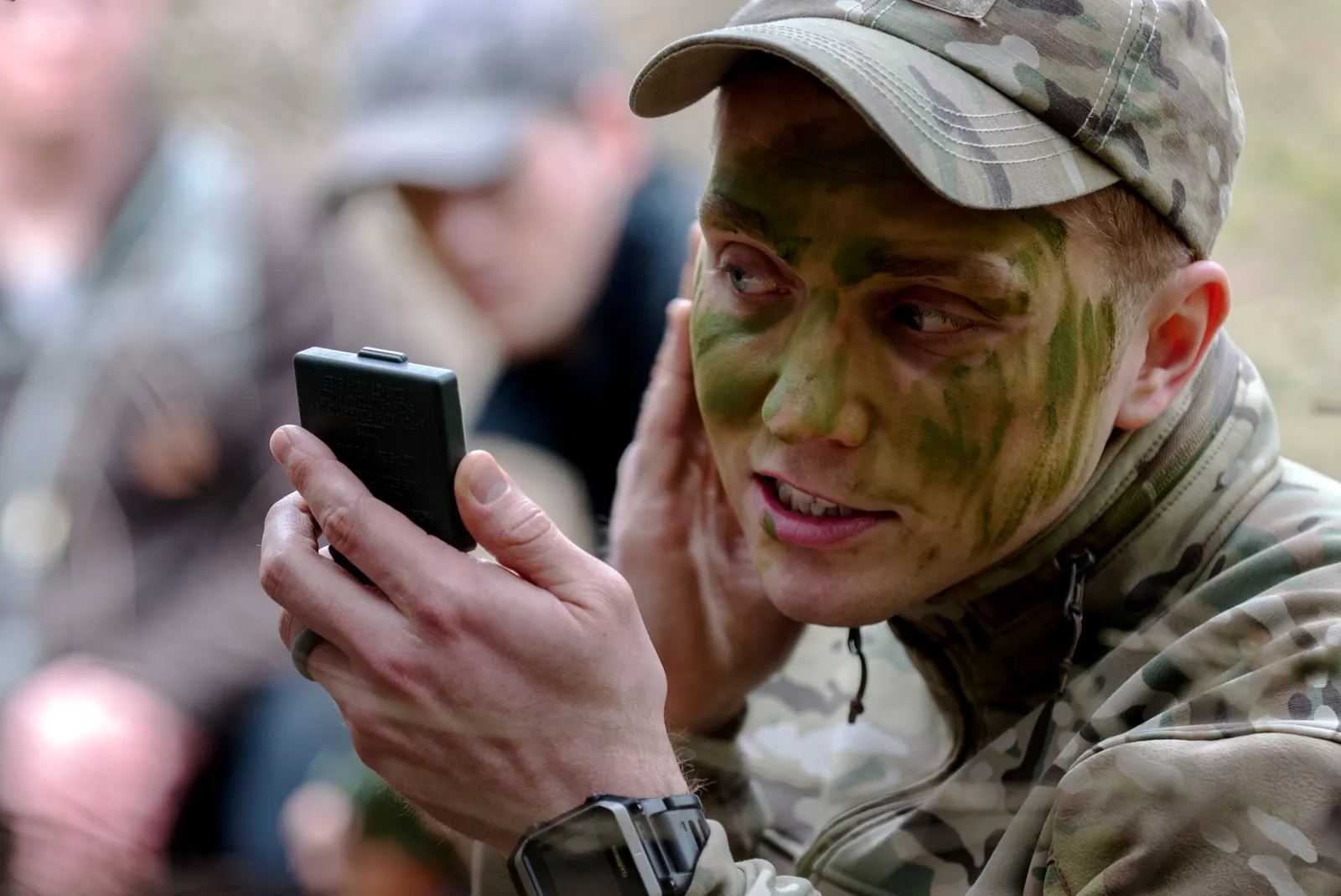
In the Bundeswehr, SERE Level C prepares particularly exposed personnel for survival and evasion in a hostile environment and for appropriate conduct as prisoners of war. It is intended chiefly for special forces and pilots: after separation from friendly forces, they must remain capable of acting on their own, avoid capture and contribute to their recovery. In the German terminology, Extraction means returning to friendly forces. Resistance to Interrogation, or RtoI, is a further training component particularly associated with special forces and aircrew.
German training pathways and roles
A central provider is the Ausbildungszentrum Spezielle Operationen, the Special Operations Training Centre in Pfullendorf. Its training for German and international special forces and specialised forces includes survival and conduct after capture. German C training encompasses different roles: special forces, including personnel from the Kommando Spezialkräfte, Army specialised forces with extended basic capabilities, and particularly exposed flying personnel.
Special forces and specialised forces mainly practise these tasks during a sustained period of land isolation: survival, evasion and establishing contact with friendly forces. Aircrew also face separation following an aircraft emergency: they must work with whatever personal emergency equipment remains available and prepare for pickup by recovery forces.
Level A provides theoretical foundations. Level B combines theory with practical survival and evasion training and conduct during recovery. C develops these capabilities further and includes conduct as a prisoner of war. The letters do not establish a general compulsory A–B–C sequence.
Preparing for one's own isolation
Personal identification is part of German personnel recovery preparation. The Isolated Personnel Report, ISOPREP, records information that recovery forces can use to verify an isolated person's identity. The individual contributes to the accurate and complete collection of that information. This preparation takes place before isolation; neither a uniform nor a claim of belonging to friendly forces is sufficient to identify someone who later appears.
The Evasion Plan of Action, EPA, serves a different purpose. It describes intended actions during isolation and provides a starting point for the search: where might the person move, how might they seek contact and what recovery arrangements do they intend to use? This allows the searching forces to take the participant's intended movements into account. Threats, injury or impassable terrain may require a change of intention and a fresh assessment.
Preparation also includes familiarisation with the emergency equipment actually issued. For aircrew, this can include a personal emergency vest and the survival equipment carried by their aircraft. What matters after separation is access to and operation of the available items: what stays on the body, what remains after a rucksack is lost and what can establish contact or provide a recognition signal? A communication device needs usable power, a suitable receiving station and a connection that can reach it.
Land components: a survival camp and sustained isolation
One German C training format includes a survival phase in a woodland camp with day and night navigation. It combines living in the field with finding a route under changing visibility. The individual must organise protection and supplies so that they can continue moving afterwards. In the C context, building a shelter is therefore only part of the task: effort, time spent in place and detection risk must suit the subsequent evasion intention.
The sustained field component brings these individual tasks together in an isolation scenario. The German final exercise format ULM RUN combines SERE C with personnel recovery. Its tasks include avoiding capture, establishing contact with friendly forces and conduct during aircraft pickup. The objective reaches beyond arriving at a point on the ground: the team must arrive in a condition that still allows it to establish contact and complete the transition to friendly forces.
Evasion under search and pursuit pressure
In the ULM RUN final exercise format, small teams of two or three people face search and pursuit parties, military working dogs and drones used as search assets. This creates several simultaneous tasks. A route must support the intended contact while movement, halts and tracks have to be assessed against the search. A resting place concealed from aerial observation can still have tracks along its approach that lead searchers to it. Different search assets detect different features; visual concealment alone therefore does not address the entire detection problem.
Before continuing, the team needs a shared direction and a clear intention for the next stretch. At an exposed crossing, it needs to observe whether the area is passable before committing itself. A short direct route can leave the team visible for longer than a covered detour. Every detour, however, consumes time and energy. Whether movement or a halt is more useful depends on the immediate threat, the distance remaining and the condition of those involved. Choosing an evasion hide belongs in this context: it must permit rest without compromising further movement through a conspicuous approach.
A small team can share tasks: while one person observes, others can sort their equipment or assess the next stretch. It also needs to remain together without further weakening an exhausted member through an unsuitable pace. Hunger, lost sleep and physical exertion have direct effects on the task. Missing a junction creates extra distance; hurried movement can displace observation; lost equipment reduces the available options. Supplies, direction and avoidance of hostile forces must continue to work together under these conditions.
Captivity and additional resistance to interrogation
Conduct as a prisoner of war is a distinct C subject. Capture changes the task: the individual can no longer choose their route freely, is under another party's control and must protect themselves and relevant information. RtoI particularly develops resistance to questioning. In the German model incorporating this component, a captivity and questioning phase follows the final evasion phase.
For prisoners of war in an international armed conflict, the duty to provide information is tightly limited: surname, given names, rank, date of birth and service number. For Bundeswehr personnel, the service-number item is the Personenkennziffer, their personal identification number. Coercion to obtain other information is prohibited. For the individual, this separates required identification details from information about the mission, other forces or their procedures. Protection against unlawful coercion is an obligation of the detaining state; preparation for questioning also has to address an adversary violating that obligation.
The NATO C framework combines extensive practical resistance training with a strictly controlled, realistic environment. Participants practise maintaining their ability to act under another party's control. The Resistance article develops the connections between information protection, exploitation and a group of captives.
Contact, identification and pickup
Recovery brings two sets of preparations together: the isolated person's intentions and the actions of the recovering forces. The individual must make their situation understandable using the available means. Position, numbers, injuries and observed threats can influence where and how pickup is possible. A connection requires usable communication equipment and a station within reach.
A signal panel, mirror or other available signalling item can make a position visible. Signalling and authentication perform different tasks: the signal shows where someone is; prepared identifying information helps establish who is there. The participant must therefore weigh visibility to friendly forces against the risk of enemy detection. Once contact is established, emerging from concealment and further movement follow the coordinated pickup actions. Approaching without warning can leave the recovery force's security element facing an uncertain situation.
Physical pickup includes the transition into friendly control. The individual needs to understand instructions and be able to carry them out with reduced mobility or several people involved. An aircraft or helicopter pickup requires forces that are actually available, a usable pickup opportunity and a manageable threat. The German C field task trains the isolated person's contribution to that transition.
Additional tasks for aircrew
Particularly exposed flying personnel have a dedicated C-LFB refresher component; LFB means Luftfahrzeugbesatzungen, or aircrew. Its field exercise combines independent action with signalling equipment and helicopter pickup. For the participant, this means bringing the prepared capabilities together as the situation develops: completing the route to pickup, working with personal emergency equipment and contributing to contact and recovery.
Complementary sea survival training takes place at the Marineoperationsschule, the Naval Operations School. Theory and equipment familiarisation are followed by practical water training and application in open water. The crew practise using a life raft and personal survival equipment to stay alive and capable of acting after leaving the aircraft until recovery becomes possible. Physical pickup from the water is also part of the training. Sea survival preparation addresses different initial conditions from land isolation involving an enemy search and captivity. A maritime component therefore does not describe the full C profile.
Return and the aftermath of actual isolation
Following an actual recovery, reintegration takes place under national responsibility. Medical and psychological care addresses the recovered person's condition. During debriefing about the isolation event, they can explain their route, changes of intention, observations of hostile activity and difficulties with contact or pickup. This can help account for other endangered people and improve procedures. Exhaustion, injuries and experiences in captivity also affect further care and return to personal and military life.
The appearance of U.S. Department of War (DoW) visual information does not imply or constitute DoW endorsement.