

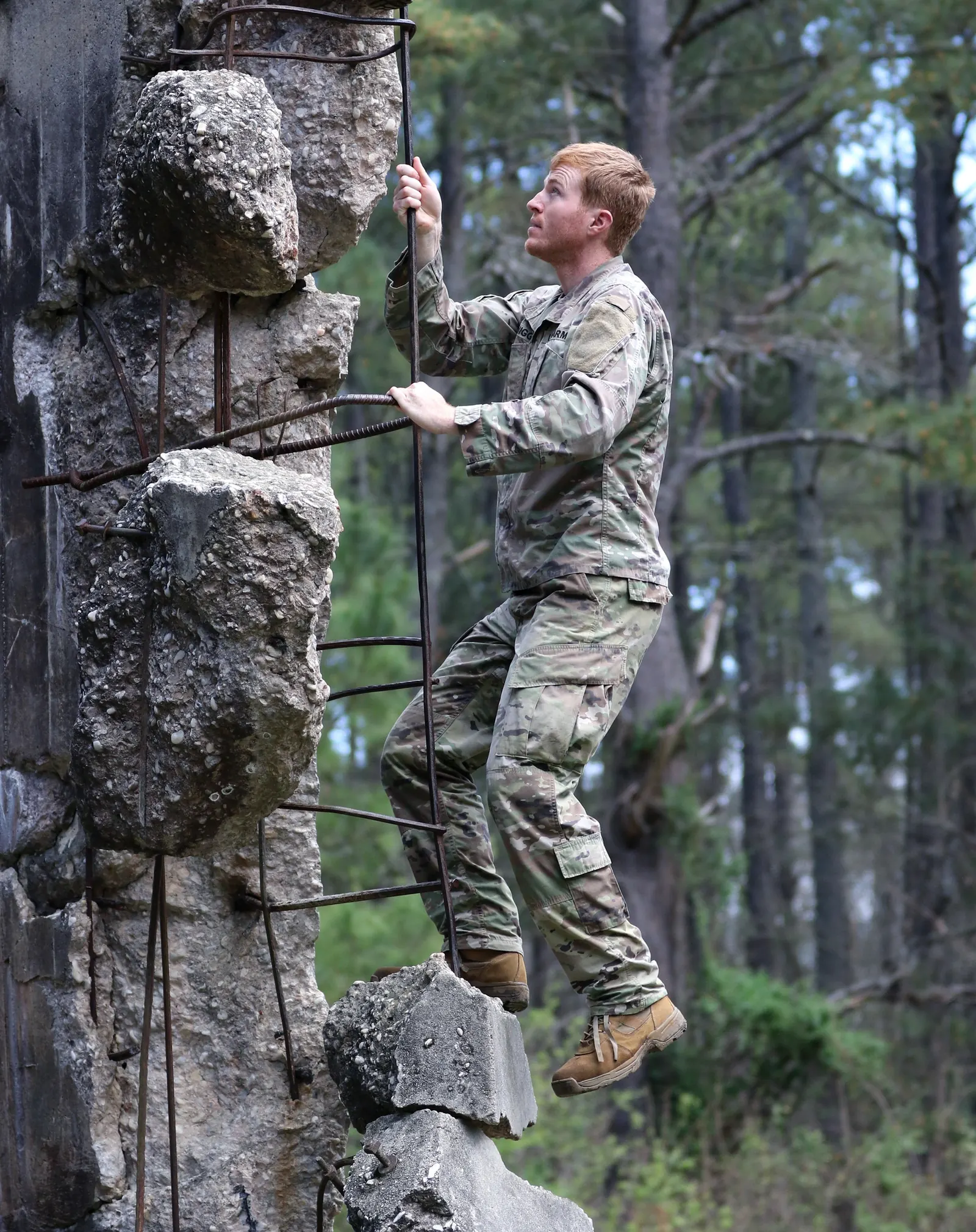
SERE Level C prepares personnel at high risk of isolation and exploitation for prolonged survival and evasion under threat, captivity and their own part in recovery. Extensive practical training connects tasks that constrain one another: obtaining water without making a location unnecessarily conspicuous; making progress without exhausting the strength needed for the next stage; protecting information and supporting fellow captives while under another party's control. Level C brings these demands together in sustained, controlled situations.
Purpose, risk and target groups
High risk arises from a person's role and mission. After being shot down or making an emergency landing, an aircrew member may be on the ground far from friendly forces. Special forces may operate in an area where loss of communications or separation immediately changes their supply and return arrangements. Knowledge and responsibility also matter: a captive may hold information about other people, procedures or intentions; their public portrayal may have effects beyond the individual case. Categorisation therefore considers the likelihood of isolation and exploitation as well as their possible consequences.
Within the NATO framework, C is the advanced level for this high risk. It includes academic education and extensive practical survival, evasion and resistance training in a strictly controlled yet realistic environment. National systems determine the affected roles and their training scope. Germany identifies special forces and pilots in particular; the French system assigns Air and Space Force aircrew to Charlie. German categorisation follows risk and role and does not require a general course sequence that every participant must complete from A through B to C.
How the training areas work together
Before the practical isolation phase, participants prepare for terrain and climate, hostile threats, the equipment carried, evasion plans and the intended recovery procedures. This includes personal navigation, sustenance and signalling equipment as well as mission instructions for communications and pickup. The radio must support the intended communication procedures, and signalling devices must be usable as briefed. Before deployment, this preparation is tailored to the area in which the person might actually become isolated.
Academic training covers immediate conduct after isolation, survival priorities, evasion planning, captivity contexts, information protection and personnel recovery. In practical components, participants use their equipment, obtain food and water, provide shelter and decide when to move or rest. During a sustained field phase, they must sustain themselves and navigate while evading. Simulated search forces leave less time for rest or obtaining supplies along an extended route.
One course model for Army Special Operations Forces, or ARSOF, connects three main components: instruction in the Code of Conduct and SERE subjects with practical fieldcraft; a survival and evasion phase in the field; and then a Resistance Training Laboratory, or RTL, in a simulated prisoner-of-war camp. Field tasks include obtaining food and water, constructing shelters and fires under evasion conditions and covering extended distances while opposing forces and tracking dogs search for participants. Additional role-play scenarios address government detention outside wartime and hostage situations. Individual and group debriefings conclude the model.
Other national descriptions combine the areas differently. The French Level C approach requires a realistic practical scenario with operational equipment and an opposing party, connecting capture avoidance with facilitating recovery. In the German description, captivity and questioning can follow the evasion phase where RtoI is included.
Survival under threat
The initial assessment concerns personal condition, immediate danger, location and the resources actually retained. Injuries or restricted mobility change which destinations are reachable; losing a container reduces the amount of water that can be carried on the next stage. French Level C content connects immediate action after isolation with adapted combat first aid, protection, location, water and food. From these, the person must determine their next tasks: leave an immediate danger, establish weather protection or secure supplies for the intended movement.
Clothing, shelter and ground insulation perform different functions. Protection from wind and precipitation reduces exposure during a halt; a dry insulating layer reduces heat loss to cold ground. A naturally sheltered location needing little additional work can save time and materials. Elaborate construction requires more effort and alters more vegetation. The choice also depends on whether approaches remain observable, the stay is conspicuous and another way out is available. A concealed drainage channel can become a trap when substantial water flows through it.
Water supply does not end at the source. The person needs treatment suited to their available equipment, a means of carrying water and a clean, closed container for the treated supply. The route to the next source must match their carried water and physical capacity. When procurement and treatment take longer, the next stage is delayed. If insufficient water can be carried for the intended route, movement must be divided differently or another reachable destination selected.
The person must weigh the benefit of food against the effort of obtaining it. A carried ration is immediately available; obtaining and preparing more food takes time and energy and may require additional journeys. Under search pressure, a long halt to obtain supplies may prevent the person from reaching the intended recovery area. Yet persistently inadequate food also reduces physical capacity. During training, they therefore need to judge the distance still ahead, which work is essential and which supplies they can use immediately.
Fire can provide heat and enable food preparation and water treatment. It also produces light, smoke and odour; fuel collection and repeated use of a work area alter the surroundings. Before lighting it, the specific need must therefore be weighed against its observable signature and the time required. Existing weather protection, ground insulation, treated water or ready-to-use rations can reduce the need for fire. A fire site ties the person to a location when evasion may require moving elsewhere.
Evasion: decisions under search and threat
From an evasion plan to the next reachable stage
Evasion aims to avoid capture and enable a return to friendly forces. A prepared Evasion Plan of Action, or EPA, records intended actions in the event of isolation. After isolation, the person must compare location, threat, mobility and retained equipment with that plan. A designated recovery area, a planned evasion area or reachable friendly territory may be the destination. The person needs to understand where they are, why they intend to move in a particular direction and whether their resources will support the journey.
Staying or moving is a situational decision. A halt allows sustenance, navigation and recovery from effort; at a threatened location, the same halt can facilitate capture. Movement can leave a search area but requires strength and makes the person observable for periods of time. Instead of continuing a long route without checking it, reachable intermediate destinations, water requirements and opportunities to observe again are considered together. A destination that was reachable only with previously held supplies or lost equipment must be reassessed.
Navigation tests the assumed position. Maps, compasses and available electronic aids perform different functions; identifiable terrain features support cross-checking. If the actual route and assumed position are not reconciled, an error can carry through several stages and later distort a location report. When expected and observed terrain conflict, a concealed halt helps clarify position where the threat permits stopping.
Terrain, movement timing and observation
A route is assessed for concealment, human activity, obstacles, energy cost and the intended return. A direct route may cross open ground or frequently used approaches. A concealed detour may make observation harder but require more water and time. Terrain features are therefore examined for the next section: where will the body stand out against the sky or a bright background? Where can the onward route be viewed from concealment? Where does the terrain restrict later evasion options?
Low light or poor weather may make the person harder to see while moving; reduced hostile activity can also offer a better opportunity to move. Poor visibility, however, also obscures their own view of the terrain and makes location checks harder. They need to weigh improved concealment against whether they can still follow the route reliably. Misreading the terrain in darkness may cause navigation errors or an unnecessarily long stay at one location, losing the advantage.
The person stops at concealed points to observe. They check visible activity and listen for vehicles, people, aircraft or other conspicuous sounds. Smoke, tracks, roads, buildings and identifiable movement help them assess what lies ahead. New evidence of human presence may require a different route section, a later departure or another halt. Before moving on, they therefore check direction, the next stage and the apparent threat again.
Concealment, equipment and evidence of a stay
Concealment uses background, posture and natural barriers to sight. A low posture and observation from a concealed position reduce the visible outline; unnecessary movement makes a person stand out against a still background. Shiny objects and loose, rattling equipment can reveal a location. Before the next stage, reflective surfaces are covered or stowed and moving items secured. Camouflage must be checked against a changing background: a shifting shadow exposes a previously hidden part, and cut greenery can become conspicuous as it wilts.
A stay also leaves evidence. Broken branches, disturbed ground cover, discarded packaging or lost personal equipment can reveal passage; particular objects may identify a person or group. Careful movement and securing personal equipment reduce avoidable clues. Existing protection is used for a rest site instead of creating it through extensive alterations. Repeated movement between shelter, water source and work area increases the visible effects of the stay.
A suitable halt combines small, low, irregular concealment with observable approaches and ways to leave. A site with only one exit can restrict the person's choice to that route when someone approaches. Potential approaches must remain observable while the person exposes as little of themselves as possible. Weather hazards, water run-off and dead trees are assessed at the same time. The halt then serves a specific task: preserving strength, sorting equipment, clarifying location or waiting for a better opportunity to move.
Remaining capable under pursuit pressure
When searchers are active, the person has less time to remain in one place. Obtaining water or food there may be urgent, but prolongs the halt. Moving immediately gains distance but may consume strength needed later for navigation, obstacles or pickup. The ARSOF field model represents this conflict through opposing forces and tracking dogs. The person observes search activity and avoids unnecessary signs of their presence. The distance they can cover on the next stage also depends on where they can obtain supplies and rest.
When pace and work cause a marked decline in performance, avoidable effort must be reduced: unnecessary construction, additional procurement journeys or a pace at which observation and location checks cease. A possible concealed rest period can support the next essential movement; an immediately approaching threat may instead require moving first. This preserves strength for tasks that cannot simply be deferred later. The recovery area remains a destination whose reachability is continuously checked against the person's actual condition.
Captivity, information protection and resistance
After capture, others control movement, supplies, contacts and access to information. The detaining party may exploit this dependence to acquire military knowledge, identify other people, force statements about the captive's own side or display the captive publicly. Resistance counters this exploitation. With the limited choices still available, the person must care for their physical condition, protect information and fulfil responsibilities towards fellow captives.
Prisoner-of-war status depends on the conflict and the covered category of person: these include, for example, members of a party's armed forces who fall into enemy hands during an international armed conflict. Government detention outside this conflict framework is prepared for as a separate captivity context. In hostage-taking, the detained person is used to pressure a third party: a threat to their life or bodily integrity, or of continued detention, is intended to compel a state, organisation or other people to act or refrain from acting. The demand is tied to the hostage's release or safety. This purpose explains the situation more precisely than simply identifying a state or non-state actor. The US ARSOF model therefore supplements its prisoner-of-war scenario with peacetime government detention and hostage contexts. The French Level C approach addresses practical resistance to state and non-state detention together with psychological and legal aspects of captivity.
Information protection starts before questioning. Intentions written on a map, conspicuous markings or other retained mission information can reveal plans if lost. Questioning may seek knowledge about missions, people and procedures. Oral or written statements may also be used as propaganda against the person's country, its allies or fellow captives. The national behavioural framework determines which information must be given and how further demands should be handled.
For members of the US armed forces, the Code of Conduct is central. Article V specifies name, rank, service number and date of birth when a prisoner of war is questioned. The person is to evade further questions to the utmost of their ability and make no oral or written statements disloyal to their country and its allies or harmful to their cause. Article III connects continued resistance with efforts to escape and help others escape and excludes parole and special favours from the adversary. These provisions form a US military framework for decisions in captivity.
Article IV sets out responsibility towards fellow prisoners. It requires withholding information that could harm comrades and taking no part in actions that could endanger them. The senior prisoner is to take command; others are to obey lawful orders from those appointed over them and support them. The person must therefore consider how relief for themselves would affect the group. Even with restricted communication, prisoners need to maintain cohesion, take responsibility and protect one another while an adversary seeks to exploit information or behaviour.
In a controlled resistance scenario, participants apply the conduct requirements they have learned to instructions, questioning, restricted contacts and responsibility for the group. They practise assessing demands, protecting information and acting responsibly under another party's control. The US model calls this an RTL; the Bundeswehr uses Resistance to Interrogation, or RtoI, for the additional component described. Where this follows the evasion phase, participants must adjust to the limited choices available after capture.
Personal preparation, contact and actual pickup
Personnel recovery connects an isolated person's actions with the use of available recovery forces. The EPA communicates intended evasion to those forces. The Isolated Personnel Report, or ISOPREP, supports identification and authentication. Applicable documents and instructions are completed or checked before deployment. A planned route expresses an intention; a verified current location shows where the person can actually be reached.
The isolated person must be able to apply mission communications and signalling procedures with the equipment retained. Serviceability, power, antenna and a reachable receiving station determine the usable link. In a hostile environment, transmitting can also reveal the area through radio direction finding; transmitting from a shelter must therefore be weighed against that threat. Agreed contact opportunities and mission instructions provide the framework. Until contact is actually established, strength, supplies and location checks are maintained for continued evasion.
With a usable link, current information needed for pickup is passed: position and how it was determined, number of personnel, injuries and mobility, identifiable adversary activity, pickup-site characteristics and available signalling devices. An accurate report of an obstacle or an immobile person changes the recovery force's plan. Incorrect coordinates or outdated situation information can direct the search to the wrong place or trigger an unsuitable approach.
A signal makes a location identifiable to a receiver; a radio link also permits instructions and situation information to be exchanged. Without radio, an appropriate ground-to-air signal may be the only means of contact with an aircraft that is present. Signalling devices are used as briefed or directed. The person needs to consider that hostile observers may also see the signal. They keep the equipment ready and choose their location so that they can use the agreed signal when required.
Authentication confirms that the person contacted is the one being sought. Precise coordinates alone do not resolve this. An adversary could exploit knowledge of the location or compromised information to draw recovery forces into a dangerous approach. The person therefore completes the designated authentication procedure and protects the information intended for it. Recovery forces consider identity, situation and their own risk before conducting pickup; authentication may be repeated on return to friendly control.
Immediately before pickup, personal equipment is packed and secured while directed signalling devices remain ready. Under threat, the person remains concealed until recovery is imminent and then helps identify their position according to the procedure or instructions. For ground or landing pickup, weapons are secured, a non-threatening posture adopted and sudden movements avoided. The vehicle is approached when instructed. Rotors, propellers, uneven ground and loose equipment require attention so that the final movement to pickup does not cause another accident.
Recovery may be undertaken by nearby forces, a single vehicle or a larger coordinated force. Threat, terrain, personal condition and available capabilities determine the possible option. The objective is actual transfer to the custody of a friendly organisation. Nationally organised reintegration and support after real isolation may follow. A training debrief instead explains the exercise, the person's decisions and possible alternative actions.
Pressure and the abilities that must be retained
Prolonged movement, limited food, thirst, cold or heat and fear of discovery can coincide. Fatigue limits how far a person can walk, what they can carry and which work they can still perform. Pace, load and working methods must match their condition. An extra hour spent building shelter or obtaining supplies leaves less time for an essential stage later. In US Level C field training, participants have to weigh obtaining more food against reaching the recovery area in time.
Sleep loss impairs attention, judgment and reaction. The person may miss a location check, overlook an approach or forget an instruction. Severe sleepiness can cause involuntary sleep, particularly during monotonous observation. Noise, bright light and uncomfortable temperatures can further interrupt rest. When choosing a halt, the person therefore needs to consider whether rest is actually possible there as well as whether the site offers concealment. A group can allocate tasks and rest periods according to what each member can still do.
Under uncertainty and time pressure, indecision, forgetfulness, carelessness or withdrawal are warning signs when essential tasks are affected. The person then focuses on the next manageable step: checking location, securing equipment, completing necessary sustenance tasks or making a specific movement decision. In a group, clear responsibilities and mutual checks help identify omitted tasks. Observation, navigation and recall of arrangements must continue under pressure.
During sustained Level C training, participants have to handle these tasks at the same time. Resting longer delays the next stage; moving consumes supplies; signalling may expose them to observation. In captivity, they must account for their physical condition and responsibilities towards others while working with limited information. Under these pressures, they still need to remain able to act, assess the situation, protect information and work together.
National approaches
Germany
The Bundeswehr connects Level C with advanced survival and evasion skills and appropriate conduct as a prisoner of war. RtoI is described as an additional component for particularly exposed roles, especially special forces and aircrew. Where it is combined with the course, a captivity and questioning situation follows the evasion phase. This transition matters: in the field the person decides about location and movement; under external control they must use their remaining scope for action to survive and resist exploitation.
The German approach also connects SERE with actively helping forces locate and recover the person. Prepared identification information and conduct during pickup belong to this relationship. C and RtoI refer to different things: a risk-related training level and a specifically named resistance component. Role and exposure determine the actual training requirement.
United States
In the United States, SERE stands for Survival, Evasion, Resistance and Escape. In the Army ARSOF model, survival and extended evasion under search pressure are followed by a prisoner-of-war RTL; peacetime government detention and hostage scenarios are also included. Army Aviation Level C training likewise includes academic, field and resistance phases. Its school prepares high-risk service members and designated government civilians and contractors for isolation and captivity. These groups have different roles and legal positions. For military personnel, the Code of Conduct provides the national behavioural framework.
The US Air Force's operational SERE provision also connects evasion and conduct after capture with aircrew tasks: procedures after leaving an aircraft, survival medicine, personal equipment, day and night navigation, ground-to-air signals and preparation for recovery devices. The separately named ECAC programme is Level B and already includes practical evasion and a hostage RTL. Escape means getting out of captivity; survival and evasion may become necessary again after escape until pickup. Responsibility towards fellow prisoners remains part of the US behavioural framework.
United Kingdom
The British expansion is Survive, Evade, Resist, Extract. National risk categorisation associates medium and high risk with B and C respectively; B is delivered at unit level and C centrally by the Defence SERE Training Organisation. The programme portfolio includes practical evasion, resistance and Conduct After Capture. It also includes maritime survival for aircrew and training in jungle, desert and cold-weather environments.
In the British PR framework, personal health takes priority during reintegration after actual recovery; urgent information to recover other isolated personnel or protect lives may nevertheless be required immediately.
France
In the French Level C model, high-risk personnel train with operational equipment in a realistic scenario against simulated opposition. Specific content includes immediate action in isolation, survival in a non-permissive environment, adapted combat first aid, evasion and practical preparation for state or non-state captivity. Navigation, position signalling and secure communications use personal means such as maps, compasses, GPS, suitable beacons and radio or satellite links. Which tasks the person can carry out depends on the equipment actually available.
Extraction includes the applicable standard operating procedures and special instructions, SOPs and SPINS. Nationally, recovery is also connected with RESCo, combat search and rescue, and, for special forces, UAR, unconventional assisted recovery. Air and Space Force aircrew receive the highest level, Charlie. Wider French provision also includes cold-weather, desert and equatorial training.
Differences from Levels A and B
Within the NATO framework, Level A provides the foundations for low risk; Level B connects academic education with basic practical survival and evasion and classroom resistance training. C expands practical preparation across all three areas for high risk. Its connected demands are particularly characteristic: extended evasion with limited resources, maintaining protection and sustenance despite search activity and resisting exploitation during controlled simulated captivity.
National programmes place the boundary differently. The US Air Force's ECAC programme belongs to B and already uses role-play scenarios, a practical evasion laboratory and a concluding hostage RTL. The word “laboratory” or a practical captivity component therefore does not determine the level by itself. Categorisation depends on the risk profile and actual scope of the specific programme.
The appearance of U.S. Department of War (DoW) visual information does not imply or constitute DoW endorsement.