

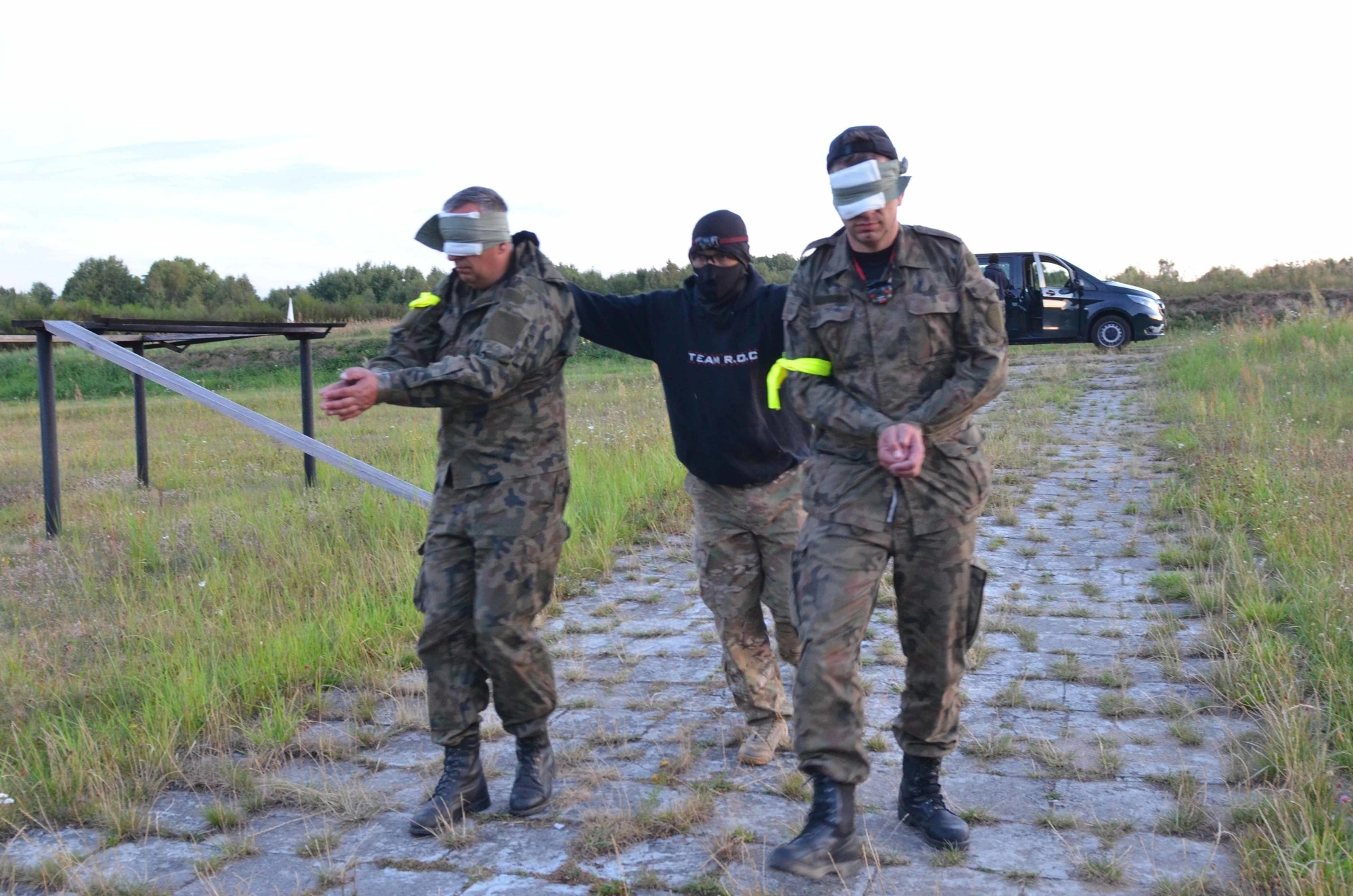
Polish SERE training prepares soldiers to remain able to act after separation from their unit in a hostile environment: sustain themselves, avoid capture, resist exploitation and contribute to their recovery. This can concern a cut-off group or aircrew after an emergency escape from an aircraft. The Polish terms przetrwanie, unikanie and przeciwdziałanie wykorzystaniu refer to survival, evasion and preventing exploitation. Both Escape and Extraction are used for the final E: getting away and being picked up by friendly forces are different tasks.
A, B and C: from basic understanding to captivity preparation
The Polish levels link preparation to the risk of isolation. A provides the theoretical foundation. B develops practical tasks under restricted supply; its participants include personnel preparing to serve abroad. C is for personnel at particularly high risk, including aircrew, special operations personnel and prospective SERE instructors. Units deliver much of the A and B training, while specialised establishments conduct advanced training.
| Level | Personal task | Training form |
|---|---|---|
| A – podstawowy | Understand isolation, survival needs, capture and recovery. | Theoretical foundation; associated with low risk in the risk model. |
| B – średniozaawansowany | Carry out an evasion plan with limited resources, avoid detection and prepare contact. | Theory and practical field training for medium risk. |
| C – zaawansowany | Manage sustainment, information protection and personal conduct when exhausted and after capture. | Advanced field tasks and controlled captivity scenarios for high risk. |
Evasion plan, movement and rest under threat
In a B course run by the 25th Air Cavalry Brigade, an EPA, an Evasion Plan of Action, is prepared and then carried out in the field. Groups must reach assigned points within a specified period, hide from search forces and preserve sufficient ability to act until friendly forces collect them. A wrong turn adds distance and consumes extra water, time and strength. The route therefore needs checking during movement, before a navigation error becomes an exhaustion problem.
The small group assigns specific responsibilities. A leader checks that necessary tasks have been completed and nothing conspicuous is left behind on departure. Two people crosscheck the route with different means of orientation. One handles communications; another watches for approaching search forces and gives warning. This model deliberately brings together soldiers who do not know each other. The group first needs to establish who does what. A lone person can only perform these tasks in succession: attention spent on determining location or using a radio is unavailable for observing the surroundings.
A field phase involving the 17th Mechanised Brigade and 10th Logistics Brigade makes route choice concrete: public roads, built-up areas and especially dangerous locations are excluded; outsiders should not notice the group either. After dark, lights and conversation are prohibited. This changes movement because an accessible path or a short passage through a settlement can also make the group visible. Observation remains a task during rest. In the B model, a group warned of approaching search forces must quietly break its halt and move on. After an overnight stop, temporary shelters are dismantled and signs of the stay reduced.
Sustainment remains the personnel’s own work. Carrying less water reduces the load but requires further acquisition along the route. A limited ration requires considering remaining supplies, opportunities to obtain more and the distance still to cover together. Wet conditions, dense terrain and wrong turns increase the effort. A rest site serves to restore the ability to move; prolonged construction instead takes time and leaves further traces.
Captivity: protecting information and sustaining the group
Advanced training extends the field task to loss of freedom of movement. In a SERE model used by the Agat special operations unit, movement in the mountains is followed by simulated capture. The person enters the next situation already exhausted. In captivity, they must now keep themselves alive while limiting the adversary’s access to militarily useful information.
Questioning focuses on the mission, unit and superiors. Alternating threatening and apparently friendly behaviour seeks to unsettle captives and make them talk. The prospect of warmth, quiet or additional supplies can intensify this pressure. The personal task is to recognise the detaining party’s interests behind friendly treatment and treat information about the mission and other soldiers as information requiring protection.
Specific actions remain possible alongside this: drink water that is offered, eat available food, accept a blanket and ask for another for fellow captives. These resources preserve physical strength; they are no reason to offer military information in return. The Agat model also addresses pressure caused when a comrade bears the consequences of one’s response. Responsibility for the group therefore extends beyond one’s own questioning: notice others’ needs and speak up for them when an opportunity to obtain supplies is available.
A personal reason to keep acting
Psychological preparation includes identifying a personal reason to keep going before isolation: family, a task still to complete or keeping fellow captives alive. That reason can help the person accept supplies despite exhaustion or continue caring for others. During controlled captivity exercises, psychologists observe the reactions of participants and instructors and can limit the exercise.
Winter tasks and equipment actually available
Polish SERE instructors practise movement in winter mountains with issued and improvised snowshoes, reading and masking tracks in snow, and signalling. Snowshoes spread the load over a larger area and reduce sinking; the route travelled still leaves a visible change in the snow. Mobility and the trace left by movement therefore need considering together. Another training subject is the situation after breaking through ice: a movement task can become a cold exposure and survival problem within seconds.
One Polish training recommendation for aircrew is to perform SERE tasks in issued flight clothing and with the equipment actually intended for flight. This shows what the available equipment allows: which clothing protects the person, which equipment can still be used and which action is possible with it? Assuming additional material during a course prepares a different starting situation from that after an emergency escape. Using actual equipment ties sustainment and movement to what the crew carries.
Report location, confirm identity, enable pickup
Polish recovery preparation connects personnel at risk of isolation with command and recovery forces before deployment. Prepared information about the person and intended actions helps command plan the search. In the B model, questionnaires and agreed challenges and responses are prepared before deployment; at the end of the field phase soldiers must use them to confirm their identity. An evasion plan describes intended actions; identity information helps check the person who later establishes contact.
For aircrew with a working survival radio, the personal action can be to transmit position over a connection that has actually been established. In the B group model, reports are sent at suitable times because continuous radio contact can make detection by the adversary easier.
B training also includes signal fires. Here the person deliberately creates a sign that can be seen at a distance; during covert movement they need to remain unnoticed. The signal therefore needs to fit the prepared recovery arrangements and a possible recipient. A visible fire can also draw the adversary’s attention to the location.
A known location does not yet establish who is there. An adversary can impersonate the missing person and draw recovery forces into a trap. Confirmation using prepared personal information or agreed challenges therefore remains a separate task. In a Polish recovery exercise scenario, personnel initially treat the unidentified person as a potential threat. The person must follow the force’s instructions and behave predictably. Identity checks, any necessary initial care and pickup work together; injury and separation between several people can change the order of collection.
The recovering crew can also become isolated. In the 2nd CSAR Squadron’s training model, survival radio use, personnel recovery and SERE C therefore form part of crew preparation. Recovering other personnel also requires rope skills and cooperation with medical staff. A crew member’s own SERE C training prepares them for losing the aircraft; their recovery skills help them reach and transport the missing personnel, including when those personnel are injured.
The appearance of U.S. Department of War (DoW) visual information does not imply or constitute DoW endorsement.