

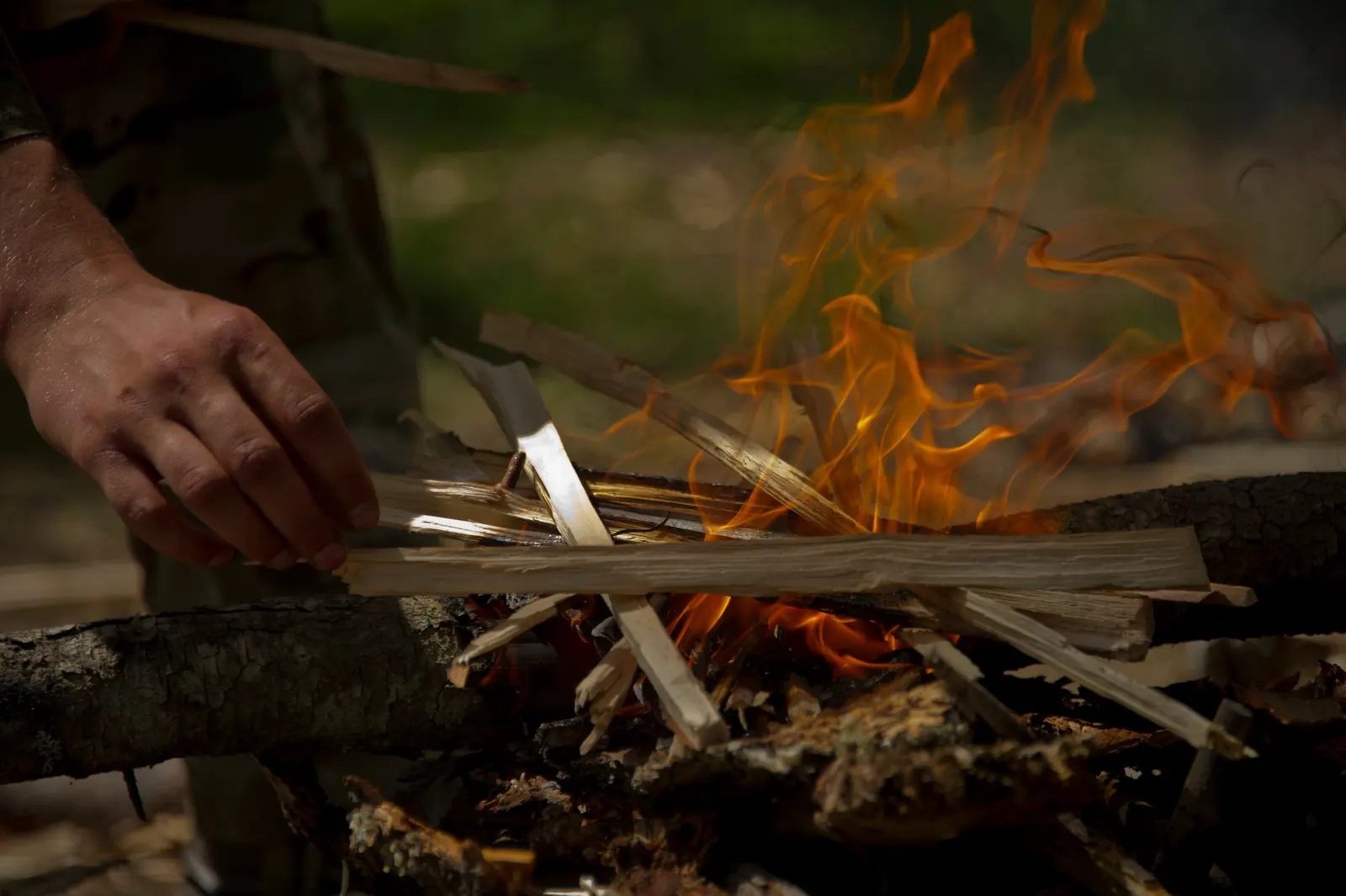
SERE instructors prepare military personnel to remain capable after separation from their own unit, evade hostile forces, survive captivity and participate in their recovery. The US Air Force SERE Specialist is a military occupational specialty that combines instruction with operational personnel recovery work. Instructors, subject matter advisers and personnel portraying hostile forces perform different tasks: they teach procedures, prepare their application in the operating area or represent the opposing side within controlled captivity training.
Qualification and personal field competence
The US Air Force training pathway begins with seven and a half weeks of Basic Military Training. The 15-day SERE Specialist Training Orientation Course at Lackland follows. Selection includes physical fitness, clear speech, leadership and teamwork, and the organization of assigned tasks. The SERE Specialist Training Apprentice Course at Fairchild then develops the occupational expertise through five and a half months and 17 training phases.
Prospective specialists train in remote forest, desert, coastal, tropical and open-ocean environments. Their own practical training includes SERE procedures, wilderness responder first aid, rough land evacuation and hand-to-hand combat. They address survival on land or at sea as well as the problems of an injured person whose movement is restricted. They must be able to handle survival, parachuting and signaling equipment under the conditions in which isolated personnel might actually need it. The field also includes developmental and operational testing of SERE and aircrew equipment.
Mission Qualification Training is an additional requirement for independent work in an assigned position. In the US Air Force model, it covers occupational, command and unit tasks. Specialists must complete this qualification before performing their assigned unit mission without a trainer or task certifier. Occupational training and subsequent preparation for a particular assignment therefore form two distinct parts of qualification.
The British Defence SERE Training Organisation also identifies subject-specific and general instructor qualifications separately. An instructor mentor role, for example, names Defence Trainer and SERE Practical Resistance Instructor alongside each other. The work includes theoretical and practical SERE instruction on assigned courses, maintaining personal specialist competence and developing other instructors. Maritime survival, evasion and practical resistance each have their own technical requirements; a mentor supports a particular area within the organization.
A separate selection and qualification pathway is planned for the Canadian Conduct after Capture Instructor function. Military volunteers are selected for maturity, self-discipline, emotional control and credible portrayal of different roles. Successful selection is followed by a planned introductory course and the CACI specialist course. Maintaining the qualification subsequently requires ongoing participation in the delivery of captivity training. The focus is on conduct in captivity and the controlled portrayal of an opposing side under stress.
Instructors and resistance roleplayers
The practical duties of a German SERE instructor can include release from restraints, overcoming locks, emergency shelters, improvised clothing, and food preparation and preservation. These prepare personnel to continue an escape or survive with the material that remains. Protection from cold must be made from available resources and food must stay usable during movement; after escaping on their own, personnel may still need to evade until they reach friendly forces. The instructor also advises on protecting the person and relevant information following capture. These duties require practical expertise in survival, escape and protection against adversary exploitation.
In an Australian Conduct after Capture model, qualified resistance trainers portray hostile forces. The scenarios distinguish foreign government detention, a hostage situation and military exploitation. A foreign government may detain personnel outside an armed conflict as well. The opposing roles can portray, for example, foreign government border security, police or intelligence personnel, members of a terrorist or criminal organization, or personnel of a foreign military. The person practices conduct towards the respective detaining power, including resistance to interrogation and exploitation. In the military scenario, the opposing side may comply with the Geneva Conventions or violate them.
The roleplayer carries out the conduct of the opposing side within the exercise framework. This requires the credibility and self-control also sought in Canadian CACI selection. The Australian model separates this function from those who observe and control the activity. The conducting officer, neutral observers, and medical and psychological personnel monitor training. Medical and psychological personnel may withdraw a trainee; the activity's safety personnel may stop the activity.
How specialist work prepares an aircrew for isolation
Aircrew preparation in a US operational model shows how this specialist work is applied. The SERE specialist works with intelligence and tactics personnel. Before the mission, they assess potential hostile forces and their expected behavior, survival conditions in the operating area and available recovery forces. They also account for the planned communication and authentication procedures. This informs the area briefing, adjustments to personal survival equipment and preparation for what the aircrew may need to do after isolation.
For the aircrew, this preparation must establish what equipment will remain usable after leaving the aircraft, which environmental hazards limit survival and movement, and which evasion plans fit the intended recovery options. Protection, sustainment and evasion are practiced with the equipment actually carried. When signaling, the trainee needs to reach the intended receiver while assessing who else could detect the transmission or visible signal. This affects how much concealment they give up to signal.
An Evasion Plan of Action makes intended evasion movements available to recovery planners. The ISOPREP supports formal identification and authentication of the person. During actual isolation, any possible contact must also establish the current location and condition. If injury, lost equipment or hostile movement has caused the person to act differently from the plan, recovery forces need to know about that change once communication is established. The prepared intentions support planning; the current situation determines what remains feasible.
After a forced landing, however, the aircrew may have no communications and considerably less equipment than before. Individuals must initially provide their own protection and supplies while evading hostile forces. An injury may make a planned route impassable; inadequate protection from cold may prevent a prolonged rest; identified hostile forces may make the intended contact location unusable. The specialist works through such changes with the aircrew during preparation. Participants practice using the remaining resources, matching movement and rest to physical condition, and avoiding hostile observation. Radio or visual contact requires a functioning means and a reachable receiver. An actual pickup additionally depends on available forces and their access to the location.
The interface with recovery forces
The specialist work of a German SERE instructor at the European Personnel Recovery Centre includes preparing both sides of a recovery exercise. Possible landing zones and local conditions are discussed with aircrews. At the same time, personnel portraying isolated individuals receive their instructions for the scenario. The aircrew and the person on the ground therefore rehearse the same contact and pickup situation. Terrain, conduct on the ground and aircraft access must fit together so that a reachable position can become a usable pickup location.
In the US operational support model, specialists also contribute to PR planning, coordination centers and the appraisal of designated recovery areas and evasion corridors. They connect their understanding of an isolated person's situation with the capabilities of the forces. A specific recovery decision considers, among other factors, the verified location, the person's condition, authentication, available capabilities, and the risk to the person and recovery forces. Subject matter advice prepares that decision; execution is organized through the responsible military command elements.
Specialist work after return
In the US model, SERE specialists may assist reintegration teams with the SERE debriefing of recovered personnel. They examine the actual course of isolation to establish which preparation the person could draw on, which equipment and procedures they used and which experiences are relevant to further missions. These findings can inform operational concepts and PR instructions. Medical and psychological care remains part of the designated reintegration process and is provided by the corresponding professional staff.
Subsequent institutional analysis is a separate task. The Joint Personnel Recovery Agency processes debriefing transcripts, reports and other material into separate event, individual or group, and SERE lessons learned summaries. A single return can thereby lead to concrete changes in preparation and procedures. Reintegration is the responsibility of the respective nation; training, operational advice and analysis are distributed among different positions and organizations according to the national system.
The appearance of U.S. Department of War (DoW) visual information does not imply or constitute DoW endorsement.