

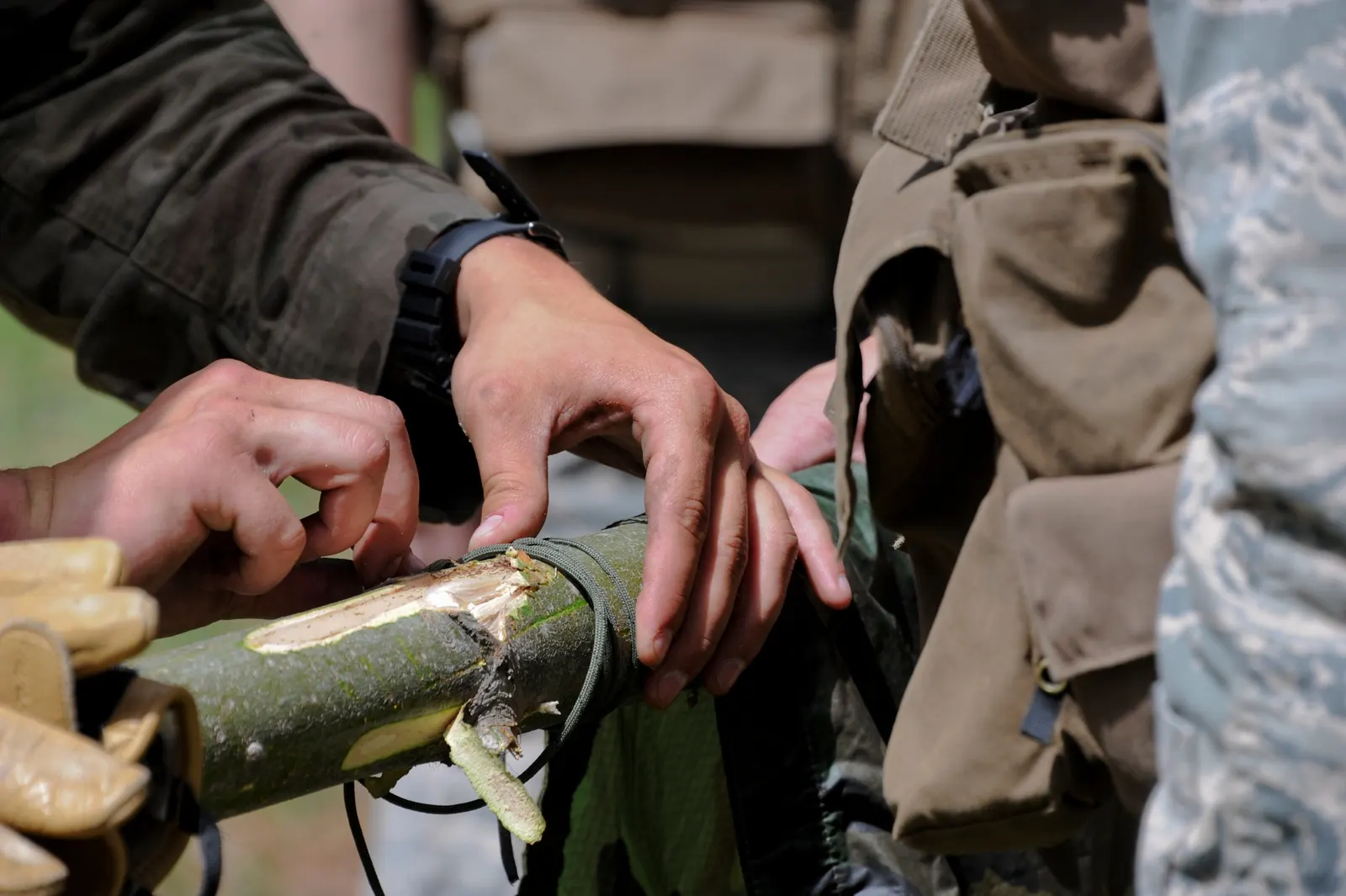
SERE Level A provides the foundations for a situation in which personnel operating in a military context become separated from their unit or organisation, must survive with limited resources and may face capture or exploitation by an adversary. It connects survival, avoiding capture, conduct in captivity and participation in one's own recovery. Within the NATO training framework, it is intended for personnel at low risk of isolation or exploitation. Its basic form is academic instruction; national programmes determine the target groups, content and additional preparation.
Purpose and target groups
Risk depends on a person's actual employment. Unit, military occupation, mission and operational procedures influence how readily someone might become cut off from friendly forces. Knowledge and responsibility also influence what an adversary could gain from that person's capture. Someone may therefore be particularly vulnerable because of their information or function, even if they rarely move alone. Categorisation considers both the likelihood of isolation and the possible consequences of exploitation.
Within the NATO framework, Level A provides the foundations for low-risk personnel. A nation can also assign this baseline to a wider audience: France requires it for personnel deployed to the land portion of an operational area. In American preparation, the affected groups include military personnel, Department of Defense civilians and certain contractors accompanying the force. Personnel whose missions require Level B or C still need these foundations; their higher risk additionally requires the practical training specified for them.
Before possible isolation, personnel need to know which hazards can immediately impair their ability to act, how they can improve the situation with their own resources, and which information or conduct can support recovery. This also includes protecting others: disclosing movement intentions or information about fellow captives can put more people at risk.
What military isolation means
Military isolation occurs when someone is separated from their unit or organisation and direct command or established control procedures no longer operate. This can happen after an ambush, a vehicle breakdown or an aircraft crash. While the remaining forces deal with the incident, the absence of an individual or part of the group may initially go unnoticed. Several people can also be isolated together; having companions does not itself restore the connection to their organisation.
The situation combines environmental hazards with a possible adversary threat. An injured person must preserve their physical capacity but cannot simply use a conspicuous shelter location. A water source can be essential and also lie on a route used by other people. A signal can reveal a position to friendly forces and expose the same position to an adversary. Survival, evasion and recovery therefore interact even in basic decisions.
Initially, the relevant factors are personal condition, the immediately apparent threat, the resources still available and approximate location. These determine whether protection is needed first, whether the location must be left and which destination can actually be reached. Setting off without a sound reason consumes energy, changes the search area and may complicate a prepared recovery. Under immediate threat, remaining in place can instead be dangerous. Movement requires a destination, a reason and an assessment of whether physical condition and supplies will support the journey.
Survival: preserving the ability to act
The foundations help personnel remain able to move, observe, determine their location, operate available equipment and understand instructions during contact. The French Level A programme groups the basic subjects as protection, location, water and food. It also covers physiological and time-related limitations and the use of personal equipment. Its national medical component draws on military first-aid knowledge.
Protection, injuries and exertion
Clothing, protection from weather and an insulating layer beneath the body perform different tasks. Air between clothing layers reduces heat loss. Excessive clothing during physical work promotes overheating and sweating; damp clothing may subsequently provide less insulation. Shelter from wind or rain limits further cooling, while separation from cold ground reduces heat loss through the area in contact with it. Personnel need to choose and use protection without adding unnecessary exertion or sweating, or revealing their position through conspicuous construction.
Injuries and illness change the entire subsequent plan. Impaired walking ability limits the distance that can be covered; continued exertion increases sustainment needs. Personnel must assess their condition and use their own first-aid capabilities with the supplies that remain available. Movement decisions are part of this: an objective that could be reached with uninjured feet may become inaccessible after an injury. For a later recovery, it is essential to communicate that condition clearly, including whether someone can walk independently or needs assistance with transport.
Water, food and available time
Finding water, preparing it for drinking and then protecting it from recontamination are separate tasks. In addition to an accessible source, the person therefore needs a usable treatment method and a suitable container. A clean, closed container protects the supply already obtained. Under threat, time spent at the source also matters: working for a long time at an accessible location leaves the person observable there and delays further movement.
Food supports continued physical work, but obtaining it also costs time and energy. Existing supplies can be included in route planning; a difficult search for more food may consume energy before providing anything to eat. Water requirements, physical condition and available shelter therefore need to be considered alongside the route.
Location and personal equipment
Determining location starts with the information actually available: a map, known terrain features, the route already travelled or existing knowledge of the area. Personnel must distinguish a confirmed position from an estimate. This affects both route selection and every position report. A precise-looking but incorrectly assigned map location can direct friendly forces to the wrong place.
Personal equipment provides protection, helps with supplies and navigation, and may help friendly forces locate the person. What matters is which items remain available and accessible after isolation. A lost pack can substantially change the equipment available. Signalling devices have different requirements: a mirror needs suitable light and a visible receiver, a light signal needs a discernible line of sight, and an infrared marker needs compatible observation equipment. A radio needs power and a functioning connection to a reachable station.
Evasion: movement and visibility under threat
Evasion aims to avoid capture and preserve the possibility of return. Level A explains the basic relationships involved. A short, easily travelled route may cross open terrain or follow frequently used paths. A more concealed route may cost more time and energy. Personnel therefore need to understand where the destination lies, which sections of the route are observable and how the additional effort affects sustainment.
Signature includes the features through which a person can be detected. Movement attracts attention; a body outline against a uniform background, shiny objects and noise can reveal a location. Terrain and vegetation can interrupt the view of these features. The same concealment may limit the person's own observation: someone who cannot see the approaches may notice an approaching threat late. A resting position therefore needs opportunities for observation and departure as well as protection.
Whether to move, rest or replenish supplies depends on the immediate need. Movement can take the person away from danger or towards the intended destination; a halt allows physical recovery and time to assess the terrain. The route, rest location and supplies need to be planned together: the shortest path, a concealed position and the most convenient water source can each carry different risks. The foundational level teaches these relationships; extensive practical evasion under pursuit pressure belongs to further training.
Captivity, exploitation and information protection
Capture is addressed at Level A because it fundamentally changes the options available. The person can then influence their location, sustainment and contacts only to a limited extent. An adversary may also attempt to obtain militarily useful information or use the person as leverage against their own side. Information about missions and other people, publicly presented statements and the treatment of a captive group therefore have significance beyond the individual.
Prisoner-of-war status belongs to the law of international armed conflict. It encompasses, for example, members of a party's armed forces and certain authorised civilian personnel accompanying those forces when they fall into enemy hands. Government detention can also occur outside this conflict context: the person is then held by state authorities. In hostage-taking, the captors threaten death, injury or continued detention to compel a third party, such as a government, to act in a particular way; the hostage's release or safety is made conditional on that conduct. Military personnel can also be used as leverage in this way. Preparation therefore connects the captivity situations anticipated in the mission with the person's national conduct guidance and the protection of exploitable information. The American SERE 100.2 course distinguishes its content according to military and civilian responsibilities.
At this level, information protection means understanding the value of one's knowledge and the consequences of disclosure. Information about other people's locations or intended movements can lead an adversary to those people. Statements that implicate fellow captives or present one's own side for an adversary's purposes can also contribute to exploitation. Personnel must therefore consider how their statements and conduct could endanger other members of the group.
A specific national example is the American Code of Conduct for members of the US Armed Forces. Among other things, it requires loyalty to fellow prisoners and prohibits information or actions that could harm them. For questioning as a prisoner of war, it lists the person's name, rank, service number and date of birth, and requires evading further questions to the utmost of one's ability. It also addresses responsibility within the prisoner group and harmful oral or written statements. Civilian personnel follow the applicable civilian principles of behaviour. Practical resistance to exploitation under simulated captivity conditions is a component of further training.
Personnel recovery: preparing for and supporting one's own recovery
Personnel recovery encompasses military, diplomatic and civil efforts to recover isolated personnel and subsequently reintegrate them. SERE prepares the person to act during isolation and participate in a possible recovery. Their actions must fit the capabilities of the forces involved. Recovery may be carried out by forces actually available nearby or by forces assigned to a recovery mission. Distance, adversary threat, personal condition, communications and transport capabilities determine whether and how this is possible.
Before the mission: evasion plans, contact procedures and identity information
Mission-specific preparation establishes which destinations, contact opportunities, signals and procedures can be used during isolation. Before the mission, personnel familiarise themselves with their prescribed contact procedures and listening schedules, and check the available communications and signalling devices and their operation. Preparation can include an Evasion Plan of Action, or EPA, and an Isolated Personnel Report, or ISOPREP. Their use follows national and operational guidance. Level A explains their purpose: the information helps friendly forces anticipate the isolated person's actions and check a subsequent contact.
The EPA describes intended actions in the event of isolation. It may, for example, record where the person intends to move and which destinations or contact points the mission plan provides for. This gives recovery forces an indication of where a person or group is likely to evade. An EPA does not report a live position. If threats, injury or missing supplies make the intended action impossible, friendly forces' assumptions may no longer be accurate. If contact becomes possible, the person can report the changed situation.
The ISOPREP holds information to facilitate the identification and authentication of a potentially isolated person. Identification associates a contact with an expected person; authentication checks whether the contact actually originates from that person. The information held in advance can support this process. It protects against deception and is particularly important during a recovery in which forces approach an exposed location. Personnel need to know the prescribed procedures and protect the information intended for them.
During isolation: position, signals and communications
A position report answers where the person is. It requires a usable location reference and an understanding of how certain that location is. When communications exist, further information includes the number of people, their condition, the apparent threat and available signalling devices. This allows friendly forces to assess required transport, contact and risks. Reporting by the isolated person requires a reachable station. Notification of the isolation event can also originate from observers or the unit. A missing-person report draws attention to the isolation; the person's actual location must subsequently be established for recovery.
A position signal makes a location recognisable. A conspicuous panel, a directed mirror flash or a suitable light can guide a searching force to the correct point. The receiver must be able to detect and interpret the signal. Other people may also see it. Under threat, its use therefore follows the prepared procedure or actual contact with confirmed friendly forces. A signal laid out openly replaces neither knowledge of the intended receiver nor an identity check.
Two-way communications provide more than a location indication: recovery forces can give instructions and the person can report changes. Listening schedules, available power and local communications conditions limit this exchange. If radio contact cannot be established, only the means actually available and prepared in advance remain, such as agreed visual signals. Personnel still need to survive and base movement on threats, condition and reachable destinations; waiting for a possible recovery requires protection and sustainment just as movement does.
During contact: authentication and recovery
An accurately known position does not establish who is waiting there. Recovery forces therefore authenticate the contact before recovery. For the isolated person, this means following the prescribed procedure and protecting the required information from unnecessary disclosure. Conspicuous friendly markings may help locate someone, but serve a different function from authentication.
During an actual recovery, personnel must understand and follow the recovering force's instructions. They prepare signalling devices, secure loose equipment and weapons, avoid sudden or threatening movements and approach a vehicle only when instructed. Injuries, people unable to walk and obstacles at the recovery site must be reported when communications permit. Contact with a vehicle, a landing and recovery from the air each require the prescribed movement and securing procedures. Actual transfer to friendly control begins the transition to care and reintegration.
Training format and national approaches
The NATO framework specifies at least foundational academic instruction for Level A. It may take the form of a briefing or online course and can be supplemented with basic practical survival training in a controlled environment. Subjects progress from possible isolation, sustaining oneself and avoiding capture to captivity and recovery. Preparation for a particular mission adds local hazards, available resources and the prescribed PR procedures.
The Bundeswehr describes Level A as exclusively theoretical: it teaches awareness of potential hazards, the foundations of personnel recovery and preparation for survival in a hostile environment. France requires its theoretical foundational level for the broad group of personnel deployed to the land portion of an operational area. Preparation before deployment adds local PR procedures. The French Level A component addresses simple or improvised position signals and conduct towards a recovery force. Generic identification and authentication methods are not routinely taught in this national Level A training; they are taught during deployment preparation when operational guidance provides for them.
The American online course SERE 100.2 connects the foundations with the Code of Conduct and distinguishes military and civilian responsibilities. Within the US Marine Corps military instruction framework, subject areas include planning and preparation, survival, evasion, resistance to exploitation, captivity resolution and support to recovery. The meaning of the letter E also shows a terminology difference: the NATO training framework uses Extraction for recovery, while the American SERE designation includes Escape.
How Level A differs from Levels B and C
Level A explains the foundations and the role of potentially isolated personnel. Extensive practical evasion and realistic resistance training under simulated captivity conditions belong to further levels. The comparison below shows the NATO framework; national employment determines which training a person requires.
| Level | Risk profile | Training within the NATO framework |
|---|---|---|
| A – Basic | Low risk of isolation or exploitation | Foundational academic instruction; basic practical survival training in a controlled environment may be added. |
| B – Intermediate | Medium risk of isolation or exploitation | Foundational academic instruction, practical survival and evasion training, and classroom resistance training. |
| C – Advanced | High risk of isolation or exploitation | Academic instruction and extensive practical survival, evasion and resistance training in a controlled, realistic environment. |
The appearance of U.S. Department of War (DoW) visual information does not imply or constitute DoW endorsement.