

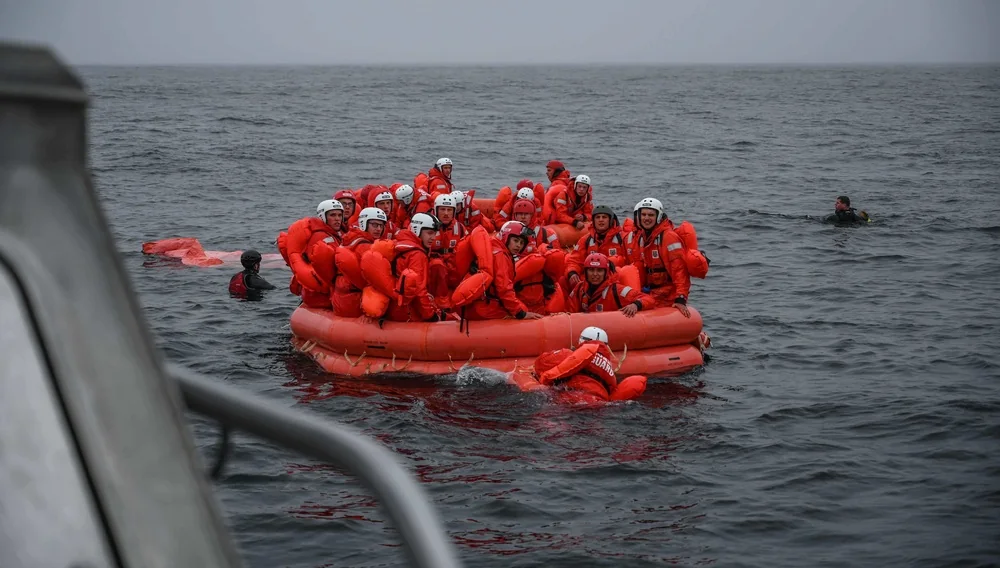
SERE Level B is the intermediate training level for personnel facing a medium risk of military isolation or adversary exploitation. In the NATO framework, it combines foundational instruction with practical survival and evasion tasks and classroom resistance training. Participants must use their personal equipment to protect and sustain themselves, establish their location, avoid capture and contribute to their own recovery. National programmes place different emphasis on these tasks: the French model covers tasks from the start of isolation through to authentication, the Bundeswehr includes an evasion exercise and conduct during pickup, and the US Air Force combines practical evasion with different captivity contexts in ECAC.
Which tasks Level B prepares personnel for
Risk arises from occupational role, unit and mission. Relevant factors include the likelihood of becoming separated from friendly forces, the danger of subsequent capture and the consequences of adversary exploitation. A person's knowledge and responsibilities also matter: someone holding particularly valuable information can present a different target for an adversary from someone following the same route through the terrain. A rank group or occupational title alone therefore does not determine an international Level B category.
In the French competency model, B is intended for personnel expected to deploy regularly on operations involving at least a medium risk of isolation; the responsible commander specifies the theatre requirements. The German B description addresses soldiers at medium risk of becoming separated from friendly forces. The UK links B or C to the assessed elevated operational risk of isolation and delivers B at unit level.
A concrete German operational context involves Joint Fire Support Teams, or JFSTs, operating directly alongside combat troops, and artillery guns and reconnaissance equipment deployed far forward with their personnel. If these forces are overrun or separated from their own troops, individual soldiers may be left wounded in hostile territory. Their previous supplies and movement with the unit may no longer be available. With the equipment still accessible, they need to remain able to act, evade hostile forces and find a route back to friendly forces or a possible pickup. Training in sustainment, evasion and conduct during recovery prepares them for this situation.
Level A provides the foundation for recognising isolation, hazards and recovery possibilities. In the NATO model, B includes basic practical survival and evasion training; C includes extensive practical survival, evasion and resistance training in a controlled, realistic environment. The letters describe scope and risk. For an individual, the qualification required by the mission matters; this does not create an automatic sequence of A, B and C courses.
A documented B model from isolation to pickup
The French model assigns B four connected fields of activity. Survival includes immediate responses to isolation, protection, location, water, food and the use of personal equipment. Evasion connects avoiding capture with movement and preparation for recovery. Resistance addresses captivity and exploitation. Extraction includes recovery methods, operational instructions, personal communications equipment, identification and authentication. Instruction, practical demonstrations, workshops and field exercises can connect these tasks.
At the start of isolation, the person takes stock: what threatens them at the present location, which injuries or environmental conditions limit them, what equipment remains accessible, and how certain is their location? The answers determine initial actions. An immediate risk of discovery or capture may make leaving the exposed position the priority; in a concealed location, urgently needed weather protection may first preserve the physical ability to act. Building an extensive camp would consume time and material while creating visible changes in the terrain.
The person then needs to sustain themselves and decide whether to move. They use the available protective equipment and supplies, establish their position with suitable navigation aids and check whether their condition and supplies allow them to reach the intended destination. Along the way, they repeatedly check position, observe the surroundings, remain concealed and avoid conspicuous sounds or movements. A short distance on the map can take considerable strength and time if terrain and threats require detours or long observation pauses.
For recovery, the person learns to use prepared signals, a serviceable communications device and the applicable operational procedures. These allow them to report position and respond to an authentication request. During pickup, they must carry out friendly forces' instructions. German Level B training practises these tasks through an evasion exercise and conduct towards a personnel recovery team.
Protection, sustainment and personal equipment
The Bundeswehr names shelter construction, firecraft and water and food preparation as B content. Under adversary threat, these activities preserve the person's ability to continue acting. Shelter must therefore fit the weather, the available material and the next movement task. Natural protection with minor improvements may suffice, while a large construction requires additional work and leaves cut vegetation and conspicuous shapes.
A roof keeps precipitation off and reduces wind exposure. Contact with cold or wet ground remains a separate source of heat loss. The person therefore also needs to insulate the sleeping surface, using suitable available equipment or dry ground insulation. When selecting the site, they additionally check whether approaches can be observed, whether an exit remains available, and whether falling wood or rapidly rising water threatens the resting place. A well-concealed depression can become the wrong location if rain turns it into a drainage channel.
Clothing and protection equipment already fulfil part of this task during movement. Air between suitable layers reduces heat loss; excessively warm clothing during exertion leads to sweating and damp insulation. The person therefore adjusts layers before a demanding section and protects equipment needed for rest from additional moisture. Equipment is packed and secured against loss, damage and rattling during movement. A lost water container reduces the amount that can be carried for the next section; a damaged positioning device makes onward navigation harder.
Water procurement, treatment and storage are separate tasks. The person needs an accessible source, a treatment process they can carry out with available equipment, and a clean, closed storage container. If treated water is returned to a used raw-water container or touches contaminated material, it may become contaminated again. Planning must also account for the effort required to treat it: heating needs a suitable vessel, fuel and time; available treatment products have their own operating conditions. The journey to a water source and the time spent there need to be included in further evasion planning.
The person plans food for the next stage of movement. Existing rations require shorter stops and less equipment than obtaining and preparing more food. Additional food can help preserve strength, but searching for it can consume supplies and delay arrival in a suitable recovery area. The person therefore assesses the route, effort, water requirement and time spent at one location alongside the possible yield.
A fire requires ignition heat, fuel and oxygen. It provides warmth and allows food to be cooked, but also creates light, smoke and an identifiable fire site. Firecraft in Level B therefore includes deciding whether a fire is needed: what is it needed for now, what can be done without it using available equipment, and how does remaining at the location increase the risk of detection? The French B model also expressly includes combat first aid adapted to the environment and threat; this forms part of immediate care for the isolated person and preservation of their ability to keep moving.
Navigation, observation and movement under threat
The French B model requires the use of positioning and navigation systems and personal electronic devices; it names maps, compasses and GPS. Terrain features and a map help establish the present location and possible routes. A compass gives direction, while a suitable positioning device gives location. The person can then decide which route leads to a reachable destination and which sections need to be avoided because of terrain or adversary activity.
Location checking continues during movement. Distinctive terrain forms, known reference points, direction of travel and estimated distance covered are compared. A detour can change the planned heading, while slow progress can distort distance estimates. When features conflict, the person stops at a suitable location and resolves their position before further movement compounds the error. Remaining strength and water also limit how much searching movement is possible.
Evasion changes the choice of the next section. The person observes from concealment before entering open ground or a transport route. Movement, outline and conspicuous contrasts can reveal them even when clothing matches the surroundings. Natural concealment interrupts the view of the body; avoiding a silhouette on a crest prevents a particularly distinct outline. Secured equipment reduces rattling, while covered shiny objects reduce conspicuous reflections.
Observation is repeated along the route. Sounds of vehicles or people, visible movement and new tracks can change an earlier route decision. A concealed pause provides an opportunity to notice these indications when the noise and activity of walking would mask them. The person then chooses a further concealed section, a detour or more waiting. Reduced light can limit visual exposure while making terrain recognition and navigation harder; a fixed rule to always travel at night would ignore that conflict.
Concealment also concerns what is left behind. Unnecessarily broken vegetation, overturned objects, litter or lost equipment indicate passage and can reveal information about the person. Movement should therefore use existing terrain forms and avoid unnecessary disturbance. A resting place needs observable approaches and a way to continue moving alongside protection and low visibility. Without an exit, an inconspicuous position can become a trap; without rest and sustainment, the person may exhaust themselves before the next necessary section.
Position signals and usable communications
A position signal shows friendly forces where the person is. A communications device can additionally report condition, intentions and hazards and receive instructions. For location signalling, the French B model lists strobe and infrared lights, flares, smoke and light sticks; the German description adds a signal cloth and mirror. Radio, telephone and data transmission form a separate field. The person needs to operate the available equipment and judge whether friendly forces can detect the signal or receive the message.
A visual signal requires a suitable receiver able to see the signal area; an infrared signal requires compatible receiving equipment. Concealment, distance and the receiver's location therefore determine whether a prepared device can be noticed at all. A widely visible marker or smoke can also draw other observers' attention to the location. The person prepares the agreed means and uses them according to operational instructions or after actual contact, avoiding continuous signalling that exposes the place of concealment.
A communications device needs power, must be serviceable and must be operated correctly; exchanging information also requires a connection. The person checks communications and signalling equipment, keeps it ready for use and manages battery consumption according to the planned operating periods. A telephone requires a usable connection; a radio requires a reachable, compatible receiver. Evasion planning must account for the communication options the devices actually provide. If no contact is established, the person must continue to check their own location, protect themselves and plan further movement.
Once communication is established, an unambiguous position report forms the basis. Additional information includes the number and condition of people, observed adversary activity, obstacles at a possible pickup location and available signalling means. This helps friendly forces verify the location and match pickup to the actual situation. After movement, reporting the original isolation site does not replace the new position.
Recovery preparation, authentication and pickup
Personnel recovery connects the individual's preparation with friendly forces' capabilities. Before a mission, an Evasion Plan of Action, or EPA, can record intended actions during isolation. An ISOPREP contains information for formal identification and authentication. The instruments therefore perform different functions: the EPA helps interpret intended movement, while the ISOPREP helps confirm the correct person. Actual location and current condition must be determined separately during isolation.
The French B model includes knowledge of recovery methods and applicable PR instructions. These include standard operating procedures, SOPs, and mission-specific special instructions, SPINS. For the individual, they cover matters such as planned communication and signalling procedures, identification and authentication. Before deployment, the person must check that they can carry out the applicable communication and recovery procedures with the equipment actually issued and understand the instructions for the theatre.
Identification and authentication solve a different problem from location. A precise coordinate indicates the place but does not establish that the person there is the one being sought. Friendly forces therefore verify identity using the prepared procedure before pickup. The person responds according to their briefing and protects the relevant information against adversary use. An adversary could use disclosed authentication information to impersonate the missing person and deceive recovery forces when they are particularly exposed during pickup.
Subsequent recovery depends on location, condition, threat and the forces and equipment actually available. Once radio contact is established, the person may be instructed to move if their current position is unsuitable for pickup. They need enough strength and supplies to complete that route through the terrain. Until pickup becomes feasible, they must continue to protect themselves from the weather, observe their surroundings and decide whether to remain or keep evading.
For pickup, personal belongings are packed and secured and the required signalling means prepared. The person helps identify their position at the instructed time, follows the recovering force's instructions and adopts a recognisable, non-threatening posture. Weapons are secured; rapid, unexpected movements and approaching a vehicle without direction can appear threatening. They approach only when instructed. With an aircraft, rotors or propellers and loose equipment create additional hazards.
Resistance foundations and the national ECAC model
In the NATO framework, B includes classroom resistance training. The French model names the treatment of prisoners of war, psychological and legal aspects of captivity, state and non-state detention, and stages of captivity. The subject is adversary exploitation of a person deprived of freedom of movement. Preparation therefore connects information protection with conduct in the relevant captivity context and preservation of the person's ability to survive.
Captivity as a prisoner of war has a particular legal context: in an international armed conflict, prisoners of war include members of a party's armed forces who fall into enemy power. Under specified conditions, civilians authorised to accompany the armed forces can also qualify. Detention in peacetime does not acquire this prisoner-of-war status merely because the person belongs to the military. The French B model therefore expressly addresses resisting exploitation both where the Geneva Convention applies and in other detention contexts.
In hostage-taking, the captive is used to exert pressure on a third party. The captor threatens killing, injury or continued detention to compel, for example, a state, organisation or another person to act; the hostage's release or safety is made conditional on that conduct. The demand may therefore target a decision beyond the captive's influence. This differs from questioning aimed directly at obtaining information from the captive.
The US Air Force describes Evasion and Conduct After Capture, ECAC, as an explicitly designated Level B programme. It combines instruction on wartime, peacetime and hostage captivity with Academic Role-Play Laboratories, training environments with represented roles and situations. It also includes instruction on evasion, personnel recovery principles and tactics, techniques and procedures, together with an Evasion Laboratory. This evasion component provides practical application of the procedures. The programme concludes with a Hostage Resistance Training Laboratory, a practical training environment focused on resistance in a hostage context.
The Code of Conduct forms part of the US military conduct framework. It requires prisoners of war to remain loyal to fellow prisoners: they must not disclose information that could harm them or take part in actions that could endanger them. The senior person assumes command; others support lawfully appointed leadership. When questioned, prisoners give their name, rank, service number and date of birth and avoid further answers to the utmost of their ability. Oral or written statements disloyal to one's country or its allies, or harmful to their cause, must be avoided. A statement about other prisoners can help the adversary act against them; a harmful written statement may continue to be used after that questioning session.
In the general German level description, more advanced conduct in captivity as a prisoner of war is assigned to C, while resistance to interrogation is an additional module primarily for special forces and aircrew.
The position between A and C
In the NATO framework, risk and practical training scope are assigned as follows:
| Level | Risk and NATO scope | The individual's task |
|---|---|---|
| A | Low risk; foundational instruction, potentially supplemented by basic practical survival in a controlled environment. | Understand isolation, hazards, protection and recovery tasks and personal preparation. |
| B | Medium risk; foundational instruction, basic practical survival and evasion training, classroom resistance training. | Use available means for protection, sustainment, navigation and evasion and prepare personal recovery. |
| C | High risk; instruction and extensive practical survival, evasion and resistance training in a controlled, realistic environment. | Apply these skills together in more demanding isolation and captivity situations. |
The appearance of U.S. Department of War (DoW) visual information does not imply or constitute DoW endorsement.