

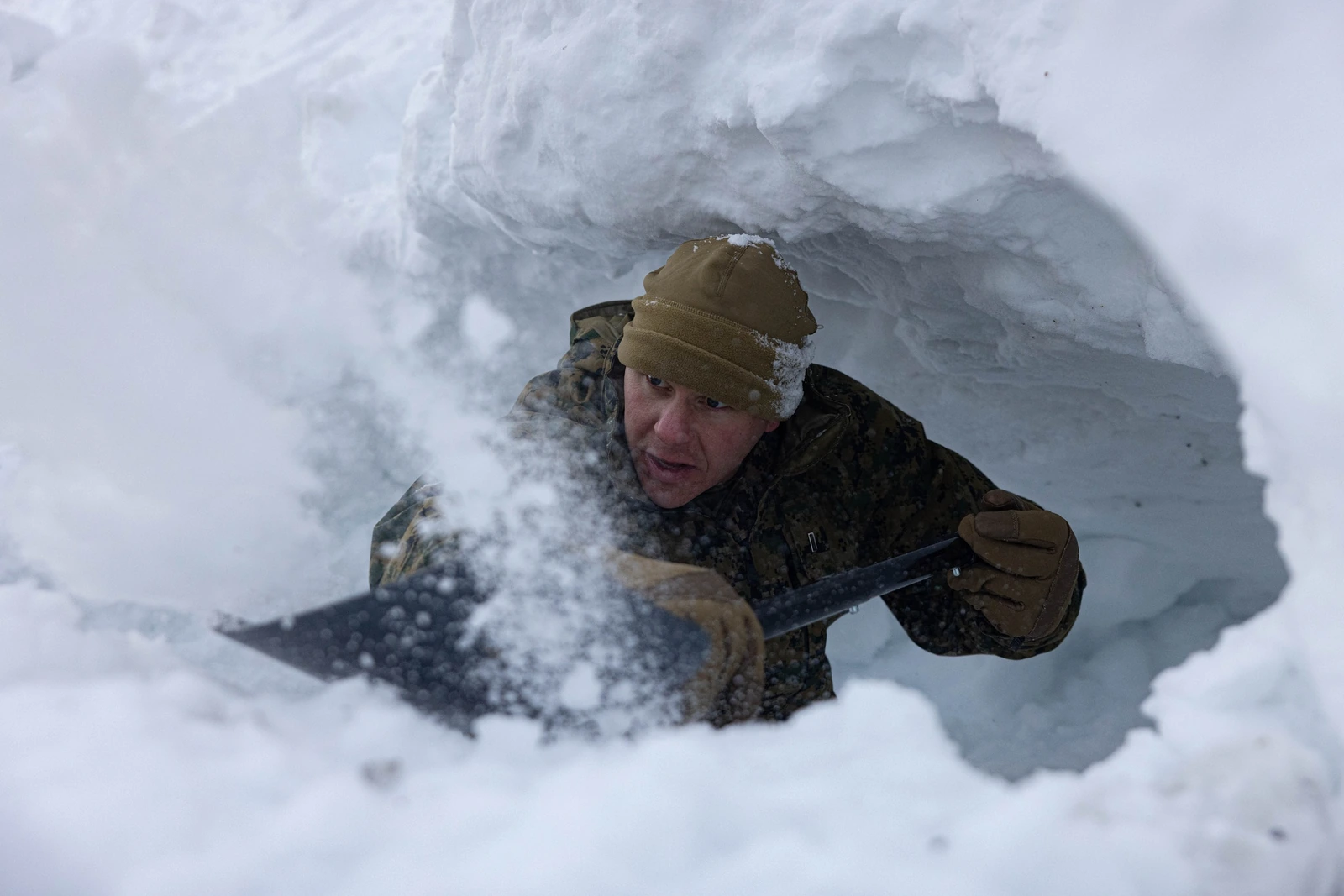
Swiss Air Force SERE prepares aircrew for the situation after a crash, an ejection or a technical emergency landing. With the emergency equipment that remains available, they must provide protection and sustain themselves, evade capture in hostile territory and manage the transition to possible recovery. Tasks actually practised include land training after a simulated crash, alpine emergency shelters made from snow or a survival dinghy, and sea-survival training followed by helicopter recovery.
Aircrew, emergencies and the SERE specialist service
The training is intended for aircrew. Actual participant groups include prospective career military pilots and personnel training to become professional airborne operators. An airborne operator who normally controls a helicopter camera can face the same protection and sustainment problems as the pilot after an emergency landing.
The SERE specialist service at Emmen airfield links training content, aircrew equipment and personnel recovery. It contributes to the selection and introduction of equipment and provides technical and tactical training. This connection has a practical purpose for aircrew: they work with items intended for an emergency on the aircraft or carried on their bodies, and with the tasks that arise after losing the aircraft. Land, mountains and water require different uses of the same emergency equipment.
The specialist service expands SERE as Survival, Evasion, Resistance and Extraction. Swiss land training also uses Escape. Survival concerns personal protection and sustainment, evasion avoiding capture by an adversary, and resistance captivity and hostile exploitation. Extraction means removal and recovery; escape means getting away. The distinction has a practical consequence: someone who escapes from a threatening situation must continue to survive and evade. Recovery by friendly forces is a separate event involving other personnel and equipment.
Land training: working with emergency equipment
One Swiss land-training model starts with the emergency equipment aircrew carry in survival vests and emergency packs. Participants use these items to provide weather and cold protection and prepare signalling equipment. Further tasks concern water, fire and food.
Weather protection has an immediate function: it reduces exposure to wind, precipitation and cold during an unplanned stay. The person must secure water and food using their remaining equipment, allowing for the time and travel required. Under hostile threat, a fire can provide warmth while drawing attention through light or smoke. The technical benefit of an item and its detectability therefore have to be considered together.
Prepared signalling equipment allows a person to attract attention deliberately when an actual search or recovery opportunity arises. Preparation can be separated from use: a signal is intended to alert a reachable friendly force to the person, but an adversary may also detect it. Aircrew therefore have to distinguish between providing protection, establishing contact with a friendly force and making their location visible.
Alpine emergency landing: snow and a dinghy as protection
In alpine-survival training for airborne-operator trainees, the task begins with an emergency landing in alpine terrain. Participants practise using their emergency equipment, build snow caves and quinzees, and use inflatable dinghies as emergency shelters. This gives them different options: create protection from the material they carry or make a sheltered space from the available snow.
A snow cave is excavated into an existing mass of snow. A quinzee is made by first building a snow pile and then hollowing it out. Both create a space shielded from direct weather exposure. The difference concerns the work and the conditions at the site: a cave requires a suitable existing snow mass; a quinzee requires snow to be gathered first. Construction uses time and physical effort. The person must weigh that work against the protection they can already provide with their available equipment.
The dinghy acquires a second function on land. As a survival craft it is intended to support a person on water; in the alpine emergency-landing scenario it acts as a protective enclosure during the stay. Reusing it avoids having to build a shelter entirely from natural materials, provided the boat is present, accessible and usable.
Survival and evasion in a continuous scenario
Prospective career military pilots, for example, take part in a week-long land exercise following a simulated aircraft or helicopter crash. In fields and woodland they combine escape, survival and return to friendly troops. The exercise runs by day and night; opposing-force role players add a threat to the environmental problems. Participants therefore have to carry out protection and sustainment tasks within a military situation and cannot select a place to stay solely for the most convenient weather protection.
For isolated aircrew, this creates a concrete conflict. A longer stay makes it easier to improve a shelter but keeps the person in the same place. Obtaining water or continuing movement takes them out of a protected position. Conspicuous means may help friendly forces find them while also assisting detection by the adversary. Land training therefore links technical survival tasks with tactical conduct, communication in hostile territory and the transition to recovery.
Captivity: personal identification and military information
A combatant who becomes a prisoner of war in an international armed conflict has a specific obligation during questioning within the Swiss legal framework: to provide their surname and first names, date of birth, rank and service number. These details identify the individual. Questions about the location and strength of troops concern military information and extend beyond those compulsory personal details. The captive needs to recognise when personal identification becomes questioning about military activities.
Further questions may be asked; answers may not be compelled through violence, threats or other forms of pressure. The information boundary is therefore distinct from a ban on all questioning. For the captive, it separates the required personal details from additional information about military forces. The resistance component of SERE concerns the threat of such hostile exploitation; the legal obligation to identify oneself describes a different task from the earlier effort to avoid capture.
Sea survival: personal protection until actual recovery
The Swiss sea-survival module includes jet and helicopter aircrew and takes place, among other locations, at Forel on Lake Neuchâtel. Participants first practise individual tasks. They then apply them together in a complete emergency exercise, such as a simulated helicopter crash over water: from leaving the aircraft through survival in water to recovery. They must be able to use their available emergency equipment throughout.
One specific element is entering a jet pilot’s one-person dinghy. A small floating craft can capsize during entry; managing the person’s body weight is therefore part of this practised task. If the boat capsizes, the person is back in the water and has not yet obtained the intended protection.
An actual sea-survival exercise for airborne-operator trainees links a hover evacuation from a Super Puma into the lake with subsequent winch recovery by a Swiss Air Force helicopter. The winch enables transfer from the water into a hovering aircraft without requiring it to land. For this recovery, a serviceable helicopter, its crew and the winch were provided as training resources.
Refreshers and preparation for the operating environment
Aircrew modules are repeated and refreshed after basic training; they form part of flight qualification. Before particular deployments, focused refreshers address the environmental conditions and possible emergencies. The specialist service works with land, mountain, sea, jungle and desert modules in Switzerland and abroad. The selected modules prepare aircrew for the environment in which they would have to act after losing an aircraft.
The appearance of U.S. Department of War (DoW) visual information does not imply or constitute DoW endorsement.