On 24 March 1943, the Norwegian fishing vessel Brattholm sailed from Scalloway in Shetland for German-occupied northern Norway. Her passengers were four members of Kompani Linge, the Norwegian unit trained in Britain for clandestine operations in their own country; eight crewmen were taking them, their equipment and explosives across the North Sea. Among the soldiers was twenty-five-year-old Jan Baalsrud, a weapons instructor now joining an operation in the field.
Sigurd Eskeland led the four-man party. Their mission, codenamed Martin Red, was to strengthen resistance in Troms by establishing contacts, organising and equipping military groups, and preparing further sabotage. The original sabotage plans had included Bardufoss airfield and the seaplanes in Tromsø harbour. Baalsrud, an experienced swimmer, was to use their diving equipment to attach limpet mines. Before any work could begin ashore, however, the party needed people who could be trusted to receive them and arrange their next movements.
Discovery in Toftefjord
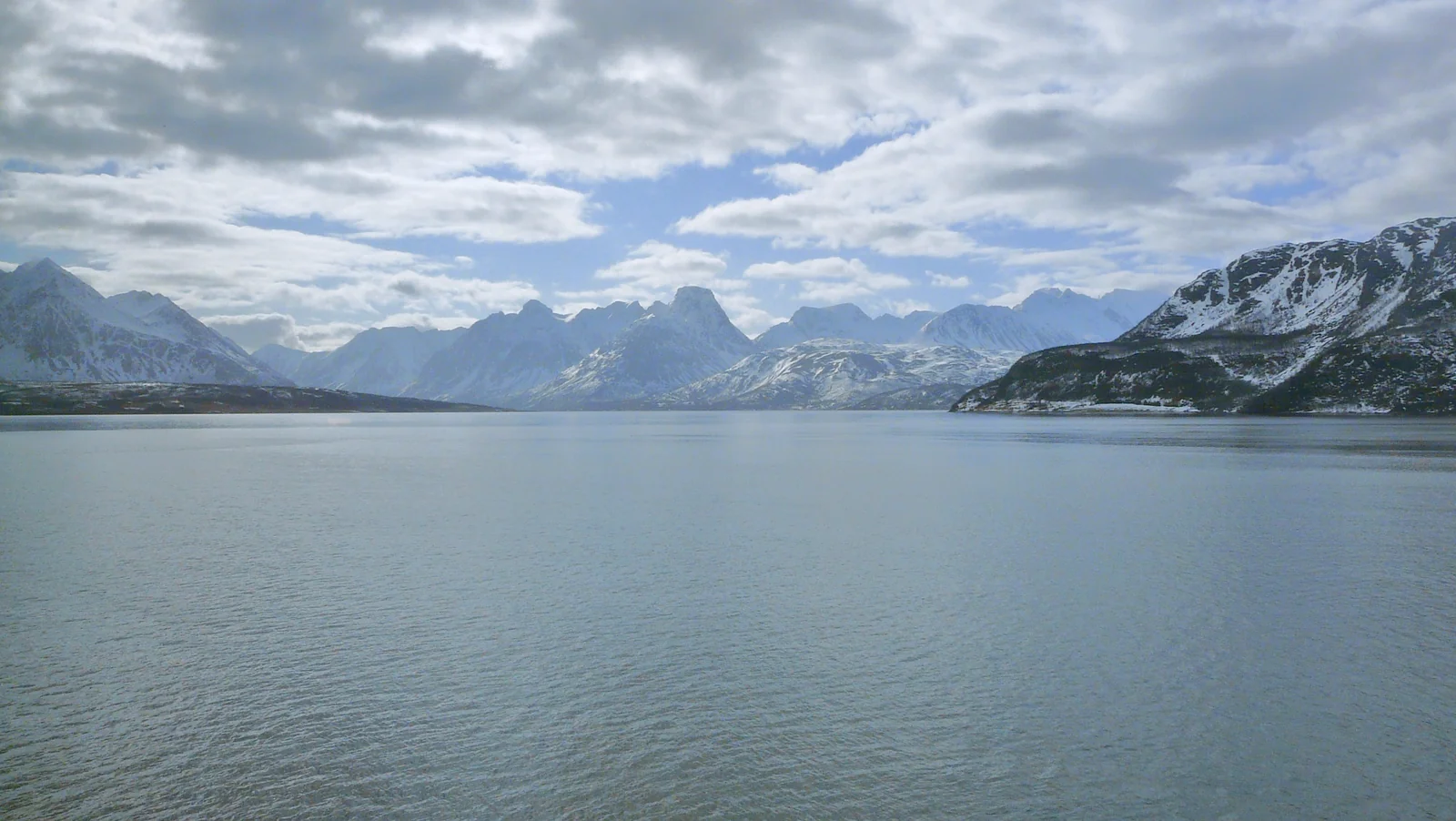
The original landing area had been near Senja, farther south. Instead, the crew headed for Rebbenesøya and entered Toftefjord on 29 March. The skipper, Kvernhellen, and Eskeland had selected the inlet from their chart; only one house stood there. A fishing vessel could pass among the other boats working along the coast without the attention a warship would attract. The party still needed a smaller boat and contacts ashore. The information they had brought from Britain was already out of date.
Eskeland sought a merchant regarded as trustworthy, but the man had died. The party approached his successor, and news of their arrival passed through the local police official to the German security police. Their appearance had also attracted notice. Olaug Idrupsen, a fifteen-year-old living with the only family in Toftefjord, had seen the visitors ashore. Low shoes, suits and uniform trousers were hardly what she expected local fishermen to wear.
On the afternoon of 30 March, the German minesweeping vessel R 56 entered the fjord. The Norwegians were caught as they prepared to unload equipment and explosives. They blew up Brattholm themselves and tried to escape. Baalsrud was wounded in a toe during the firing that followed. He got into the water, lost a boot and made his way among the small islands beyond the Germans' immediate reach. None of the planned sabotage attacks had been carried out.
All eleven of his companions died. Some were killed or mortally injured in the encounter; the prisoners were taken to Tromsø and abused. Eight were shot at the Grønnåsen firing range on 2 April. Baalsrud did not yet know the full fate of the other men. He remained close to the scene of the attack, in soaked clothes, with a wounded toe and one bare foot. To leave this stretch of coast, he needed somebody to take him by boat.
Across the islands to the mainland
Olaug and her relatives had seen the explosion. It broke windows in their house, and the women left the dangerous inlet in a rowing boat. Near Vårøy they spotted a man they initially thought was Olaug's brother Peder. He had gone fishing, and they expected to meet him on their way to Vargsund. The man on the shore was Baalsrud. They took him aboard, noticed the single boot and the other bare foot, and rowed him to Olaug's aunt at Vargsund.
In the house, he could finally wash and warm himself. His hosts cleaned his clothing and heated the stove until the room was almost unbearably hot: the clothes had to dry quickly so that he could leave again. They gave him food while a lookout watched for approaching boats. A narrow path provided a way out if suspicious visitors arrived. Baalsrud used it several times, waiting outside while his hosts persuaded the newcomers to go away. No Germans were among those visitors.
The son of the household offered to row him to Ringvassøya at dawn. His father was away fishing in Lofoten. Baalsrud warned the son of the danger, but he insisted on going. On the island, he intended to introduce Baalsrud to a midwife. The fugitive asked to be put ashore before reaching her home and walked there alone. The rower was not to know where Baalsrud would stay, and the midwife was not to be told who had brought him. She fed him and helped him warm up. With other patients also in the house, he moved on as soon as he felt able.
During the first days of April, Baalsrud travelled south across Ringvassøya. He sought people he knew to be trustworthy, stopping at several houses for food, warmth and care for his injured toe. These visits kept him able to walk. He could still make his own way between farms and settlements, but getting to the mainland required another crossing. Grøtsundet, the strait on the approach to Tromsø, was watched by German forces.
Einar Sørensen's family arranged that passage. At first the family's two adolescent sons offered to row, but their grandfather considered it too dangerous. Einar and his seventy-two-year-old father, Bernhard, went instead. In strong wind and driving snow, they rowed Baalsrud across to Snarby. They avoided using an engine because its sound might give them away in the guarded strait. The weather made the work harder for the rowers while also making the small boat less visible. All three reached the mainland.
The family at Alfred Lokkertsen's farm took the fugitive in. Eleven-year-old Alvin Andreassen, a foster son living on the farm, saw him arrive at about four in the morning. Baalsrud stayed through Sunday and ate with the family while a German patrol boat passed outside. That evening they took him to another boat with a food parcel and a fur cap. Alvin had found the cap on the shore, and the family had washed and dried it. Skis were also obtained and sent on for the next part of the journey.
A motorboat carried Baalsrud from Snarby across Ullsfjorden to Kjosen on the Lyngen peninsula. His helpers used an engine on this passage; the rowing boat through Grøtsundet had been one stage of a longer route. At Kjosen he received the skis and poles. They allowed him to continue over snow-covered ground. The boats and successive stays in people's homes had brought him away from the coast despite his injury. To reach the valleys farther east, he now had to cross the mountains of the Lyngen peninsula.
Finding a way to Furuflaten
At Lyngseidet, Baalsrud saw a German checkpoint and turned into the mountains. He tried to follow an old Sami summer route towards Furuflaten, using the course he had memorised from a map. It linked the two settlements and would avoid the highest mountains as well as the controlled village. In early April, however, the ground was still buried in snow, and he had never travelled through it before.
A snowstorm left him disoriented. In poor visibility he could no longer distinguish the shape of the ground, and snow-blindness further impaired his sight. An avalanche caught him. He survived it but lost his skis. For at least three days he felt his way through the mountains before finding a route down into Furuflaten. His feet were now so badly injured by frost that he could not resume the journey himself.
At the Grønvoll family's small farm, his hosts removed his clothing, fed him and cared for him. He was exhausted and needed extensive attention. Marius Grønvoll took charge of organising further assistance. Agnethe Lanes, whom Marius later married, helped look after the wounded man and also took part in the journeys to move him. What might otherwise have been another brief refuge became a longer stay while Grønvoll sought people who could take a bedridden patient out of occupied territory.
He brought Alvin Larsen into the effort. Larsen owned a fishing vessel, which allowed the helpers to make contacts across the fjords. They first approached people in Birtavarre and Samuelsberg to prepare an onward route through Manndalen. Teachers and resistance members found men, money and materials. Larsen did not know every detail of Martin Red; his part was to carry the patient and equipment over the agreed passages. Grønvoll coordinated these different contributions.
A hiding place on Lyngenfjord
The farm at Furuflaten was close to a German garrison, and Baalsrud could not remain there indefinitely. Around mid-April, the helpers took him to the shore and rowed him across Lyngenfjord to Revdalen. A small shed stood at a farm abandoned long before the war. No road led to it then. The helpers called the shelter Hotel Savoy. It gave them somewhere to hide the patient while they obtained a sledge and recruited men for the next stage.
Baalsrud received food but depended on his helpers making the crossing. When the weather deteriorated, a rowing boat could no longer get across Lyngenfjord. He had to wait alone in the shed, and his feet grew worse. Tissue in the frost-damaged toes was dying. During the weeks he spent in hiding, he cut away parts of that dead tissue himself. He lost several toes and remained unable to walk.
Martin Jensen, the caretaker at the school near Lyngseidet, built a light ski sledge for him. The connections of the teacher Ingjald Leigland helped with materials and organisation. Jensen disguised the sledge as a large box for Larsen to collect at the small harbour. A German sentry helped Larsen load it aboard. From its packaging, the soldier could not see that the box contained a means of moving the escaped Norwegian. Larsen carried it to the men who were to pull Baalsrud uphill.
The proposed route was too long for a single group to undertake. Men from Furuflaten would first climb from Revdalen onto the Nordnes plateau. Helpers from Manndalen, who knew the high country beyond, were to take over there. For the border section, the organisers hoped to enlist Sami men with draught reindeer. Several arrangements had to work together: the patient had to reach an agreed meeting point, the next party had to find him, and the reindeer owners had to gather animals suitable for the journey.
In the snow shelter on the plateau
During the night leading into 25 April, Marius Grønvoll, Alvin Larsen, Amandus Lillevold and Olav Lanes collected Baalsrud from the shed. They attended to him, took him outside and lashed him to the sledge. In the woods, the men repeatedly broke through the snow crust. Higher up, the slope grew steep enough to require ropes. One man went ahead to make a track, another pulled, and two pushed and held the sledge steady. They had to work together throughout the ascent to keep the load from sliding back down the mountainside.
Nobody from Manndalen was waiting when they reached the plateau. The four men could neither complete the handover nor continue to the border themselves. They lacked the equipment and local knowledge needed for the route ahead; descending the steep slope again with Baalsrud was scarcely possible. Beneath a large rock slab, they found a hollow formed by the stone and snow and placed him inside. They had to leave him there and go back down to restore contact with the next party.
From Manndalen, Peder Isaksen and Nils Nilsen searched for the patient. Many large boulders lay across the plateau. The men went from rock to rock, calling the agreed recognition phrase, without finding him. There was no unmistakable marker, and drifting snow had further concealed the shelter. A message about a missing fishing net was relayed to Grønvoll. It meant the helpers had not yet reached Baalsrud.
Marius and Agnethe climbed back up from the Revdalen side, bringing food and care and leaving a clearer mark. When Isaksen and Nilsen went out again, they saw two ski poles with their tips together. Below them lay the snow-covered hollow. The men dug with their hands because they had brought no shovel, calling the password as they worked. Baalsrud still had a weapon and needed to recognise the arrivals as helpers. At first he did not answer. Only after more digging did they hear a sign of life and reach him.
Baalsrud stayed beneath this rock, later known as Gentlemansteinen, from late April into early May. Marius and Agnethe had supplied him during that stay, followed by the men from Manndalen, but long days separated the visits. After finding him, Isaksen and Nilsen intended to start moving him onwards. A storm with strong north-westerly winds and heavy snow stopped them again. They tried to climb through Kjerringdalen and had to turn back, waiting for the weather to ease.
Eventually, Baalsrud was put back into his sleeping bag and secured on the sledge. Four men pulled him towards the border. After several hours, the storm worsened until they could see nothing. They temporarily left the sledge while they worked out their position and sought a way towards Manndalen. On their return, Baalsrud said he had heard German voices and believed the men had been captured. His helpers found ski tracks and feared patrols but encountered no German party. They had to abandon the journey to the border.
The men brought Baalsrud back towards Manndalen and made a temporary shelter beneath a rocky outcrop in Avzevaggi, a side valley of Manndalen. He remained there for several days. Six men then tried once more to pull the sledge towards the border. This time dense fog forced them to turn back. Only after this second failed attempt was Baalsrud moved farther down the valley to a better-protected hiding place.
Keeping Baalsrud alive in Manndalen
After the failed attempts to move him, Baalsrud needed a less exposed shelter. His helpers took him to a natural cave in upper Manndalen, about six kilometres above the last farm. It was drier, and the rock provided better protection from the wind. He could recover from being constantly wet and received regular visits, including warm meals. He spent the middle and later weeks of May there while his helpers arranged contact with the reindeer owners.
Aslak Fossvoll and other residents organised the supplies. Twelve men and women took turns visiting the hiding place. Others obtained food, cooked meals and contributed from their own scarce rations. Medicines also reached Baalsrud. The work therefore extended beyond the people climbing to the cave: meals had to be prepared and supplies gathered in the households below, while messages about the patient's condition and the proposed onward journey passed between those involved.
Peder Isaksen later explained their willingness to help through a familiar local custom. A traveller passing through Manndalen should be offered food, something to drink and a bed if needed. This particular visitor was lying in the mountains, and looking after him could bring severe punishment if discovered. Residents nevertheless made the journeys and provided food. By now dozens of people had helped Baalsrud: the women in the first boat, coastal households, boatmen, the sledge builder, carriers and the people feeding him in his mountain shelter.
The occupation remained a danger even though the helpers were able to travel between settlements. Patrol boats, garrisons and checkpoints formed part of daily life. A continuous German hunt through every stage of the escape, as portrayed particularly in the 2017 feature film Den 12. mann, is not established. German reports after the attack accounted for all twelve men as dead or captured. Andreassen, who had seen Baalsrud at the Snarby farm, challenged the portrayal of constant pursuit. The helpers continued to conceal the patient and their movements from German forces.
As May drew towards its end, the shrinking snow cover created an urgent problem. Baalsrud still could not walk, and the sledge needed snow. The usual seasonal movements of the reindeer herds were already over, so his transport could not simply be added to a migration that would happen anyway. Aslak and Per-Thomas Baal, the brothers contacted by his helpers, first had to collect suitable draught animals. That took several days, during which the people of Manndalen continued carrying provisions to the cave.
Through Finland into Sweden
The final mountain stage began in late May. Severely emaciated, Baalsrud was wrapped up warmly and taken out of the cave on the sledge. Men first had to haul him back onto the plateau before the reindeer could take over. The Baal brothers brought a herd with them so that, if observed, their journey could look like ordinary work with the animals. They were transporting the wounded soldier towards the border over the snow that still remained at altitude.
The thaw forced the party to stay high enough to find usable snow. The brothers combined local knowledge, suitable animals and the skills to guide a herd through the terrain. They, too, were exposed to the conditions that had defeated the earlier transport parties. Aslak became snow-blind and had to stop at the Norwegian-Finnish border. Per-Thomas continued with Baalsrud, crossing the narrow strip of Finnish territory and taking the reindeer sledge over the ice of Kilpisjärvi.
On 1 June 1943, sixty-three days after the attack in Toftefjord, Baalsrud reached the Swedish side of the lake. Per-Thomas handed him over to the Juuso brothers. On the same sledge, they took him farther to Kummavuopio, where he was cared for again. He was now beyond German-occupied territory, but another journey still separated him from a hospital. An aircraft could not collect him at this remote location.
A riverboat therefore carried him on towards the south. Baalsrud lay in his sleeping bag, hardly able to move during the passage. Men at the bow and stern used poles to steer the boat through the difficult river section. At Keinovuopio, a woman cleaned his injured toes again. The boat then continued through drifting ice and rapids towards Sarikoski. There the party finally reached an aircraft, which flew him from the river forming the Finnish-Swedish border to hospital at Boden.
In Boden, doctors treated his severe injuries. They were able to preserve his legs and cover damaged areas with skin taken from his thighs. Treatment and recovery took considerable time, and the injuries to his feet left permanent consequences. In autumn 1943, he returned to Britain and resumed work as a weapons instructor. He was the only one of the twelve men aboard Brattholm to survive the operation.
Baalsrud kept in touch with the people of northern Norway. In the summer of 1987, he met Olaug again in Toftefjord. Now called Haagensen, she had not seen him since 1943. After his death in 1988, his ashes were buried at his request in Manndalen. His grave lies beside that of Aslak Fossvoll, who had helped organise his supplies from the valley.