

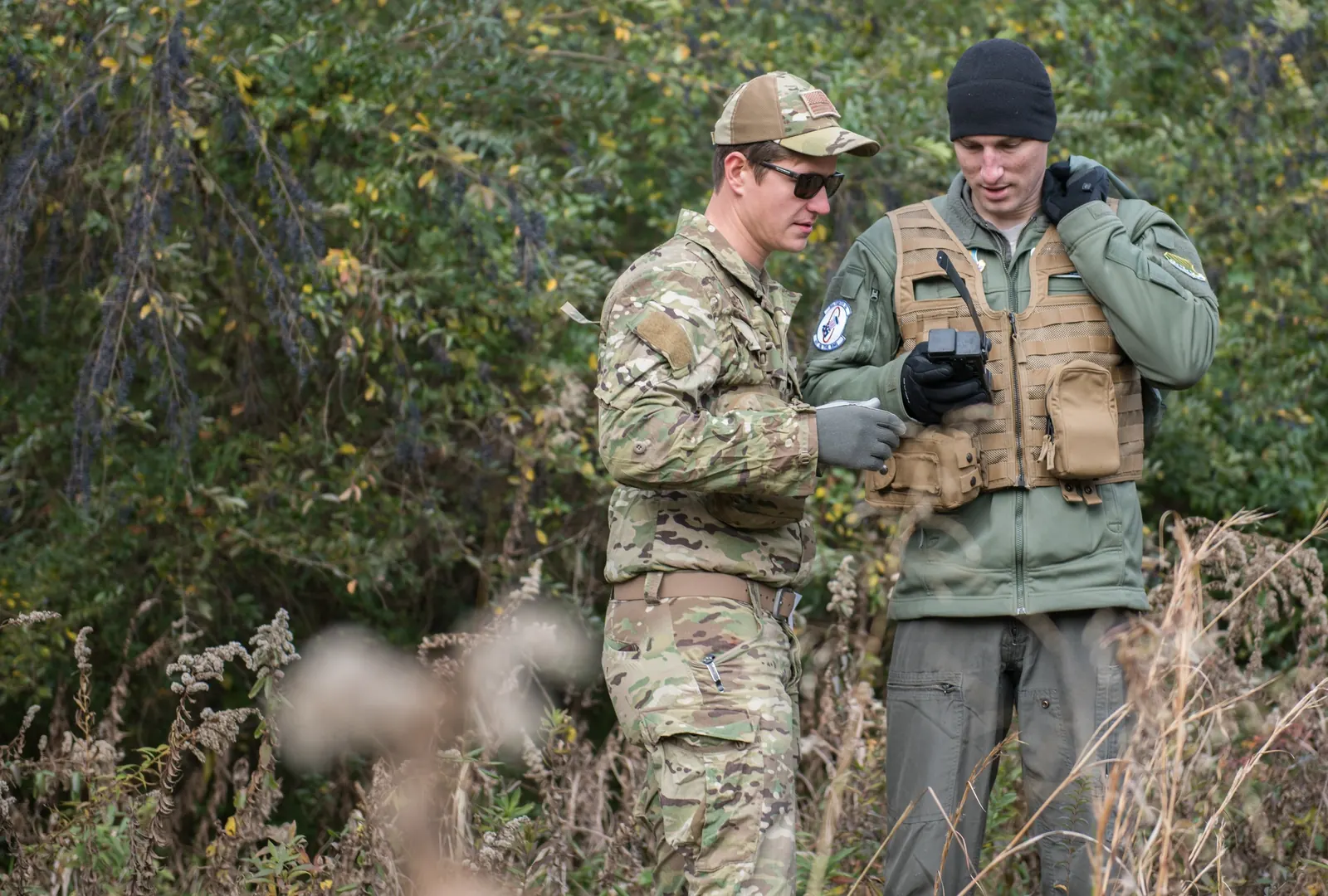
Survival concerns sustaining the body. Combat survival connects this with the demands of military isolation and hostile threats. SERE describes the connected actions involved in survival, avoiding capture, resisting exploitation, and escape or extraction. Survival remains necessary during evasion and captivity.
| Term | Focus | Task for the person |
|---|---|---|
| Survival | Maintain bodily functions with available means | Use protection, sustenance and rest to retain mobility and the ability to handle personal equipment |
| Combat survival | Sustain life under hostile threat | Assess sustenance, remaining at a location and movement against the risks of detection and capture |
| SERE | Connected actions during isolation and preparation for them | Combine survival with evasion, resist exploitation in captivity, and work towards escape or actual pickup |
Sustenance and concealment at the same location
Rest preserves strength for further movement; protection from cold, wet conditions or wind reduces the strain on the body. Under hostile threat, the rest site is also chosen so that natural concealment makes the person and their activity harder to see. Clear views of the approaches help the person notice others coming closer. There must also be a way out if their approach makes it unsafe to stay.
At a concealed halt, the need for a heat source is determined by physical condition rather than comfort. Wet clothing, wind and cold ground can reduce mobility before the next stage. If dry layers, ground insulation and weather protection are sufficient, the additional signatures of a fire can be avoided. If body temperature continues to fall despite those measures, the person must move to a better site or use a more effective heat source while accepting the resulting increase in detection risk.
The person conserves strength for periods when they must leave their location. If they observe an enemy approach threatening the rest site, they assess what movement they can manage with their physical condition and remaining means. Needed rest or sustenance prolongs the stay at the threatened site; leaving immediately draws on remaining physical reserves.
SERE as action and preparation
In US joint military terminology, SERE actions performed by isolated personnel are directed towards health, mobility, safety and return to friendly control. Within the NATO framework, mission preparation, suitable equipment and SERE training prepare personnel for these tasks.
Survival and evasion may be necessary at the same time: the person sustains their body and avoids capture while obtaining sustenance, resting or moving. If they enter enemy custody, resistance and preparation for escape opportunities become additional tasks. After getting free, movement under threat and sustenance can again be the immediate concerns.
Captivity changes the person’s tasks
In captivity, the captor exercises direct control over the person and may exploit them for information or other purposes. Resistance is directed against this exploitation. Physical survival remains necessary while protection of information and fellow prisoners takes on additional importance. The person must adapt their conduct to this loss of control; they can no longer determine their own location and movement.
Within the US military Code of Conduct, this includes efforts to escape and helping other prisoners escape. The framework requires loyalty to fellow prisoners and prohibits information or actions harmful to them. For US prisoners of war, Article V calls for giving name, rank, service number and date of birth when questioned, while avoiding further answers to the utmost of their ability.
Recovery: individual preparation and receiving forces
The final E in the US expansion of SERE means escape; within NATO it means extraction. Escape concerns getting free from enemy custody. Extraction focuses on physical pickup and removal of an isolated person. Escape centres on leaving captivity; during pickup the person must work with the forces actually employed. NATO preparation also includes getting free after capture.
When communications with recovery forces are established, position reports and signals support location. The same transmissions or visible signs can also reveal the person’s whereabouts to others. Prepared authentication methods support verification of the person being sought. Even with precise coordinates, the forces must carry out this identity check before pickup.
An ISOPREP provides prepared information for identification and authentication; an Evasion Plan of Action describes intended actions during evasion. The receiving forces and their command assess available means and the risks to the person and forces during pickup. During an actual recovery, the forces physically take the person into friendly custody. Personnel recovery connects the isolated person, recovery forces and coordinating command; subsequent reintegration includes medical and psychological care and debriefing on the isolation experience.
Training names and content
Within the NATO model, SERE training reflects the risk of isolation and exploitation. Level A provides basic academic education and may include basic practical survival. Level B combines theory with basic practical survival and evasion training, plus classroom resistance training. Level C includes extensive practical survival, evasion and resistance training.
A course with combat survival in its name can also include captivity preparation. The British Aircrew Combat Survival Course included Conduct After Capture as an integral element.
The appearance of U.S. Department of War (DoW) visual information does not imply or constitute DoW endorsement.