

Military survival training expanded to include three tasks beyond keeping the body alive: avoiding capture, limiting exploitation in captivity, and supporting a return to friendly control. These tasks became the connected fields of Survival, Evasion, Resistance and Escape or Extraction. Different armed forces followed different paths. Aircrew needed protection after a crash, special operations personnel needed preparation for prolonged isolation behind enemy lines, and deployed personnel needed a framework for captivity and detention. Today, SERE connects these personal tasks with Personnel Recovery: preparing, coordinating and conducting recovery, and providing support after return.
Environmental survival and the return of aircrew
Military aviation was an important route in this development. People who survived a crash or forced landing could be left far from friendly forces in cold weather, mountains, desert or at sea. Their immediate task was to survive the period after the accident: assess injuries, limit heat loss, secure usable equipment and manage their remaining strength. Training had to match the flight route and the equipment carried. An aviator who had left an aircraft at sea had different means of movement and protection from a crew stranded in snow.
The US Army Air Forces' Arctic training during the Second World War already combined living in cold conditions with rescue training. Some instruction depended on the student's military role; the common task was practical Arctic living. Environmental survival and return therefore existed alongside one another. The later expansion into SERE retained these fields. Warmth, water and injury care remain essential because exhaustion or hypothermia reduces a person's ability to observe, evade, signal and take part in a recovery.
Evasion changes how survival skills are used
In enemy-controlled territory, something that helped a person survive could also help the enemy capture them. Fire provided warmth, but light and smoke revealed a location. An open site made the person easier to see for search forces and the enemy. A road saved effort but might be watched. Evasion added a tactical task to survival training: sustain the body and seek a return to friendly forces while avoiding detection.
This produced connected tasks for the isolated person. After an incident, they must assess injuries, equipment and the situation, gain a protected position and observe their surroundings. Further movement needs a destination and a route that limits exposure. Rest sites must combine environmental protection with concealment and opportunities to observe. Water needs, exhaustion and injuries affect whether a route can be completed at all. Simply continuing to walk consumes the strength needed for a later danger area or recovery.
Signalling also acquired a different significance. A signal should draw attention to the right person when contact is actually possible. Used too early or towards unidentified forces, it can lead the enemy to them. Observation, identification, agreed contact procedures and subsequent conduct during recovery therefore belong to the same preparation. Evasion does not necessarily mean continuous flight. Concealment, observation and deciding whether to stay or move are also part of the task.
Captivity became a separate training subject
The experiences of American prisoners of war in Korea added another focus to US training. Captives could be pressured to disclose military information and participate in propaganda. The Code of Conduct introduced afterwards established a common American framework for combat and captivity. It connected resistance to exploitation with responsibility towards fellow prisoners, military leadership within the group and efforts to escape. The training task therefore extended into captivity: it had to explain which tasks continued under enemy control.
For a captive, this involves more than enduring an interrogation. Information can identify comrades with valuable knowledge, statements can be used for political purposes, and privileges can be offered in return for harming others. Protecting information, supporting sick or wounded fellow prisoners and maintaining a common organisation are therefore connected. The American framework permits conversations about health and welfare; it does not demand years of silence on every matter of daily life. The question is which information or action helps the captor exploit the prisoners.
Preparation must also address coerced compliance. Physical and psychological pressure can force captives to make statements or take actions. Afterwards, the task is to limit further disclosures and resume resistance to the next demand. An already coerced concession does not remove the person's ability to act permanently. This American framework is a national component of SERE. Other armed forces have their own rules and terms for conduct after capture; the six American articles do not become international law.
Captivity experience produced specialised training paths
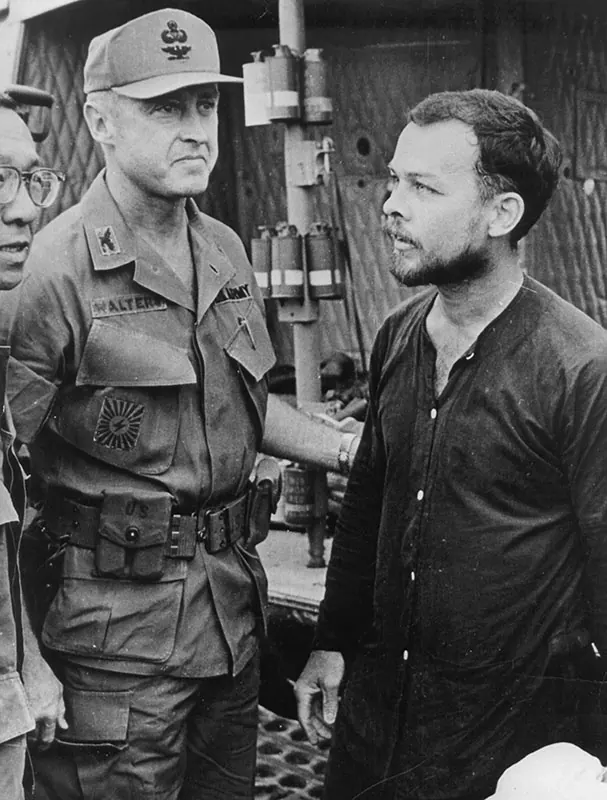
Within US Army Special Forces, experiences from the Vietnam War shaped a separate advanced SERE course. Nick Rowe contributed his years in captivity and his escape to its development. The Army Special Operations Forces (ARSOF) model that emerged combined preparation and practical skills, a field survival and evasion phase, and a controlled captivity phase. Participants had to sustain themselves under pursuit and then carry out their individual and collective tasks against exploitation. Rowe's role belongs to this particular Army development.
Government detention during the Cold War also prompted specialised preparation. The shooting down of U-2 pilot Francis Gary Powers over the Soviet Union was a trigger for American training that addressed this captivity environment. In the lineage of the Personnel Recovery Academy, this developed into preparation for people whose mission, position or knowledge could be particularly useful to an adversary. The training problem is more than the likelihood of capture. The consequences of exploitation also determine the preparation required.
This risk assessment explains differentiated training. In the NATO model, Level A provides foundational knowledge; Level B combines it with practical survival and evasion and classroom resistance training. Level C includes extensive practical survival, evasion and resistance preparation in a controlled but realistic environment. Assignment takes account of isolation, exploitation and their consequences. People at high risk need to practise decisions under exhaustion, uncertainty and enemy pressure. The letters identify a training scope within the relevant system, rather than one identical course worldwide.
Training for different forms of captivity
Australia expanded its former Resistance to Interrogation training into Conduct After Capture. Government detention and hostage situations became separate training areas, while the military component was framed as Military Exploitation. This broadened the subject from protecting information during questioning to conduct during different forms of captivity. A border authority, a foreign military and a criminal or terrorist group may pursue different objectives and allow different freedom of movement and conversation.
The questions a captive must assess consequently change. Is the immediate purpose a government investigation, military intelligence collection, or pressure on third parties through the captive? Which statements concern the person's own condition, and which concern the mission or other people? Which action could worsen their own situation or that of fellow captives? A hostage can be used to communicate a demand without possessing valuable military knowledge. Training therefore has to address exploitation beyond conventional military interrogation.
The British joint SERE system was likewise justified by hostage risks and the exploitation value of personnel even at junior ranks. The joint training covers environmental survival, evasion, resistance and extraction, while the services retain their particular requirements. Today, British Level B is delivered at unit level, while Level C is reserved to the Defence SERE Training Organisation. Personal preparation is intended to fit both operational risk and the means available to the individual.
With its own Code of Conduct After Capture, Canada developed general preparation, mission-specific preparation and advanced preparation for personnel at particularly high risk or of high exploitation value. The situations addressed include prisoners of war, government detainees and hostages. In advanced preparation, reactions to captivity and skills for coping with stress are first explained and rehearsed before being applied under controlled pressure. The person should be able to recognise threats and their own reactions and redirect attention towards a manageable task. These captivity components address a different problem from a course in Arctic environmental survival.
National approaches connect different tasks
The French development shows how new captivity components were integrated into established specialised survival and rescue training. Modules in conduite après capture were added to selected courses at the Centre de formation à la survie et au sauvetage. Separate training for equatorial conditions, cold weather and desert remained. In cold terrain, survival after an accident could be the main task without a tactical threat; in hostile territory, concealment, enemy search and preparation for combat rescue were added. The particular training subject therefore determines whether the participant faces environmental problems, captivity problems or their combination.
French combat survival training linked personal equipment with identification during recovery. A survival radio and the prepared personal information have to work together: forces need an indication of the person's location and a way to verify that they are communicating with the person they seek. Participants had to know the devices and the information supporting their pickup. Survival after leaving an aircraft was thereby connected to a personal task in the rescue procedure.
In Germany, this connection appears in the SERE framework for isolated personnel. Alongside survival and evasion, practical preparation includes the Evasion Plan of Action, prepared identification information in ISOPREP, and conduct during pickup. Advanced preparation adds conduct in prisoner-of-war captivity and supplementary Resistance to Interrogation modules for personnel at particular risk. For someone in the field, this means relating further movement to prepared intentions, protecting identification information and acting during an actual pickup so that recovery forces can take them into custody.
Personnel Recovery makes return a shared task
Organised Personnel Recovery framed return as a task involving three parties: the isolated person, commanders and their coordination elements, and forces capable of conducting a recovery. Before an operation, command must establish which capabilities are available, how isolation will be detected and how information will reach the participants. For the individual, this planning supplements SERE skills with mission-specific information, contact procedures and preparation for pickup.
The Evasion Plan of Action describes prepared intentions in case of isolation. It gives recovery forces a basis for narrowing down possible movement and locations. ISOPREP supplies information for identification and authentication. The two instruments serve different purposes: a plausible position does not establish identity, and establishing identity does not provide a suitable pickup site. Available radios can communicate the situation, the person's condition and enemy activity. When visual contact alone is possible, agreed visual signals may be used. The person must assess which means they actually possess and to whom they are revealing their location.
Pickup requires access to the person, suitable forces and an acceptable situation for their approach. An enemy may try to draw search forces into danger through a false message or compromised identification information. Authentication therefore remains necessary even with precise coordinates. During a coordinated pickup, the isolated person prepares equipment, reports visible obstacles and their condition, and follows the recovery force's instructions. They leave concealment when the procedure calls for it. Until such contact and pickup become possible, they must maintain their ability to act, continue observing and decide how to proceed with evasion.
Return includes support and reintegration
The return of American prisoners from Vietnam demonstrated the importance of prepared reception and support after prolonged captivity. Those experiences were needed again later; a fully usable plan was not simply waiting when prisoners returned from the Gulf War. Further development therefore included turning experience into reusable procedures. Follow-up evaluations of former prisoners at the Robert E. Mitchell Center continue to examine physical and psychological effects and their relevance to later operations.
For the recovered person, medical care, psychological support and examining the events serve different purposes. Injuries and illness require treatment; distressing experiences and the return to family and unit may require further support. An operational debrief gathers information about isolation, enemy behaviour and recovery. The US Navy has separate psychological and operational support responsibilities for this work. Under the NATO framework, reintegration is a national responsibility. Evasion ends when friendly forces take charge of the person. Care, debriefing and preparation for a return to everyday life follow.
The appearance of U.S. Department of War (DoW) visual information does not imply or constitute DoW endorsement.